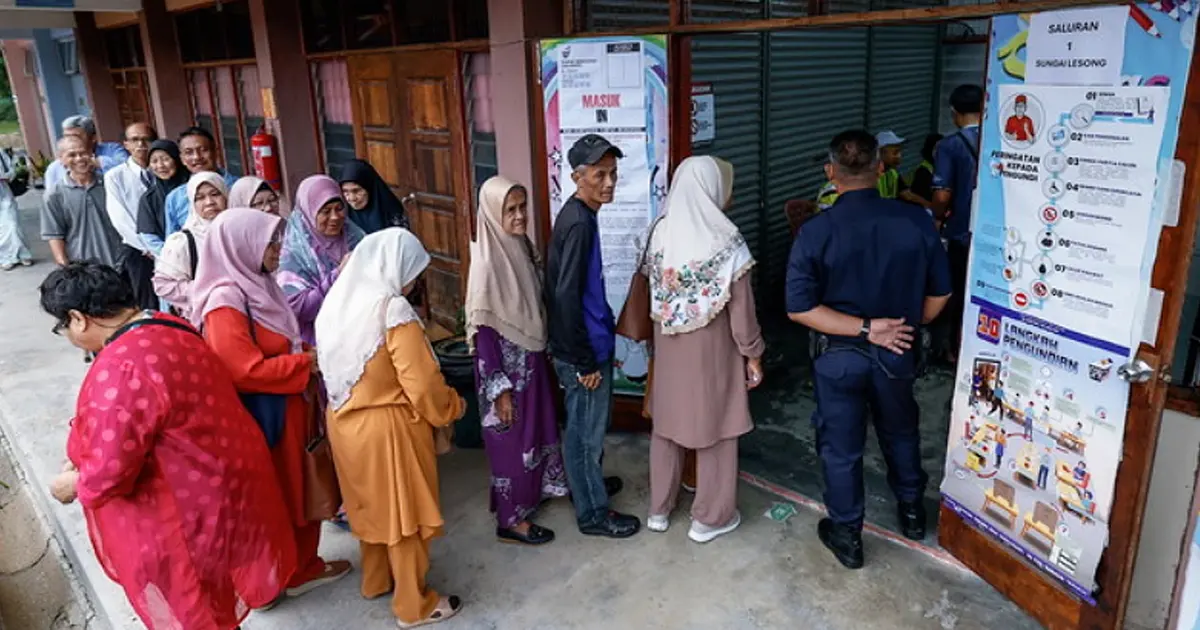
The relentless debate over race and religion—commonly referred to as the 3R issues in Malaysian politics—threatens to drain Malay voters of emotional and political energy, according to Awang Azman Pawi, a political scientist at Universiti Malaya. The analyst's observation comes at a time when Malaysia's political landscape remains fractured between competing coalitions and factions, each vying for support within the Malay-Muslim demographic through appeals to communal identity and religious sentiment.
Awang Azman's warning signals a potential shift in voter priorities that political parties across the spectrum have not fully grasped. While race and religion have long been central to Malaysian politics—serving as reliable mobilisation tools for decades—the analyst suggests there are limits to how long voters can remain engaged with these narratives, particularly when their daily lives are constrained by pressing economic hardships. The concept of "emotional fatigue" reflects a growing recognition that populations, even those with deep communal attachments, eventually seek respite from perpetual identity-based conflict and controversy.
The timing of this observation is significant given Malaysia's current economic environment. The rising cost of living has become a dominant concern for households across income levels, affecting everything from food prices to housing affordability to transportation expenses. When Malay voters—who comprise the largest ethnic group in the country and a crucial voting bloc—are struggling to manage their monthly budgets, the salience of debates over constitutional protections or religious jurisdiction naturally diminishes in their personal calculus. Parties that fail to acknowledge this shift risk appearing out of touch with constituent concerns.
Historically, Malaysian political parties have leveraged 3R issues as a means of consolidating support and deflecting attention from governance failures or policy shortcomings. The strategy has proven durable across electoral cycles, generating strong turnout among core supporters and reinforcing party loyalty along communal lines. However, Awang Azman's analysis suggests this model may be reaching an inflection point. Voters, particularly younger Malays with families and mortgages, increasingly evaluate their political choices based on tangible outcomes: whether a government reduces inflation, creates stable employment, improves public services, or addresses corruption in ways that benefit ordinary citizens.
The challenge facing Malaysia's political establishment is that transitioning away from identity-based appeals requires offering a compelling alternative narrative—one centred on competence, economic management, and institutional reform. This shift is particularly difficult for parties that have built their organisational cultures and messaging strategies around communal mobilisation. It demands not merely adjusting campaign rhetoric but fundamentally reconceptualising how parties present themselves to voters and what they prioritise in policy formulation.
For coalition leaders and party strategists, Awang Azman's observation carries operational implications. The upcoming electoral cycle will test whether parties can successfully reorient their platforms to emphasise economic stewardship and delivery without entirely abandoning the communal messaging that remains important to their base. This is a delicate balancing act; alienate the core vote by de-emphasising 3R issues entirely, and a party risks losing disciplined supporters. Conversely, continue dominating the conversation with race and religion debates while real hardship mounts, and parties risk appearing callous or irrelevant.
The concept of emotional fatigue also speaks to a broader democratic maturation within the Malay-Muslim community itself. Voters are not a monolithic block, and many have sophisticated understandings of policy trade-offs, political feasibility, and the actual versus symbolic importance of various issues. Some may prioritise identity-based concerns; others prioritise economic security; many want both addressed in an integrated framework. Sophisticated political parties must develop the capacity to speak to these varied constituencies rather than treating the Malay community as a single audience responding uniformly to identical stimuli.
Regional context further sharpens this analysis. Across Southeast Asia, similar patterns have emerged in elections in Thailand, Philippines, and Indonesia, where identity-based mobilisation, though still potent, has increasingly had to coexist with economic discontent and demands for institutional accountability. Malaysian parties can observe these regional precedents and recognise that emotional fatigue around cultural or religious debate is not merely a local phenomenon but part of a broader shift in voter expectations as societies grapple with inflation, inequality, and demographic change.
For Malaysia specifically, the imperative now lies with political parties to demonstrate that they can balance attention to communal identity with serious engagement on cost-of-living pressures, infrastructure development, healthcare accessibility, and education quality. Awang Azman's analysis suggests that the electorate is ready for this evolution, perhaps even demanding it, even if the political class has not fully caught up. Parties that recognise this transition early and adapt accordingly may find themselves positioned advantageously in coming contests, while those that cling exclusively to traditional 3R messaging risk discovering that their audience, though sympathetic to these concerns, is increasingly exhausted and looking elsewhere for leadership that speaks to their immediate material circumstances.

