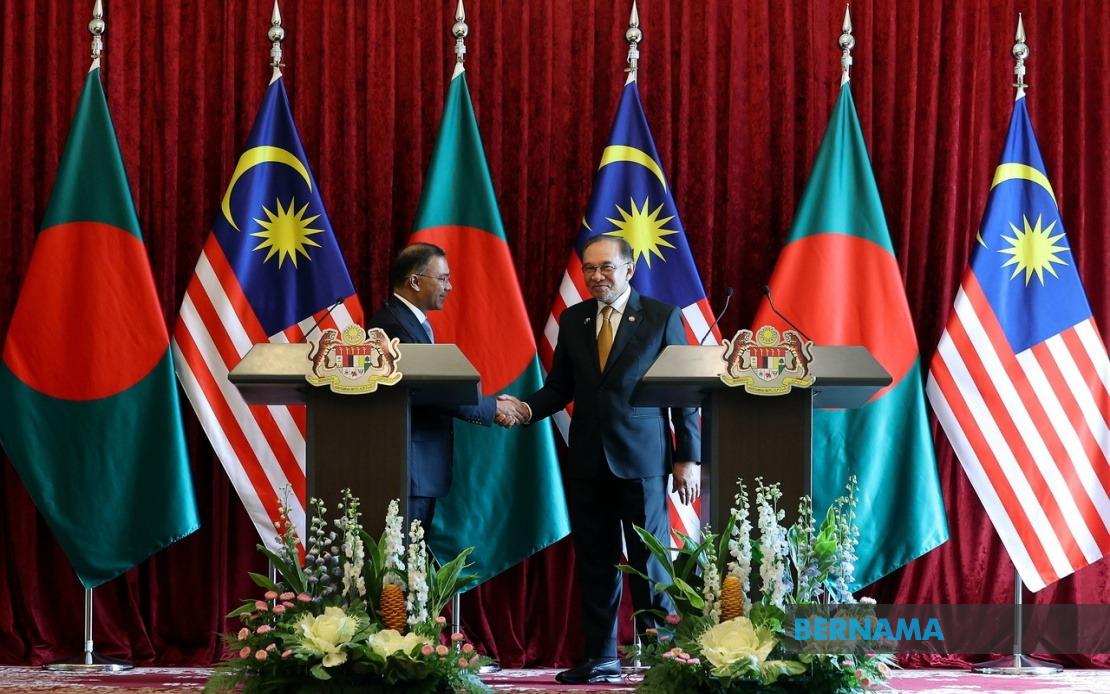
Malaysia and Bangladesh have reached a consensus that the systematic exploitation and mistreatment of migrant workers represents an unacceptable breach of human dignity that both nations must address through coordinated policy reform. Prime Minister Datuk Seri Anwar Ibrahim articulated this commitment during a bilateral meeting with Bangladesh Prime Minister Tarique Rahman in Putrajaya on June 22, emphasising that the relationship between the two countries extends beyond economic transactions to encompass a moral obligation to safeguard vulnerable populations. The joint position signals growing pressure on both governments to move beyond rhetorical gestures towards substantive changes in how foreign labourers are recruited, deployed, and monitored within Malaysia's economic system.
During the press conference, Anwar acknowledged the paradox that has long defined Malaysia's reliance on migrant labour: while foreign workers have proven indispensable to sustaining economic growth across multiple sectors, their presence has simultaneously generated numerous scandals rooted in insufficient oversight and inadequate protection mechanisms. He articulated the need for transformation in how recruitment operates, specifically stressing that the process must become more transparent and equitable, meeting the standards and expectations established by both Malaysia and Bangladesh. This framing suggests official recognition that previous recruitment frameworks have been opaque and potentially exploitative, allowing intermediaries and unscrupulous employers to capture disproportionate benefits while workers bear the costs of structural dysfunction.
The Malaysian Prime Minister emphasised that protecting the welfare of migrant workers and securing the interests of their families represents not merely a humanitarian imperative but a matter of bilateral integrity. By coupling worker protection with family safeguards, Anwar expanded the discourse beyond individual employment relationships to encompass the transnational economic dependence that migration creates. Bangladeshi families often depend on remittances sent home by workers abroad, meaning that exploitation in Malaysia directly undermines economic stability in Bangladesh. This interconnection underscores why the bilateral agreement carries weight: both governments face domestic constituencies whose wellbeing is directly affected by how migrants are treated across borders.
Bangladeshi workers constitute one of Malaysia's largest foreign labour cohorts, particularly in construction, manufacturing, and domestic service sectors where they perform work that Malaysian citizens increasingly avoid. The historical pattern of recruitment abuse—ranging from wage theft and contract switching to physical abuse and restrictions on movement—has created persistent tensions between the two countries. Bangladesh Prime Minister Tarique Rahman utilised the bilateral platform to raise specific economic interests, requesting that Malaysia consider expanding its intake of Bangladeshi workers and accelerating the reopening of its labour market following periods of closure or restriction. This request reflects Bangladesh's significant stake in maintaining and expanding labour export opportunities, which constitute a crucial source of foreign exchange for the national economy.
The context for this agreement extends beyond isolated incidents of worker mistreatment. Malaysia has faced sustained international scrutiny regarding labour practices, including from human rights organisations and foreign governments concerned about conditions in specific industries. The construction sector, in particular, has attracted attention from international media and advocacy groups documenting unsafe working conditions, wage disputes, and cramped living arrangements affecting predominantly foreign workforces. Similarly, domestic workers employed in private households have reported experiences of isolation, excessive working hours, and limited recourse to legal protections. These documented patterns suggest systemic issues rather than aberrations, indicating that transparent recruitment reforms could address root causes of exploitation.
The emphasis on transparency in recruitment carries substantial implications for how Malaysia's labour market functions. Currently, recruitment frequently involves multiple intermediary agents and brokers who extract fees from workers before they even arrive in Malaysia, effectively creating debt bondage scenarios where workers must labour for extended periods simply to repay recruitment costs. A more transparent system would ostensibly reduce opportunities for such exploitation by establishing direct pathways between employers and workers, with government oversight ensuring that fees remain reasonable and terms are clearly documented before departure from Bangladesh. Implementation would require coordination between Malaysian labour authorities and their Bangladesh counterparts, potentially creating bilateral oversight mechanisms capable of monitoring compliance.
For Malaysian employers and sectors dependent on foreign labour, the commitment to reform presents both challenges and potential efficiencies. Industries that have relied on informal, ad-hoc recruitment practices would need to formalise hiring procedures and documentation standards. However, more transparent systems could paradoxically benefit legitimate employers by reducing competition from operators using exploitative practices and ensuring more stable, lower-turnover workforces. Workers who feel their rights are protected and their wages secure prove more productive and committed than those subject to abuse or uncertainty. Regional competitors including Singapore and Thailand have implemented labour standards that, while imperfect, demonstrate that competitive economies can maintain worker protections without sacrificing economic competitiveness.
The political dimension of this agreement merits consideration. Anwar's emphasis on Malaysia taking the lead in reform efforts positions the country as a moral actor willing to confront uncomfortable truths about its economic model. For Bangladesh, securing Malaysia's commitment to fair treatment carries domestic political value, demonstrating to constituents that their government advocates effectively for citizens working abroad. Both leaders face constituencies concerned about migration's social impacts, and addressing documented abuses represents a strategy for managing public opinion around labour export policies that remain economically essential but socially contested.
Practical implementation will determine whether this bilateral agreement translates into meaningful improvements for workers. Establishing independent monitoring mechanisms, creating accessible complaint channels, and ensuring enforcement of standards requires sustained commitment and resource allocation. Malaysia's experience with previous labour policy reforms suggests that translating political commitments into operational change proves difficult without sustained pressure and institutional accountability. The agreement's success will depend on whether follow-up mechanisms are established, whether both governments provide the institutional capacity for oversight, and whether consequences exist for violations of reformed standards.

