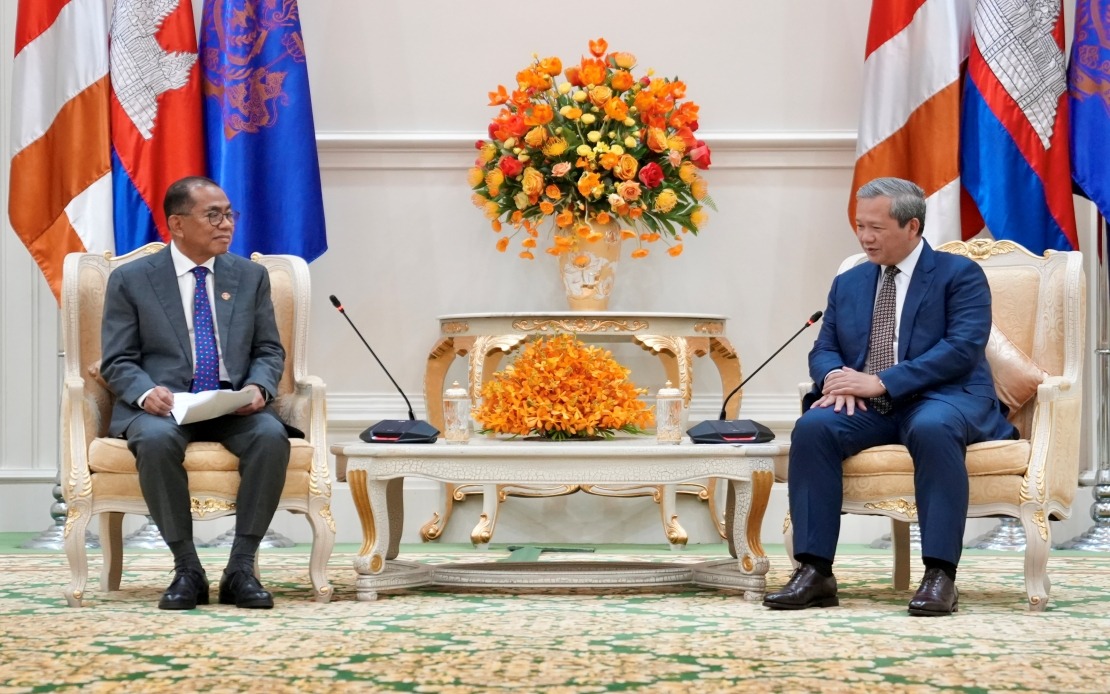
Malaysia and Cambodia are moving to deepen their defence relationship through a comprehensive cooperation framework that reflects broader efforts to strengthen ASEAN's strategic posture amid shifting regional dynamics. Defence Minister Datuk Seri Mohamed Khaled Nordin's recent visit to Phnom Penh underscores this commitment, with discussions centred on finalising a bilateral Defence Cooperation Memorandum of Understanding that will formalise collaborative mechanisms between the two Southeast Asian neighbours.
The proposed MoU represents more than ceremonial diplomacy. For Malaysia, it signals strategic investment in relationships with fellow ASEAN members at a time when the bloc faces mounting pressure to present unified positions on transnational security matters. The agreement comes as Cambodia, historically a focus of ASEAN mediation efforts due to its border complexities, seeks to anchor its defence relationships within the regional framework. Mohamed Khaled's courtesy call on Prime Minister Samdech Thipadei Hun Manet at the Peace Palace demonstrated the diplomatic weight both governments place on this engagement, reflecting recognition that bilateral relationships form the sinews binding ASEAN together.
Central to the discussions was ASEAN centrality—the foundational principle that the regional bloc, rather than external powers, should drive responses to regional challenges. This emphasis carries particular relevance for Malaysia, which despite stepping down from the ASEAN Chair after 2024 remains invested in maintaining the organisation's cohesion and relevance. The conversations touched on persistent flashpoints including Cambodia-Thailand border tensions, where dialogue and peaceful resolution mechanisms remain essential to preventing localized disputes from destabilising broader ASEAN equilibrium. Malaysia's continued backing for the ASEAN Observer Team mechanism demonstrates its preference for multilateral tools that keep disputes contained within regional frameworks rather than inviting external intervention.
The South China Sea Code of Conduct emerged as another critical agenda item, reflecting Malaysia's longstanding concern about finalising rules-based maritime governance in contested waters. By emphasising this with Cambodia, Malaysia reinforces the importance of collective ASEAN action on issues that individually affect each member differently. Cambodia's strategic position in these discussions matters because its cooperation strengthens ASEAN's negotiating position with Beijing, even though Cambodia maintains particularly close ties with China. The emphasis on concluding the COC signals that despite geopolitical divergences, ASEAN states recognise mutual vulnerability to unilateral actions that destabilise regional shipping lanes and resource access.
A notable innovation in the proposed cooperation framework involves emerging security domains that reflect contemporary defence concerns rather than traditional military balance calculations. The inclusion of jungle warfare training acknowledges shared tactical challenges in Southeast Asia's geography, while commitments to collaborate on artificial intelligence and drone technology signal awareness that future security competition centres on technological mastery. These areas assume particular significance for Malaysia, which faces its own capacity-building imperatives while seeking to support ASEAN partners in upgrading defence capabilities. By proposing joint development initiatives rather than purely technology procurement arrangements, Malaysia positions itself as a partner in capability advancement rather than a senior mentor.
The defence industry component merits specific attention for Malaysian stakeholders. Local defence contractors gain potential access to Cambodian opportunities, while the arrangement could catalyse technology transfer and manufacturing partnerships that strengthen Malaysia's defence industrial base. This dovetails with Malaysia's Defence White Paper priorities, which emphasise building credible partnerships that generate mutual economic and strategic benefit. For Cambodia, such cooperation diversifies its defence relationships beyond its traditional partners, creating competitive dynamics that improve terms of engagement across suppliers.
Mohamed Khaled's parallel visit to Vietnam underscores a deliberate diplomatic strategy targeting key ASEAN members simultaneously. Vietnam's prominence as a South China Sea stakeholder and a significant ASEAN military power makes coordination with Hanoi critical for Malaysia's regional strategy. The visits together demonstrate Malaysia's effort to maintain active defence diplomacy even after relinquishing the ASEAN Chair—a signal that leadership roles rotate but commitment to regional architecture persists. This messaging proves important to countries that might fear Malaysia's post-Chair period might see diminished diplomatic engagement.
The timing carries significance as Malaysia and Cambodia approach their 70th diplomatic anniversary in 2027. Mohamed Khaled's explicit reference to this milestone indicates both governments view the current cooperation initiatives as laying groundwork for a sustained strategic relationship spanning multiple decades. Rather than treating anniversaries as retrospective celebrations, both capitals frame them as catalysts for deepening institutional ties. The MoU targets completion during the ASEAN Defence Ministers' Meeting in the Philippines, suggesting coordination among ASEAN defence establishments to synchronise bilateral agreements within the multilateral calendar.
The delegation's composition—including Navy Chief Admiral Tan Sri Zulhelmy Ithnain and Defence Ministry policy leadership—reflected the seriousness with which Malaysia approached these talks. This was not perfunctory engagement but substantive dialogue involving officials responsible for implementing agreed frameworks. For Malaysian defence planning, such visits generate feedback about peer capabilities, operational concepts, and interoperability challenges that shape training doctrines and procurement strategies. Cambodia similarly gains insight into Malaysian defence approaches and positioning within ASEAN security architecture.
From a Malaysian perspective, strengthening Cambodia ties addresses broader strategic objectives. Cambodia's geographic position makes it relevant to regional supply chains and security corridor thinking. Closer defence relationships enhance intelligence sharing potential on transnational threats including trafficking, terrorism financing, and cyber operations. The emphasis on regional mechanisms and dialogue-based approaches reflects Malaysia's preference for rules-based engagement that accommodates all ASEAN members regardless of great power alignment. This positioning allows Malaysia to maintain equidistance from competing strategic camps while advancing parochial interests through collective frameworks.
The focus on peace and stability along the Cambodia-Thailand border highlights persistent vulnerabilities within ASEAN territory that require constant management. Malaysia's support for ceasefire maintenance and peaceful resolution reflects recognition that border conflicts, if unmanaged, draw in external powers and undermine ASEAN unity. By offering its voice and diplomatic weight to supporting Cambodian stability efforts, Malaysia prevents vacuums that might otherwise attract competing external influences.
The Defence White Paper's Third Pillar—Credible Partnerships—provides the intellectual framework for these initiatives. Rather than viewing defence cooperation as zero-sum competition, Malaysia promotes partnerships that enhance collective capability while respecting member autonomy. This approach requires sustained engagement, regular dialogue, and demonstration of reliability in honouring commitments. The visit sequence and agreement trajectories suggest Malaysia is executing this framework methodically, building relationships that accumulate credibility over time rather than seeking dramatic breakthroughs that might prove ephemeral.
Looking ahead, the finalisation of the Malaysia-Cambodia Defence Cooperation MoU will mark concrete progress on multilayered engagement spanning traditional security domains through emerging technological frontiers. The arrangement exemplifies how ASEAN states navigate their strategic complexity by deepening bilateral architectures while maintaining commitment to regional centrality. For Malaysia specifically, such initiatives allow demonstration of strategic purposefulness and regional leadership that sustains influence even when formal ASEAN Chair rotates to other hands.

