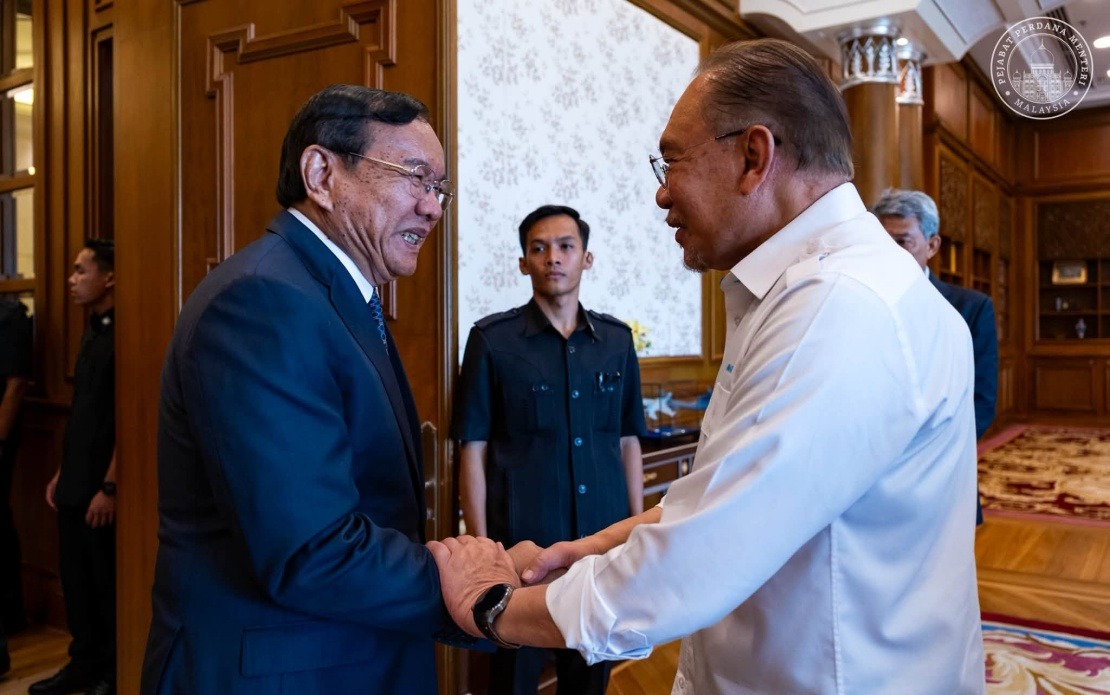
Prime Minister Datuk Seri Anwar Ibrahim has underscored Malaysia's commitment to forging a more expansive partnership with Cambodia, signalling renewed emphasis on bilateral cooperation that extends well beyond traditional diplomatic channels. The announcement comes as Cambodia's Deputy Prime Minister and Minister of Foreign Affairs and International Cooperation Prak Sokhonn touches down in Malaysia for a two-day official visit, marking a significant diplomatic engagement between the neighbouring Southeast Asian nations. During their courtesy meeting, the two leaders outlined an ambitious agenda spanning multiple economic and security domains, reflecting both countries' determination to leverage their geographic proximity and shared ASEAN membership for mutual advancement.
The scope of intended cooperation is notably broad, encompassing emerging sectors that represent the future of economic development in the region. Digital economy initiatives and artificial intelligence development figure prominently in discussions, indicating Malaysia's push to position both nations as competitive players in the technology-driven global marketplace. The halal industry, where Malaysia maintains considerable expertise and market leadership, presents particular opportunities for knowledge transfer and joint ventures that could benefit Cambodian businesses entering this increasingly lucrative sector. Food security, a critical concern for both nations and the broader Southeast Asian region, has also been elevated as a priority area, suggesting coordinated efforts to build resilient agricultural systems and supply chains amid global uncertainties.
Beyond economic considerations, the two governments have identified cross-border crime prevention as a matter requiring enhanced cooperation. This dimension is especially relevant given the porous nature of the Malaysia-Cambodia border and the region's vulnerability to transnational criminal networks involved in human trafficking, drug smuggling, and other illicit activities. Strengthened law enforcement coordination and intelligence sharing could yield significant security benefits for both nations and contribute to broader regional stability. The commitment to human capital development further signals recognition that sustainable prosperity depends on building skilled, educated workforces capable of adapting to rapidly evolving economic landscapes.
Prak Sokhonn's visit serves as the prelude to the Third Malaysia-Cambodia Joint Commission for Bilateral Cooperation meeting, scheduled for August 4. This institutionalised framework provides the formal mechanism through which detailed agreements will be negotiated and existing arrangements reviewed. The JCBC represents a structured approach to bilateral relations, allowing both governments to translate high-level political commitments into concrete operational plans and measurable outcomes. Such joint commissions typically establish working groups focused on specific sectors, establish timelines for implementation, and create accountability mechanisms to ensure follow-through on announced initiatives.
The timing of these discussions carries symbolic weight beyond immediate diplomatic significance. Malaysia and Cambodia will observe the 70th anniversary of their diplomatic relations in 2027, a milestone that presents opportunities for retrospective celebration of shared history and forward-looking projections of future cooperation. This upcoming anniversary provides natural motivation for both governments to demonstrate tangible progress in strengthening ties, ensuring that the relationship remains vibrant and relevant to contemporary challenges and opportunities. The conscious acknowledgment of this forthcoming landmark suggests deliberate strategic planning to ensure bilateral relations continue evolving constructively.
As ASEAN member states, Malaysia and Cambodia share institutional responsibilities that transcend bilateral arrangements. Both nations are signatories to the ASEAN Charter and participants in various regional mechanisms aimed at maintaining peace, respecting international law, and advancing collective prosperity. The reference to ASEAN Community Vision 2045 underscores how bilateral cooperation fits within the broader regional integration project. This framework emphasises the interconnectedness of Southeast Asian economies and the mutual benefits that flow from coordinated regional development strategies, market integration, and enhanced people-to-people connectivity.
The emphasis on preserving peace and strengthening regional unity carries particular resonance in a geopolitical environment marked by great power competition and shifting strategic alignments. Southeast Asia's centrality to Indo-Pacific affairs means that stability and cohesion among ASEAN members becomes increasingly valuable as external powers seek to expand influence in the region. By explicitly committing to peace preservation and regional unity, Malaysia and Cambodia are implicitly affirming their dedication to the ASEAN principle of non-interference and to resolution of disputes through dialogue rather than coercion. This positioning matters not only for bilateral relations but for ASEAN's collective credibility as a cohesive grouping capable of managing regional affairs independently.
For Malaysian stakeholders, the expansion of cooperation across these sectors presents tangible commercial opportunities. Malaysian companies with expertise in digital infrastructure, Islamic financing, halal certification, and agricultural technology could find significant markets in Cambodia's developing economy. Conversely, Cambodian investors interested in accessing broader ASEAN markets or learning from Malaysian operational experience may leverage enhanced bilateral ties to establish regional footholds. The commitment to human capital development might facilitate educational exchanges, professional training programmes, and technical cooperation that benefit individuals and institutions in both countries.
Prime Minister Anwar's public articulation of these partnership goals through social media demonstrates contemporary diplomatic practice, where leaders communicate directly with citizens and international audiences simultaneously. This approach enhances transparency around bilateral negotiations and sets public expectations for measurable progress. The emphasis on mutual benefit and reciprocal advantage—rather than asymmetrical arrangements favouring either party—reflects modern diplomatic norms that emphasise equitable partnerships capable of withstanding domestic political scrutiny in both capitals.
The broader context for these discussions includes Cambodia's own development priorities and strategic orientation within Southeast Asia. As a kingdom navigating complex regional and global relationships, Cambodia's engagement with Malaysia signals commitment to maintaining strong ASEAN bonds while diversifying partnerships. For Malaysia, deepening ties with Cambodia aligns with its regional diplomacy objectives and its positioning as a bridge between developed and developing nations within ASEAN. These discussions ultimately represent practical expression of the principle that Southeast Asian prosperity and stability depend on sustained cooperation among member states willing to invest diplomatic energy and political capital in bilateral relationships that undergird the regional architecture.

