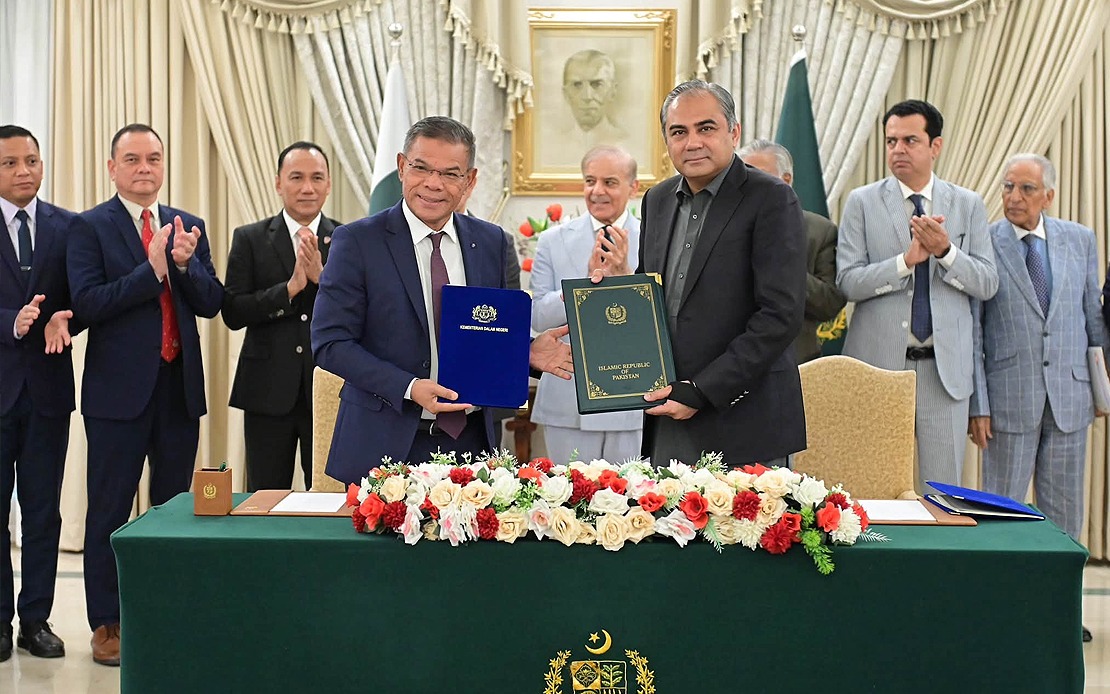
Malaysia and Pakistan have taken a significant step in deepening their bilateral relationship by formalizing the International Transfer of Prisoners Treaty, a legal framework that will reshape how both nations handle inmates with citizenship ties to the other country. Home Minister Datuk Seri Saifuddin Nasution Ismail inked the agreement with Pakistan's Interior and Narcotics Control Minister Syed Mohsin Raza Naqvi during an official visit to Islamabad, with Prime Minister Muhammad Shehbaz Sharif presiding over the signing ceremony at Pakistan's Prime Minister's Office.
The treaty emerges from an extended negotiation process that began in September 2025, involving substantial coordination across Malaysia's institutional framework. Five rounds of talks brought together representatives from the Home Ministry, Foreign Ministry, Attorney General's Chambers, Malaysian Prisons Department, and Royal Malaysia Police, reflecting the complexity of aligning two countries' penal systems and humanitarian objectives. The Malaysian Cabinet formally endorsed the instrument on May 13, signalling the government's commitment to advancing this cooperation.
At its core, the International Transfer of Prisoners framework creates a reciprocal mechanism for prisoner repatriation. Malaysian nationals currently incarcerated in Pakistani facilities may now be transferred back to complete their remaining sentences within Malaysia's correctional system, while Pakistani prisoners serving time in Malaysian prisons gain the corresponding right to be relocated to serve out their sentences in Pakistan. This bilateral arrangement addresses a longstanding gap in the two countries' legal cooperation, particularly for lower-risk offenders and those nearing the end of their sentences.
The humanitarian dimension of the agreement extends beyond mere administrative convenience. Saifuddin Nasution emphasised that the treaty facilitates access to rehabilitation and reintegration programmes tailored to each prisoner's cultural, linguistic, and social context. A Malaysian inmate completing their sentence in Malaysia can benefit from programmes designed around local values and expectations, potentially improving rehabilitation outcomes and easing reintegration into their home communities. Similarly, Pakistani prisoners returning to Pakistan gain access to facilities and support systems aligned with their own cultural framework, addressing the psychological toll that prolonged imprisonment in a foreign environment can inflict.
For Malaysia, the agreement carries particular significance given the substantial populations of Pakistani nationals in the country and Malaysian expatriates across Pakistan. The two nations maintain historically close ties rooted in shared Islamic heritage, Commonwealth membership, and complementary regional interests. By institutionalising prisoner transfer mechanisms, both governments demonstrate a maturation of their legal framework beyond trade and diplomatic protocols into the more sensitive terrain of justice administration and humanitarian treatment.
The treaty also reflects broader regional trends toward harmonising criminal justice procedures among South and Southeast Asian nations. As regional migration patterns intensify and cross-border movement increases, countries increasingly recognise that bilateral agreements governing prisoners serve multiple objectives: reducing the burden on overcrowded prisons, enabling more effective rehabilitation, and facilitating the reintegration of offenders into their home societies. Malaysia's engagement with Pakistan on this issue positions the country within a progressive regional framework.
From a security perspective, the agreement incorporates built-in safeguards that protect both nations' interests. The treaty likely includes provisions governing which prisoners are eligible for transfer, ensuring that dangerous offenders or those convicted of serious crimes remain within the jurisdiction of the sentencing country. Risk assessment protocols and security classifications presumably determine transfer eligibility, preventing the mechanism from becoming an inadvertent loophole for serious offenders.
The timing of this agreement carries additional importance given evolving migration patterns in Southeast Asia and South Asia. As both Malaysia and Pakistan manage diverse inmate populations with transnational dimensions, the treaty provides a structured pathway for managing these cases humanely while maintaining security standards. For Malaysian policymakers, the agreement demonstrates effective diplomatic engagement that translates into tangible improvements in bilateral administration.
Saifuddin Nasution characterised the treaty as emblematic of Malaysia and Pakistan's commitment to deepening security and legal cooperation. Beyond the immediate practical benefits for prisoner management, the agreement signals both countries' willingness to engage constructively on sensitive matters affecting their populations. It adds to the expanding portfolio of legal instruments governing Malaysia-Pakistan relations, complementing existing frameworks on extradition, mutual legal assistance, and security cooperation.
The execution of this treaty underscores how bilateral diplomacy addresses real challenges facing citizens in both countries. For Malaysian families with relatives imprisoned in Pakistan, the framework offers the possibility of bringing loved ones closer to home and support networks. For Pakistan, the reciprocal arrangement ensures its nationals gain comparable treatment and opportunities for rehabilitation within Malaysia's system. Moving forward, the treaty's implementation will require coordination between both countries' prisons authorities, legal agencies, and social services to ensure smooth execution and genuine humanitarian benefit.

