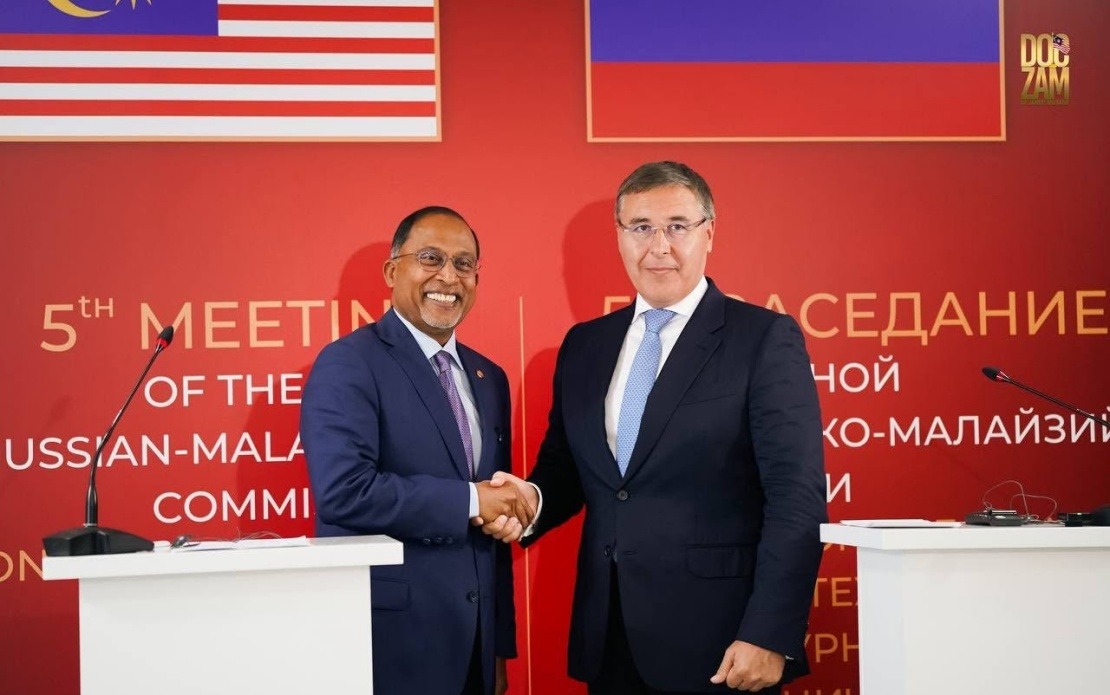
Malaysia and Russia have committed to finalising their 2027 Joint Action Plan before the year concludes, signalling a renewed push to transform longstanding diplomatic relations into tangible collaborative frameworks. Higher Education Minister Datuk Seri Dr Zambry Abd Kadir made this announcement following the Fifth Meeting of the Malaysia-Russia Joint Commission for Economic, Scientific, Technical and Cultural Cooperation, which took place in Vladivostok with Zambry co-chairing alongside Russian Minister of Science and Higher Education Valery Falkov. The timing of this agreement reflects both nations' desire to capitalise on strengthened political ties at the highest levels, particularly given recent engagements involving His Majesty Sultan Ibrahim, King of Malaysia, Russian President Vladimir Putin and Prime Minister Datuk Seri Anwar Ibrahim.
The bilateral relationship has reached a juncture where strategic intent must be converted into operational reality. By establishing a comprehensive Joint Action Plan for 2027, Malaysia and Russia aim to create structured pathways for cooperation that extend beyond ceremonial exchanges. This approach demonstrates a maturation in how the two countries view their partnership—not merely as a diplomatic courtesy, but as a vehicle for mutual economic and social advancement. The emphasis on results-oriented cooperation suggests both parties recognise the need to move past historical patterns of limited engagement and establish enduring institutional frameworks.
In the sphere of higher education, Russia will sustain its commitment to providing 40 government scholarships annually to Malaysian students, ensuring a steady pipeline of talent exchange between the nations. This consistent commitment underscores Russia's investment in building people-to-people connections with Malaysia. Beyond scholarships, both countries have endorsed several forward-looking initiatives that promise to deepen academic integration. The proposed Malaysia-Russia Rectors' Forum in 2027 would bring together university leadership from both nations to discuss strategic educational priorities. Concurrently, the expansion of the MAI-UniKL Russian Aerospace Programme signals intent to develop specialised technical expertise within Malaysia's higher education ecosystem, positioning the country as a regional hub for advanced aerospace training.
Youth development emerged as another priority area, with both sides endorsing the Malaysia-Russia Youth Leadership Summer Camp as a mechanism for cultivating the next generation of bilateral relations. Such initiatives go beyond conventional student exchanges by intentionally fostering leadership competencies and cross-cultural understanding among young professionals and academics. The collaborative networks expected to emerge from these programmes may yield innovations and partnerships that extend well beyond the formal institutional framework, creating organic linkages between Malaysian and Russian scientific and academic communities.
Trade and agricultural cooperation represent equally significant dimensions of the renewed partnership. Both nations are exploring mechanisms to expand market access and strengthen commercial ties, with particular emphasis on fertiliser supply—including urea—to bolster Malaysia's food security objectives. This focus reflects a pragmatic recognition that Russia possesses substantial agricultural resources whilst Malaysia faces periodic challenges in ensuring stable domestic food supply. The Russia-Malaysia Raw Materials Dialogue, another newly proposed initiative, suggests both countries see potential in developing structured discussions around raw materials sourcing, processing and value-chain integration. Such dialogues could yield efficiency gains and reduce Malaysia's vulnerability to global supply chain disruptions.
Strategic sector cooperation has been significantly expanded to encompass artificial intelligence, digital technology, smart cities and information security—domains that are reshaping geopolitical competition and economic opportunity in the twenty-first century. By establishing collaborative frameworks in these areas, Malaysia positions itself to access Russian expertise whilst offering its own strengths in digital commerce and fintech innovation. The inclusion of telecommunications, renewable energy, and liquefied natural gas and liquefied petroleum gas cooperation reflects both nations' interest in energy security and sustainability. Notably, both sides have also begun exploring cooperation in peaceful nuclear energy applications, though this remains subject to respective legal and regulatory requirements, indicating a cautious but genuine willingness to engage even in sensitive technological domains.
Financial cooperation has emerged as a cross-cutting theme, with Bank Negara Malaysia and the Bank of Russia now actively exploring enhanced coordination. Labuan's potential role as an international financial centre and gateway to ASEAN presents opportunities for both nations to leverage Malaysia's regional position. The explicit mention of Islamic finance and digital assets signals Russia's recognition of Malaysia's distinctive strengths and the importance of tailoring cooperation frameworks to complement rather than duplicate existing capabilities. This differentiated approach to financial partnerships demonstrates strategic maturity in bilateral relations.
Three formal cooperation agreements were exchanged during the meeting, cementing institutional foundations for sustained engagement. The partnerships between Universiti Teknologi MARA and the National Research University Moscow Power Engineering Institute address energy and infrastructure challenges relevant to both nations. Similarly, collaborations between UiTM and the Institute of Experimental Medicine, as well as between Universiti Tun Hussein Onn Malaysia and the State University of Land Use Planning, reflect Russia's capacity to contribute expertise across diverse technical and applied fields. These institutional linkages provide durable mechanisms for cooperation that transcend individual political cycles or diplomatic fluctuations.
Cultural and creative economy cooperation has also been expanded, alongside healthcare, transport, green technology and climate change initiatives. This breadth reflects a holistic vision of bilateral relations that recognises interdependence across multiple domains. The inclusion of space sector cooperation hints at Malaysia's aspirations to participate in emerging technological frontiers where Russia possesses considerable expertise and infrastructure.
The decision to host the sixth Joint Commission meeting in Malaysia in 2027 carries symbolic significance beyond logistical convenience. This timing coincides with the 60th anniversary of Malaysia-Russia diplomatic relations, creating an opportunity for both nations to reflect on six decades of engagement whilst charting future directions. By hosting, Malaysia positions itself as an active architect of the bilateral relationship rather than a passive recipient of Russian initiatives. This reflects the country's increasing confidence in its ability to set regional diplomatic agendas and convene international partnerships.
For Malaysia and Southeast Asia more broadly, this commitment to structured bilateral cooperation with Russia represents a strategic hedging approach amid complex geopolitical competition. Rather than positioning itself exclusively within any single bloc, Malaysia is deliberately cultivating multifaceted partnerships that serve national economic and security interests. The emphasis on education, technology transfer and trade diversification demonstrates recognition that long-term prosperity requires access to multiple centres of technological innovation and economic opportunity.
The success of this framework will ultimately depend on implementation fidelity over the coming months and years. Bilateral agreements often falter when political attention wanes or institutional mechanisms prove insufficient to translate intentions into concrete outcomes. However, the specificity of these commitments—from scholarship numbers to named institutions to proposed forums—suggests both parties have invested considerable thought into making these arrangements operationally viable. As Malaysia works with Russia to complete the 2027 Joint Action Plan by year-end, observers should watch for evidence that announced initiatives are not merely ceremonial but are attracting genuine institutional and financial commitment from both governments.

