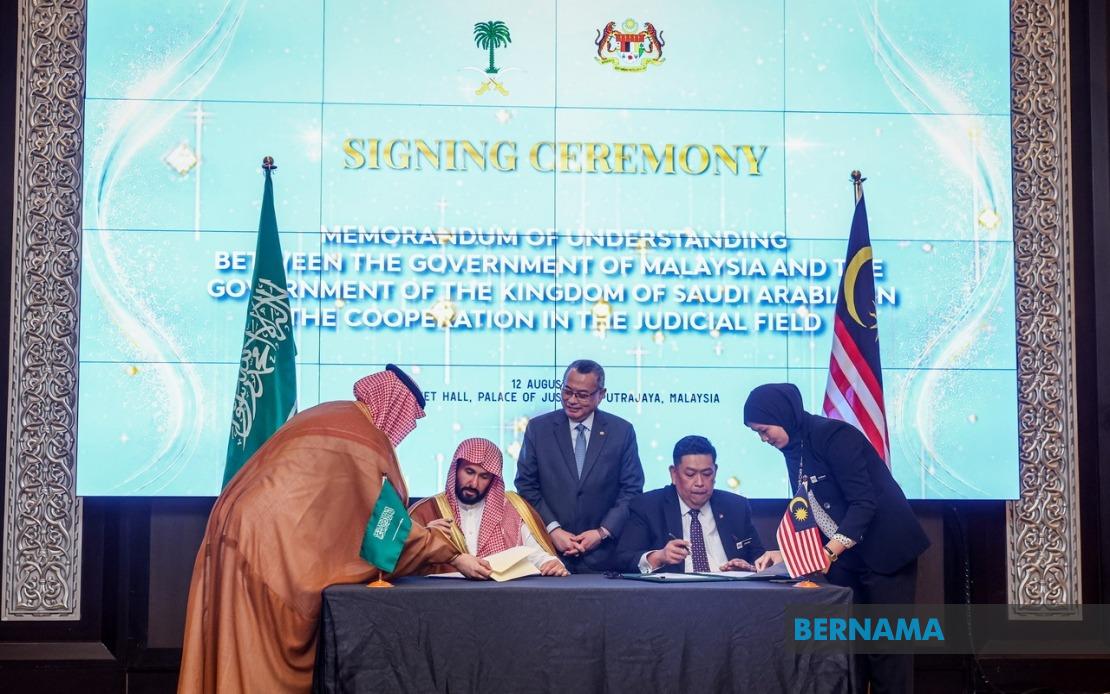
Malaysia and Saudi Arabia have taken a significant step towards deepening their institutional ties by signing a memorandum of understanding aimed at bolstering cooperation across their respective judicial systems. The agreement was formalised at the Palace of Justice in Putrajaya, where Chief Registrar of the Federal Court Azhaniz Teh Azman Teh and Saudi Arabian Minister of Justice Sheikh Dr Waleed Mohammed Alsmani affixed their signatures to the document. Chief Justice Tun Wan Ahmad Farid Wan Salleh witnessed the signing, underscoring the importance Malaysia's judicial leadership places on this bilateral engagement.
The MoU establishes a comprehensive framework encompassing several dimensions of judicial collaboration. Rather than limiting cooperation to formal legal channels, the agreement creates pathways for substantive knowledge exchange in civil case management, technological advancement within court systems, and the systematic sharing of publicly available judicial information. This multi-faceted approach reflects recognition by both nations that modern judiciaries benefit from cross-border learning and institutional best practices. The inclusion of provisions for institutional visits and regular exchanges suggests a commitment to building personal relationships between judicial officials, which often prove invaluable in fostering genuine collaboration beyond bureaucratic formalities.
The timing and nature of Sheikh Dr Waleed's visit to Malaysia demonstrates the strategic importance both governments place on judicial relations. For Saudi Arabia, engaging with Malaysia's judicial framework offers insights into how an Islamic-majority nation with constitutional safeguards operates its court system. Conversely, Malaysia gains valuable perspectives from one of the world's largest economies in the Middle East and a key player in Islamic finance and governance structures. This reciprocal learning dynamic positions both nations to strengthen their respective judiciaries while maintaining the unique characteristics of their legal systems.
A particularly noteworthy dimension of this cooperation involves Malaysia's approach to protecting children from sexual offences. The judicial dialogue conducted during the visit specifically focused on how Malaysian courts handle such cases, suggesting that Saudi Arabia views Malaysia's jurisprudence and procedural mechanisms in this sensitive area as worthy of study. For Malaysia, sharing its experiences in child protection cases reflects confidence in its judicial approach and positions the country as a regional knowledge hub on vulnerable persons protections within the legal framework. This thematic focus also indicates that both nations recognise child safety as a shared priority transcending cultural and geographical boundaries.
The emphasis on digitalisation and e-Court systems within the MoU framework reflects contemporary global trends reshaping the judiciary. Malaysia's experience with its e-Court system, which has streamlined case filing, management, and tracking, offers Saudi Arabia a tested model for technological modernisation. The integration of digital systems into judicial operations enhances transparency, reduces delays, and improves access to justice for ordinary citizens. By formalising cooperation in this area, Malaysia enables Saudi Arabia to benefit from lessons learned during the Malaysian system's implementation, potentially accelerating similar developments in the Saudi context while avoiding common implementation pitfalls.
For Malaysian judicial observers, this agreement represents validation of the country's standing as a sophisticated judiciary within the Muslim-majority world. Despite Malaysia's relatively modest size compared to Saudi Arabia, the bilateral focus on Malaysia's specific methodologies in child protection and digital court management affirms that judicial excellence transcends economic scale. This development could enhance Malaysia's reputation as a destination for judicial delegations and study missions from other nations seeking to modernise their court systems while maintaining cultural and religious values.
The broader context of Malaysia-Saudi Arabia relations extends beyond this singular judicial agreement. The two nations maintain longstanding ties rooted in shared Islamic heritage, economic partnerships, and diplomatic engagement. The judicial MoU represents an evolution in bilateral relations from trade and political dimensions into institutional cooperation affecting the daily lives of citizens through the justice system. As both nations grapple with challenges ranging from case backlogs to technological disruption, structured cooperation enables them to develop solutions collaboratively rather than in isolation.
The implications for Southeast Asia warrant consideration as well. Malaysia's role as a bridging nation between Islamic institutional frameworks and Western-influenced common law traditions positions it uniquely to facilitate knowledge transfer across different judicial systems. When Malaysia successfully demonstrates international judicial cooperation, it encourages other ASEAN neighbours to pursue similar arrangements, potentially strengthening the region's collective capacity for justice administration. Furthermore, bilateral judicial cooperation between Malaysia and a major Middle Eastern power subtly reinforces Malaysia's positioning as a regional legal centre with international credibility.
Moving forward, the success of this MoU will largely depend on implementation mechanisms and resource allocation. While the framework is comprehensive, translating agreed cooperation into tangible institutional changes requires sustained commitment from both judiciaries. Malaysia's Chief Registrar's office statement expressing readiness to advance the MoU's objectives suggests serious intent, but monitoring will determine whether actual exchanges and technology transfers occur or whether the agreement remains primarily symbolic. For Malaysian stakeholders including legal professionals, civil society, and citizens relying on court services, the genuine test will be whether international cooperation ultimately contributes to more efficient, transparent, and accessible justice systems.

