%22%2F%3E%3C%2Fpattern%3E%3C%2Fdefs%3E%3Crect%20width%3D%22100%25%22%20height%3D%22100%25%22%20fill%3D%22url(%23ph1p18qg)%22%2F%3E%3Crect%20width%3D%22100%25%22%20height%3D%22100%25%22%20fill%3D%22url(%23ph1p18qp)%22%2F%3E%3Ctext%20x%3D%2250%25%22%20y%3D%2250%25%22%20text-anchor%3D%22middle%22%20dominant-baseline%3D%22central%22%20fill%3D%22rgba(255%2C255%2C255%2C0.95)%22%20font-family%3D%22Georgia%2C%20'Times%20New%20Roman'%2C%20serif%22%20font-weight%3D%22700%22%20font-size%3D%22170%22%20letter-spacing%3D%22-0.02em%22%3EMalaysia%3C%2Ftext%3E%3C%2Fsvg%3E)
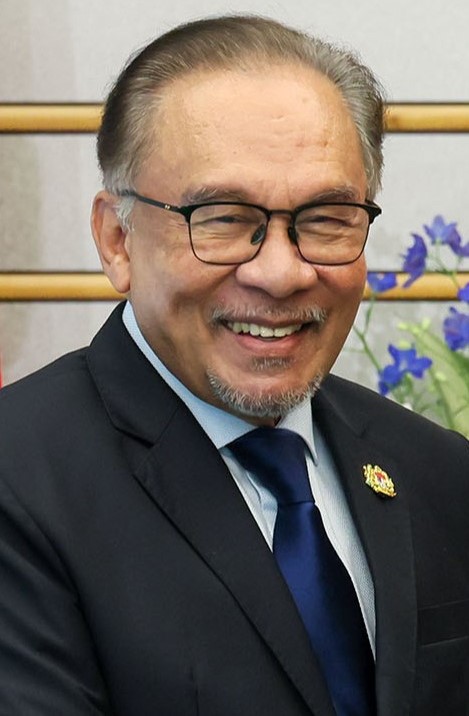
Prime Minister Datuk Seri Anwar Ibrahim has signalled Malaysia's intention to significantly deepen its engagement with the Republic of Tatarstan, identifying a broad spectrum of collaborative opportunities that could yield tangible economic and strategic benefits for both nations. During a bilateral meeting with Tatarstan's leader Rustam Minnikhanov in Kazan on Tuesday, Anwar outlined potential areas spanning trade, investment, education, tourism, the halal industry, technology and human capital development — a framework that reflects Malaysia's diversified approach to international partnership-building.
The energy sector emerged as a particularly compelling focal point for the two-day working visit, given Tatarstan's significance as one of Russia's principal oil-producing regions. Anwar, who concurrently holds the Finance Ministry portfolio, emphasised that discussions centred on the full spectrum of petroleum cooperation, from upstream extraction through to downstream refining and petrochemicals manufacturing. This alignment of interests carries strategic weight for Malaysia's own energy security and industrial development objectives, particularly as the nation seeks to strengthen its position within regional and global energy supply chains. The emphasis on downstream activities and petrochemical processing suggests Anwar's administration views Tatarstan not merely as a resource supplier but as a partner in value-added industrial integration.
Beyond the energy nexus, the bilateral discourse extended to the Kazan Forum's potential role as a catalyst for business connectivity and economic innovation. Both leaders recognised the platform's utility in fostering opportunities within emerging domains including the digital economy, innovation ecosystems and strategic investment flows. For Malaysia, such engagement aligns with broader national initiatives aimed at diversifying economic partnerships beyond traditional regional anchors and positioning the country as a hub for cross-continental business linkages. The conversation underscores a diplomatic strategy whereby economic pragmatism intersects with institutional frameworks designed to generate lasting commercial relationships.
Anwar's acknowledgment of Kazan's designation as the Islamic World Cultural Capital 2026 by the Islamic World Educational, Scientific and Cultural Organisation carries symbolic and substantive implications. This recognition reflects Kazan's historical standing as a centre of Islamic scholarship, culture and intellectual innovation — attributes that resonate with Malaysia's own identity as a Muslim-majority nation invested in advancing Islamic civilisational discourse. By endorsing this designation, Anwar signalled Malaysia's interest in participating within broader networks of Islamic cultural and educational exchange, potentially creating pathways for institutional partnerships between Malaysian and Tatarstan-based universities, research centres and cultural organisations.
The Prime Minister further commended Russian President Vladimir Putin's strategic vision in establishing the Strategic Vision Group, characterising it as a consequential institutional mechanism for bridging dialogue between Russia and the Islamic world. This appreciation reflects Malaysia's recognition that effective multilateral engagement requires formal structures capable of sustaining substantive dialogue across ideological and geopolitical boundaries. For Malaysia, which maintains its own diplomatic balancing act between Western and non-aligned spheres, such institutional frameworks hold operational relevance in furthering nuanced foreign policy objectives.
Anwar's delegation to Kazan, comprising Investment, Trade and Industry Minister Datuk Seri Johari Abdul Ghani and Economy Minister Akmal Nasrullah Mohd Nasir alongside senior officials, reflects the multidimensional nature of the engagement. The ministerial composition signals that Malaysia approaches this partnership not as a symbolic diplomatic exercise but as a substantive economic initiative requiring coordinated action across trade, industrial and institutional portfolios. The inclusion of economic and trade-focused ministerial representation indicates concrete follow-through mechanisms are anticipated to operationalise the collaborative framework discussed at the bilateral level.
The visit occurs within the context of the ASEAN-Russia Commemorative Summit, representing the apex diplomatic engagement between the Southeast Asian bloc and Moscow. This summitry reflects a relationship architecture that has evolved considerably since 1991, when formal dialogue relations commenced. Russia's elevation to full ASEAN Dialogue Partner status in 1996 and subsequent elevation to Strategic Partnership standing in 2018 underscores the progressive institutionalisation of engagement across political-security, economic and socio-cultural dimensions. For Malaysia, as a leading ASEAN economy, facilitating bilateral depth within this multilateral framework allows leveraging regional institutional weight while pursuing specific national interests.
Kazan's geographic positioning — approximately 800 kilometres east of Moscow at the confluence of the Volga and Kazanka rivers — and its status as Russia's tertiary capital after Moscow and Saint Petersburg underscore its significance as a sophisticated commercial and cultural hub. With a population exceeding 1.3 million and a history spanning more than a millennium, Kazan represents a gateway to broader Russian economic and institutional networks while embodying a distinctive Islamic cultural dimension. For Malaysian investors and businesses, the city's infrastructure development, entrepreneurial ecosystem and historical role as a centre of Islamic scholarship create multiple entry points for engagement.
The timing of Anwar's bilateral engagement preceding the ASEAN-Russia summit proper reflects diplomatic sequencing designed to establish bilateral momentum before collective regional negotiations commence. By securing preliminary understandings on cooperation frameworks with key regional actors like Tatarstan before the broader summit discussions, Malaysia positions itself strategically within ASEAN's collective negotiating posture. This bilateral-to-multilateral progression exemplifies sophisticated diplomatic choreography whereby national interests are advanced through layered engagement across different institutional levels.
Looking ahead, the cooperation framework articulated during the Anwar-Minnikhanov meeting will likely require operationalisation through working groups, business councils and institutional partnerships. The breadth of identified cooperation areas — spanning energy, education, tourism, halal certification and technology transfer — suggests an intent to develop mutually reinforcing economic relationships resistant to single-sector volatility. For Malaysian stakeholders in energy, manufacturing and service sectors, the articulated framework creates potential inroads into Tatarstan's economy while positioning Tatarstan-based enterprises within Malaysia's regional supply chains and investment ecosystems.
The bilateral engagement also carries indirect implications for Malaysia's broader strategic positioning vis-à-vis Russia and the European dimension of Russian interests. As geopolitical tensions persist between Russia and Western powers, Malaysia's willingness to engage substantively with Russian regional partners demonstrates commitment to non-aligned foreign policy principles while pursuing pragmatic economic cooperation divorced from ideological alignment. This positioning allows Malaysia to maintain relationships spanning divergent geopolitical camps — a diplomatic flexibility increasingly valuable within multipolar international structures. The Tatarstan visit exemplifies how bilateral economic engagement can coexist with strategic autonomy in broader international alignments.
The partnership potential outlined during the bilateral meeting reflects broader trends whereby emerging and developing economies seek diversified economic partnerships to enhance resilience and growth prospects. Malaysia's engagement with Tatarstan, rather than representing departure from established partnerships, represents strategic portfolio diversification — extending Malaysia's economic and institutional reach into new geographic and sectoral domains. As the international economic landscape continues fragmenting along various vectors, such expanded partnerships become increasingly valuable for mid-sized economies seeking to maintain growth trajectories and economic influence.