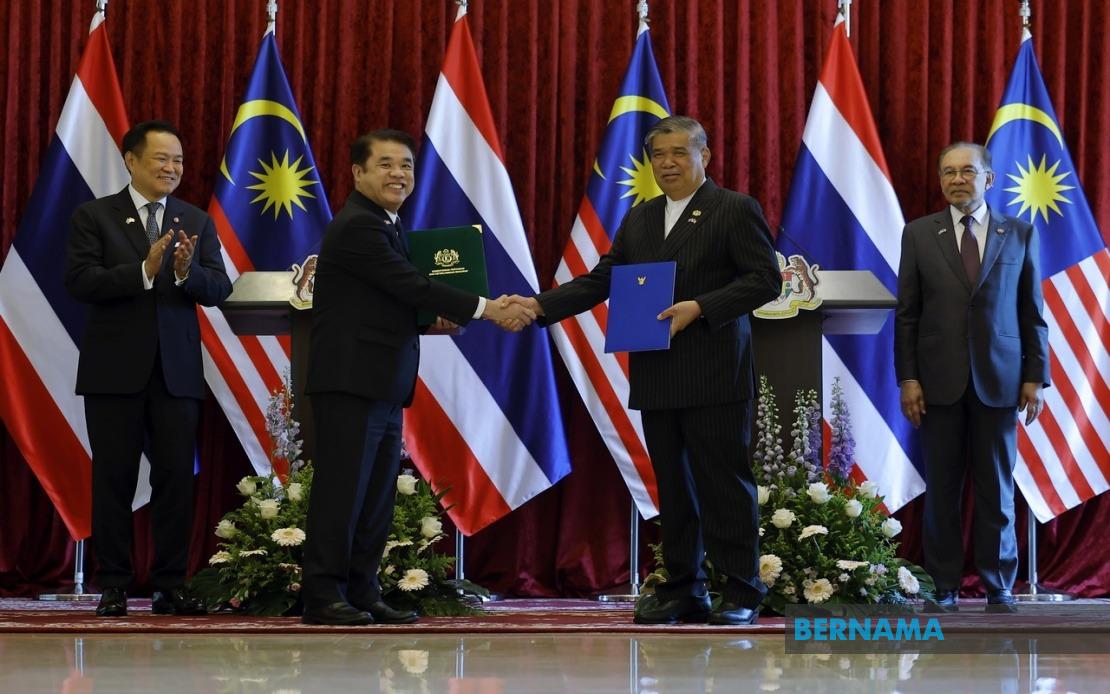
Thai Prime Minister Anutin Charnvirakul's official visit to Malaysia this week culminated in a significant expansion of bilateral agricultural ties, marking a strategic realignment in how the two nations approach regional food security and economic integration. The centrepiece of the visit was the signing of a broad memorandum of understanding between Anutin and Malaysian Prime Minister Datuk Seri Anwar Ibrahim, witnessed at the Malaysian Prime Minister's Office in Putrajaya. The framework signals an intentional shift towards treating agriculture not merely as a commodity trade issue, but as a foundational pillar of economic cooperation and mutual prosperity across Southeast Asia's most economically developed economies.
The memorandum encompasses an unusually wide spectrum of agricultural activity, from traditional crop and livestock production through to advanced research and technology development. Critically, the agreement includes explicit provisions for human resource development, suggesting both governments recognise that sustainable agricultural growth requires investment in technical expertise and knowledge transfer rather than simply opening borders to raw commodities. Thai Government spokesperson Ratchada Thanadirek emphasised that fisheries cooperation would extend beyond current practices, with dedicated focus on improving technical capabilities and productivity standards across the sector.
Perhaps the most tangible immediate outcome of the talks was the resolution of contentious market access issues that have periodically strained bilateral relations. The two countries have long battled over trade conditions affecting shrimp and barramundi exports, with protectionist sentiment on both sides creating friction despite the countries' complementary production capacities. By tasking their respective agriculture ministers with expediting implementation of agreed measures, Anutin and Anwar appear to have bypassed potential bureaucratic delays that have historically complicated such agreements. The commitment to address farmers' concerns directly suggests both leaderships understand that agricultural communities in border regions carry disproportionate political weight and deserve priority attention.
The resolution of these fisheries disputes holds particular significance for Malaysian farmers and processors, who have long sought clearer, more favourable terms for accessing Thai markets. Similarly, Thai producers have faced Malaysian import restrictions that, while ostensibly motivated by food safety and quality concerns, have occasionally appeared protectionist in nature. The new framework provides both sides with mechanisms to address grievances through structured ministerial engagement rather than ad hoc negotiations, potentially reducing future disputes and creating predictability for agribusiness investors in both nations.
Beyond agriculture, the two governments articulated an ambitious vision for overall bilateral cooperation that extends into trade, investment, tourism, infrastructure and security architecture. The joint commitment to achieving US$30 billion in bilateral trade represents a significant target, though observers note this figure has been referenced before without being fully realised. More substantially, both nations have pledged to strengthen supply chain cooperation specifically in food security, energy and high-technology sectors, recognising that regional competitiveness increasingly depends on integrated rather than isolated production systems.
The timing of the agreement takes on added significance given Thailand and Malaysia's stated intention to mark the 70th anniversary of their diplomatic relationship in 2027. By working now to conclude outstanding memoranda of understanding and deepen institutional connections, both governments appear intent on creating a legacy of cooperation that transcends individual political administrations. This longer-term perspective suggests confidence that the relationship can weather periodic trade disputes and domestic political pressures that sometimes create friction in Southeast Asian bilateral relations.
For Malaysian policymakers, the expanded agricultural cooperation framework offers several strategic benefits. First, it diversifies Malaysia's agricultural import sources and creates opportunities for Malaysian agribusiness to scale operations in response to increased market access in Thailand. Second, the emphasis on technology transfer could help Malaysian farmers adopt more efficient production methods, potentially improving competitiveness in regional and global markets. Third, the resolution of fisheries trade disputes removes an irritant that has occasionally complicated broader Malaysian-Thai relations, allowing both governments to focus on deeper economic integration.
Anutin's visit, his first bilateral trip to Malaysia since his reappointment in March 2026, suggests that Thai leadership sees Malaysia as a priority partner in regional economic architecture. The two-day itinerary, which includes a joint visit to Bukit Kayu Hitam in Kedah to inaugurate a critical border infrastructure facility, underscores the practical dimension of the partnership. The opening of the road linking the Immigration, Customs, Quarantine and Security (ICQS) Complex in Bukit Kayu Hitam with the Thai Customs, Immigration and Quarantine (CIQ) Complex in Sadao represents tangible progress on cross-border facilitation, an area where bureaucratic efficiency directly translates to reduced business costs and faster agricultural product transit.
For Malaysian consumers and food security planners, the enhanced cooperation framework carries practical implications. Improved Thai agricultural imports, whether fresh produce, processed foods or seafood products, could contribute to price stability and product diversity in Malaysian markets. The emphasis on food security cooperation aligns with regional concerns about supply chain vulnerabilities that became apparent during global disruptions in recent years. By binding Malaysian and Thai food systems together through formal mechanisms and technology sharing, both nations create buffers against external shocks that might otherwise create scarcity or price volatility.
The infrastructure dimension merits particular attention from Malaysian development specialists. The cross-border ICQS and CIQ facilities at Bukit Kayu Hitam represent more than symbolic gesture; they embody the practical reality that agricultural trade between neighbouring nations only flourishes when physical and administrative infrastructure supports rapid, efficient movement of perishable goods. The joint inauguration signals both governments' commitment to removing logistical bottlenecks that have historically plagued Malaysia-Thailand trade despite geographical proximity and complementary production profiles.
For the broader Southeast Asian region, the deepened Malaysia-Thailand agricultural partnership carries implications beyond bilateral commerce. As the region grapples with food security challenges arising from climate change, population growth and resource constraints, successful models of agricultural cooperation between major economies become templates for others. The emphasis on research, technology transfer and human resource development suggests both nations view agricultural modernisation as critical to regional stability and prosperity rather than merely as tradeable commodity sectors.
The visit concludes a period of consolidation in Thai-Malaysian relations, with both governments demonstrating capacity to resolve technical disputes while simultaneously pursuing more ambitious integration goals. The commitment to implementing agreed measures swiftly, coupled with Anutin's directive to relevant agencies to conclude outstanding memoranda before the 2027 anniversary, suggests this cooperation framework will be tested and refined through practical application over coming months. For Malaysian stakeholders in agriculture, fisheries and related sectors, the incoming period presents both opportunities and obligations to demonstrate that enhanced market access translates into tangible benefits for producers and consumers alike.

