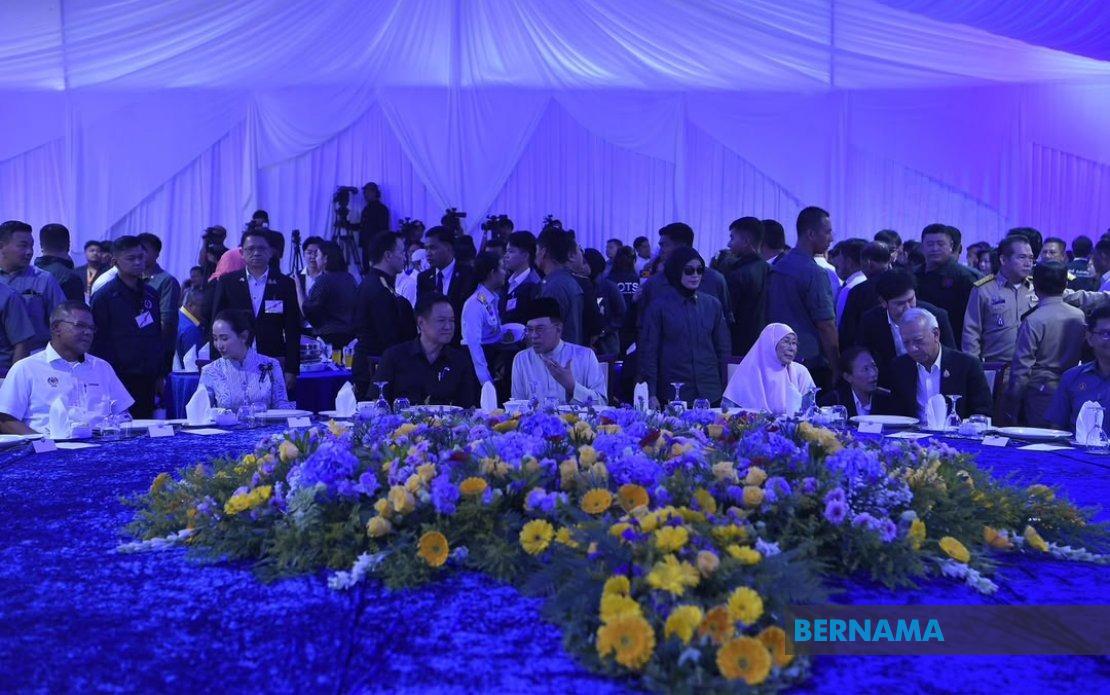
Prime Minister Datuk Seri Anwar Ibrahim and Thai Prime Minister Anutin Charnvirakul jointly opened a new highway connecting Malaysia's Bukit Kayu Hitam Immigration, Customs, Quarantine and Security Complex with Thailand's Sadao Customs, Immigration and Quarantine Complex on July 10, marking a significant upgrade to one of Southeast Asia's busiest land border crossings. The ceremonial launch underscores the deepening strategic partnership between the two neighbouring nations and their commitment to modernising critical infrastructure that facilitates the movement of people, goods, and services across their shared frontier.
The completion of this new road represents more than a simple infrastructure upgrade; it embodies the evolving relationship between Malaysia and Thailand in managing transnational mobility and cross-border commerce. The facility opens to general traffic at 6 am Malaysian time on July 11, while the existing Bukit Kayu Hitam-Danok border crossing permanently closes from midnight the same day. This coordinated transition ensures minimal disruption to the thousands of daily commuters, traders, and tourists who depend on this vital economic corridor connecting Thailand's southern provinces to Malaysia's western coast.
According to the Home Ministry, the new road symbolises the commitment both governments share in advancing diplomatic relations and establishing modern border management systems that enhance regional stability. The infrastructure project reflects collaborative efforts spanning multiple government agencies, enforcement bodies, and strategic partners across both nations. By consolidating border operations into a single, state-of-the-art facility, Malaysia and Thailand demonstrate their mutual recognition that seamless, efficient cross-border infrastructure directly contributes to prosperity and security for their citizens.
The initiative aligns squarely with Malaysia's MADANI framework, which prioritises modernisation and institutional advancement across the public sector. The Home Ministry has signalled its intention to continue investing in border infrastructure that incorporates contemporary technology and integrated control systems, positioning Malaysia's entry points as examples of transparent, efficient, and secure frontier operations. This approach extends beyond mere convenience; modern integrated facilities reduce smuggling, enhance disease prevention, and streamline legitimate trade by minimising clearance times and bureaucratic friction.
Regionally, the new crossing strengthens the ASEAN North-South Economic Corridor, a strategic initiative designed to enhance connectivity across the bloc. Malaysia, as a key node in this network, benefits significantly from improved infrastructure that reduces logistics costs and travel times. Thai traders accessing Malaysian markets, and Malaysian exporters reaching markets deeper into Thailand and Indochina, gain tangible competitive advantages through faster, more predictable border processing. The facility's modern design integrates quarantine facilities with customs and immigration, allowing simultaneous processing of cargo and passengers in ways previous systems could not accommodate.
The economic implications extend well beyond the immediate border region. Northern Malaysian states including Kedah, Perlis, and Perak have long sought to deepen trade relations with Thailand's neighbouring provinces. A streamlined border crossing reduces operating costs for businesses engaged in agricultural trade, manufacturing, and tourism services. Small and medium enterprises particularly benefit, as the old crossing's occasional congestion imposed significant carrying costs through delayed shipments and extended idle time. With integrated systems and modern facilities, border waiting times should contract substantially, making cross-border ventures more financially viable for smaller operators.
For Thailand, the new facility enhances its position as a regional logistics hub. Bangkok-based companies can more efficiently distribute goods southward into Malaysia and Singapore, while goods from Malaysia and Southeast Asia can reach Thailand's domestic market and continue northward into Laos and Myanmar. The closure of the old Danok crossing consolidates these operations, enabling Thai authorities to concentrate resources and intelligence on a single, comprehensively equipped facility rather than managing two separate installations with redundant functions.
The Home Ministry emphasised that the new infrastructure advances Malaysia's security objectives through contemporary border management technology. Integrated control systems allow immigration, customs, and quarantine authorities to share information instantaneously, identifying potential security threats or contraband more effectively than fragmented systems permitted. This capability becomes increasingly valuable as transnational criminal networks exploit gaps between agencies. By contrast, modern integrated borders create fewer opportunities for exploitation, enhancing the security of both nations.
Tourism represents another significant beneficiary sector. The Malaysia-Thailand border region attracts substantial visitor flows, particularly Thai citizens visiting Malaysian shopping centres and beaches in Perlis and Kedah, and Malaysian tourists exploring Thailand's southern attractions. Reduced crossing times and more comfortable facilities encourage extended stays and repeat visits, stimulating service-sector employment and revenue collection on both sides. The new facility's capacity for higher traffic volumes removes a previous bottleneck that occasionally deterred leisure travel during peak seasons.
The cooperation demonstrated through this project reflects the practical recognition by both governments that border infrastructure requires joint planning and investment. Bilateral working groups, technical committees, and ministerial coordination over several years culminated in this facility's successful completion. This collaborative approach offers lessons for other ASEAN member states managing shared frontiers, demonstrating that pooling resources and aligning standards yields superior outcomes compared to isolated national approaches.
Looking forward, the Home Ministry has indicated that this project establishes a template for continued modernisation of Malaysia's other entry points. The Bukit Kayu Hitam-Sadao facility showcases how contemporary design, integrated operations, and bilateral coordination can simultaneously serve security, commerce, and humanitarian objectives. As regional integration deepens and cross-border flows increase, similar upgrades to other critical crossings will likely follow.
The launch also carries symbolic weight, reaffirming that despite periodic diplomatic tensions or differing political cycles, Malaysia and Thailand prioritise pragmatic cooperation on matters affecting their citizens' daily lives and economic welfare. Infrastructure projects, unlike more politically sensitive issues, provide neutral ground for demonstrating commitment to the bilateral relationship. The jointly officiated opening sent a clear signal to investors and traders that the Malaysia-Thailand border will remain a gateway facilitating legitimate commerce and movement, not an obstacle.

