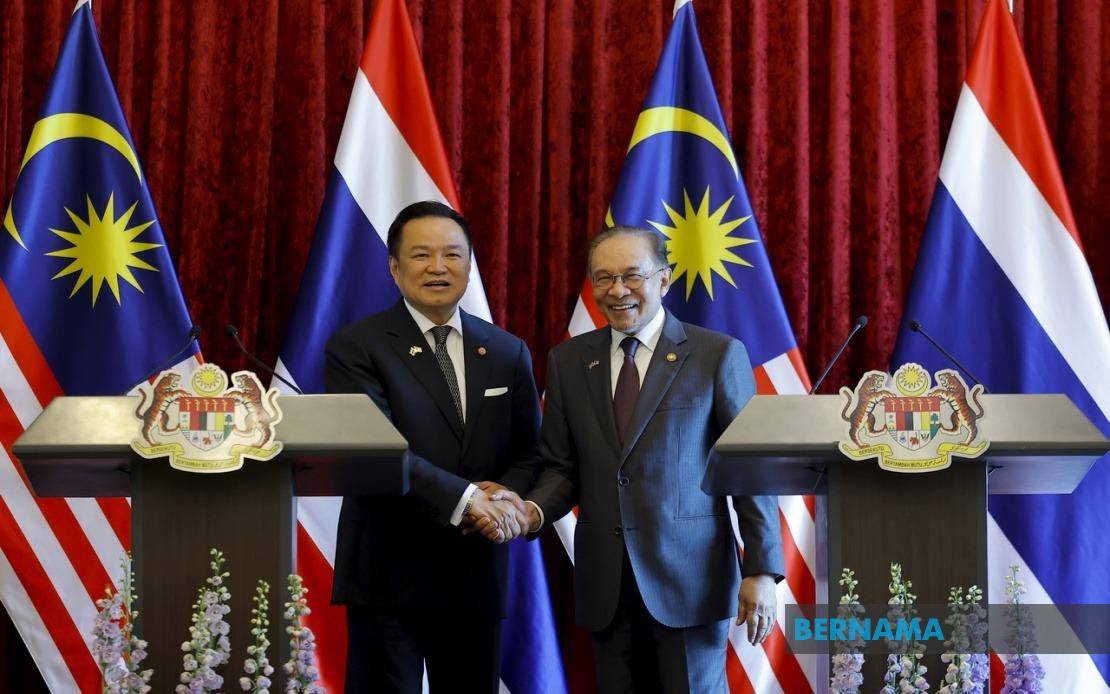
Malaysia and Thailand have mapped out an ambitious bilateral agenda centred on expediting cross-border infrastructure and establishing dedicated economic development zones along their shared frontier. The commitment emerged from bilateral talks in Putrajaya between Prime Minister Datuk Seri Anwar Ibrahim and his Thai counterpart Anutin Charnvirakul, who underlined their resolve to deepen economic partnership while resolving outstanding bilateral matters across multiple sectors.
The two nations have set a concrete target of USD30 billion in bilateral trade by 2027, representing a significant expansion of their current commercial ties. This figure reflects confidence that coordinated investment in border infrastructure and simplified regulatory frameworks can unlock substantial new trade flows between the neighbouring economies. The specificity of the deadline and monetary target suggests both governments have grounded their aspirations in detailed planning and realistic assessments of market potential.
Anwar characterised the meeting as substantive and productive, emphasising that Malaysia and Thailand possess deep historical, cultural, and economic foundations upon which to build. He acknowledged that while these ties are longstanding, considerably more collaborative effort is required across all spheres to realise the full breadth of their partnership potential. This framing suggests that current cooperation, though meaningful, remains below what bilateral proximity and complementary economies could achieve.
Central to the renewed push are border connectivity initiatives designed to reduce transaction costs and friction for cross-border commerce. These projects address a persistent challenge in regional trade: the time and expense associated with moving goods and services across land borders. By prioritising these infrastructure investments, Malaysia and Thailand are tackling practical barriers that constrain smaller enterprises from engaging in cross-border transactions, potentially democratising participation in regional commerce.
The establishment of special border economic zones represents a structured approach to leveraging geographic advantages. Such designated areas typically offer streamlined regulatory regimes, tax incentives, and improved logistics infrastructure to attract manufacturing, assembly, and trading operations. For Malaysia and Thailand, these zones could become focal points for investment in sectors where both nations possess comparative advantage, from agro-processing to light manufacturing and digital services. The zones would enable companies to operate with reduced bureaucratic overhead while maintaining full regulatory compliance.
Facilitating immigration and customs procedures forms the third pillar of this strategy. Streamlined border crossing mechanisms benefit not only commercial traffic but also tourism, labour mobility, and professional services. Simplified procedures reduce dwell time at borders, lower operational costs for logistics companies, and enhance predictability for businesses planning cross-border operations. For Malaysia, improved border efficiency could strengthen its position as a regional trading and logistics hub, while for Thailand, it enhances connections to Malaysian markets and the broader Association of Southeast Asian Nations network.
The planned visit to Bukit Kayu Hitam and Sadao underscores the border-centric nature of this cooperation framework. Rather than limiting high-level engagement to capital cities, both prime ministers are demonstrating commitment by visiting frontier communities directly. These areas experience both the challenges and opportunities of border proximity most acutely, as businesses and residents navigate daily cross-border interactions. The ground-level engagement signals that policy initiatives will reflect practical realities and local stakeholder input.
Charnvirakul's participation in this ambitious itinerary reflects Thailand's strategic interest in deepening regional integration. For Thailand, closer economic ties with Malaysia enhance its access to the Straits of Malacca trade corridor and strengthen its position within ASEAN's economic architecture. The visit duration and scope suggest Thailand views this not as routine bilateral business but as a priority engagement warranting significant ministerial time and commitment.
The timing of this initiative carries regional implications beyond the bilateral context. As Southeast Asian nations navigate economic pressures and competition from global supply chain restructuring, coordinated cross-border development demonstrates that ASEAN members can achieve integration gains through pragmatic, focused cooperation. The Malaysia-Thailand framework could serve as a template for similar initiatives between other neighbouring ASEAN members facing comparable border development challenges.
For Malaysian enterprises, particularly small and medium-sized businesses, the streamlined border environment promised by these initiatives opens new market access. Thai consumers and manufacturers represent both customers for Malaysian goods and suppliers to Malaysian industries. Reduced transaction costs and faster clearance procedures make cross-border sourcing and sales more economically viable for companies that previously found such engagement prohibitively expensive.
The USD30 billion trade target assumes effective implementation of announced reforms. Achievement will depend on translating policy commitments into operational changes at border checkpoints, sustained investment in infrastructure, and maintaining political commitment through multiple government cycles. Both nations will need to establish clear monitoring mechanisms and timelines to track progress against this ambitious goal.
Longer-term, this framework positions Malaysia and Thailand as architects of practical border integration within Southeast Asia. Success could attract interest from neighbouring countries and international development partners seeking to replicate effective models. The emphasis on special economic zones and facilitated trade procedures reflects lessons learned from similar initiatives in other regions and demonstrates both nations' willingness to adopt best practices in cross-border development.

