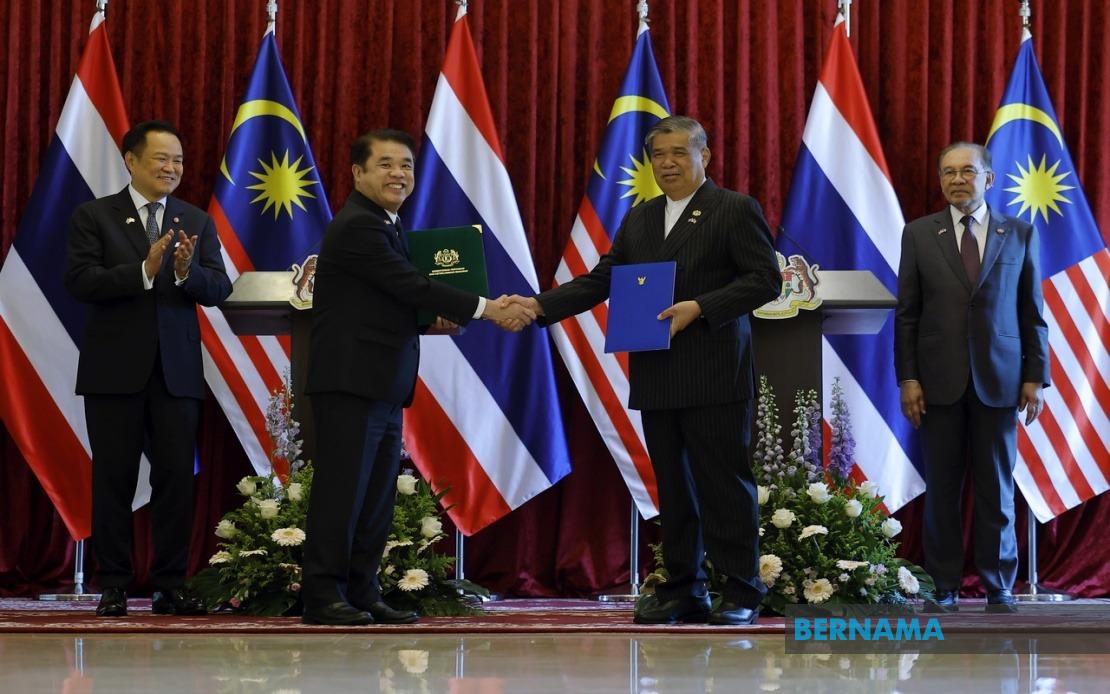
Malaysia and Thailand have moved decisively to clear away trade friction in agriculture and fisheries, with both nations agreeing to activate a comprehensive Memorandum of Understanding on agricultural cooperation within seven days. The breakthrough came during Prime Minister Anutin Charnvirakul's inaugural official visit to Malaysia, culminating in ceremonies held in Putrajaya where leaders from both countries witnessed the formal exchange of the accord. The accelerated timeline represents a significant diplomatic win, as Thailand had initially sought one and a half months for the agreement to take effect before Malaysian officials negotiated the substantially faster implementation.
Prime Minister Datuk Seri Anwar Ibrahim and Anutin jointly oversaw the signing by Agriculture and Food Security Minister Datuk Seri Mohamad Sabu and Thai Agriculture Minister Suriya Juangroongruangkit. The resolution of fisheries market access issues—which had become a sticking point in bilateral agricultural trade—featured prominently in discussions, with both sides emphasizing that resolving these technical barriers served broader strategic objectives around regional food security. Anwar characterised the agreement as tangible evidence of both governments' determination to deepen cooperation in areas critical to their populations' wellbeing and economic prosperity.
The new agricultural framework establishes a comprehensive architecture for collaboration spanning multiple sectors. Beyond headline-grabbing fisheries provisions, the MoU encompasses crop production, livestock development, trade facilitation mechanisms, and systematic approaches to marketing agricultural goods between the two economies. Critically, the agreement also establishes protocols for research and development initiatives, capacity-building programmes, and joint biosecurity arrangements. The inclusion of sanitary and phytosanitary standards—often contentious areas in regional trade—suggests both governments have invested effort in harmonizing technical requirements that frequently impede commerce.
Thailand's agriculture minister welcomed the outcomes, particularly noting that both nations had worked toward amicable solutions regarding pending market access cases for fishery products and other agricultural items. For Bangkok, the agreement addresses longstanding concerns about Malaysian regulatory barriers to its agricultural exports. The establishment of a more formal, transparent coordination mechanism between relevant authorities promises to prevent future disputes from festering and provides structured channels for rapid dispute resolution, contrasting with ad-hoc crisis management approaches that had characterized earlier bilateral tensions.
Context matters considerably here. In June, Malaysia had introduced tightened import controls targeting Thai fisheries products, requiring Certificates of Analysis for barramundi and temporarily restricting five specific shrimp species. These measures reflected concerns about product quality or safety standards but inevitably created friction in what is otherwise a substantial bilateral trade relationship. The current resolution suggests Malaysian authorities found the diplomatic costs of sustained restrictions outweighed their protective benefits, particularly as both countries prioritize food security amid regional supply chain uncertainties.
The bilateral agricultural trade relationship carries genuine economic weight for both nations. Between January and December 2025, Malaysia-Thailand agricultural and agri-food commerce reached RM20.33 billion, demonstrating the scale of commercial integration in this sector. Malaysian exporters rely heavily on Thai market access for coffee, cocoa, tea, spices, and processed food products—categories where Malaysia enjoys competitive advantages. Conversely, Malaysia imports substantial quantities of meat and meat-based products from Thailand, making Thai livestock producers dependent on maintaining open access to Malaysian consumers. This interdependence creates mutual incentives for cooperation.
For Malaysian policymakers, the expedited MoU reflects recognition that food security increasingly depends on regional supply chain stability rather than purely domestic production. Thailand, as a major regional food exporter, occupies a pivotal position in Southeast Asian food systems. Tension in Malaysia-Thailand agricultural trade can reverberate through regional markets, affecting prices and availability for other ASEAN members. By cementing cooperation frameworks, Putrajaya signals commitment to treating food security as a regional rather than purely national concern—a posture increasingly necessary given climate impacts on agricultural productivity.
The agreement's emphasis on structured communication and coordination mechanisms addresses a persistent weakness in regional trade relations. By creating formal channels for addressing disputes before they escalate into public regulatory action, both countries reduce the diplomatic temperature around commercial disagreements. The mechanism's transparency commitments also reduce space for opacity or perceived arbitrariness in agricultural policy implementation, a common source of friction when trading partners harbour suspicions about hidden protectionism.
Beyond immediate bilateral dimensions, this agreement carries implications for broader ASEAN economic integration. Malaysia and Thailand rank among the bloc's largest agricultural traders, and their ability to manage disputes constructively sends positive signals about the region's commitment to deeper economic interdependence. The framework potentially establishes a template for how ASEAN members might address similar agricultural trade tensions, particularly around food safety standards and market access that frequently pit national regulatory autonomy against regional trade liberalisation objectives.
The timing of Anutin's visit and the MoU signature deserve note as well. Thai leadership's decision to prioritise Malaysia early in bilateral engagement reflects Bangkok's recognition of the relationship's commercial importance and its desire to resolve accumulated grievances. For Malaysia, hosting the Thai premier and announcing tangible agreements demonstrates the administration's ability to deliver on regional engagement commitments, an important political signal domestically as well as internationally.
Moving forward, both governments face the challenge of translating framework commitments into operational reality. Implementation of research partnerships, capacity-building initiatives, and coordinated biosecurity approaches requires sustained bureaucratic coordination and resource commitment. The next test will come when specific disputes inevitably arise around interpretation of sanitary standards or other technical requirements. Whether the new coordination mechanisms prove robust enough to resolve disagreements swiftly, or whether they become procedural theaters masking unresolved tensions, remains to be seen.
The resolution also creates space for potential expansion of cooperation into adjacent areas. If the agricultural framework operates successfully, both countries might extend similar cooperation models to fisheries management more broadly, encompassing sustainability and resource conservation alongside market access. For Malaysian and Thai consumers, success in this area should eventually translate into improved food availability, competitive pricing, and access to a wider range of products from across the border.

