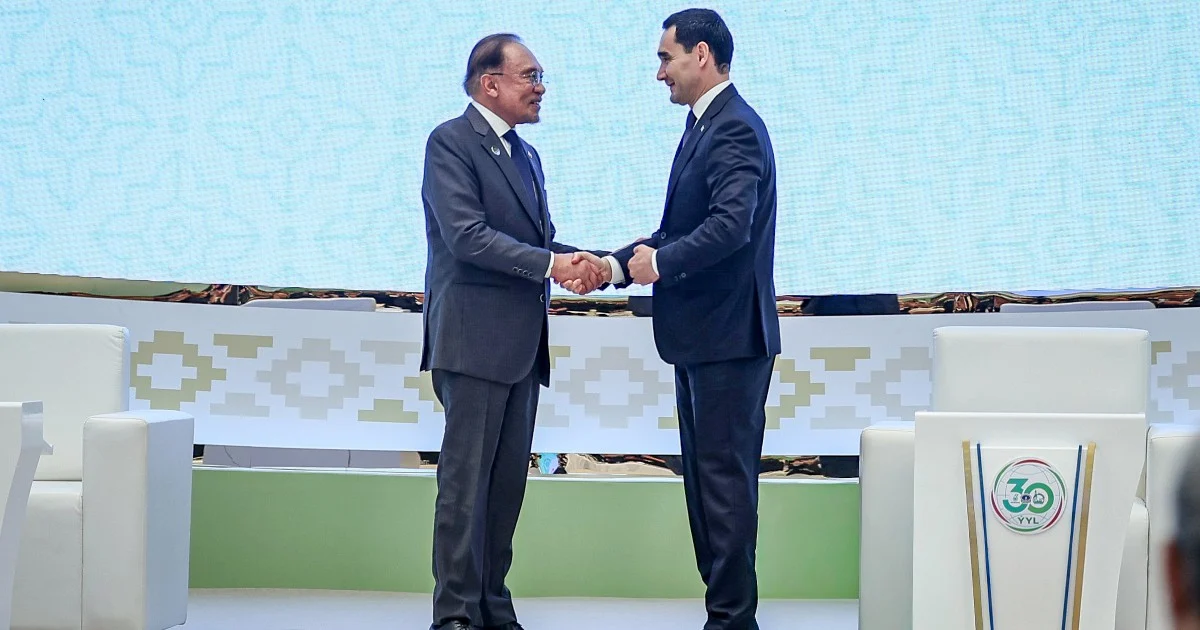
Malaysia and Turkmenistan have committed to deepening their strategic partnership across multiple sectors, with particular emphasis on energy collaboration, following Prime Minister Datuk Seri Anwar Ibrahim's official visit to the Central Asian nation. The agreements reached during the high-level visit underscore both countries' intent to leverage complementary strengths and create new opportunities for mutual economic benefit. This development marks a significant step in Malaysia's broader engagement strategy with Central Asian nations, positioning Kuala Lumpur as an active player in a region that has traditionally attracted less attention from Southeast Asian capitals.
The energy sector forms the cornerstone of the bilateral arrangement, reflecting Turkmenistan's status as a major hydrocarbon producer and Malaysia's sustained need for diverse energy supplies. Turkmenistan possesses substantial natural gas reserves and has established itself as a reliable supplier to multiple international markets, making it an attractive partner for Malaysian energy security objectives. Given Malaysia's own energy transition requirements and the global push toward more sustainable power sources, exploring collaboration with gas-rich Turkmenistan aligns with national energy diversification strategies. The partnership could potentially extend beyond traditional fossil fuels to encompass renewable energy technologies and efficiency improvements, though such specifics will likely emerge through subsequent working group discussions.
Beyond the hydrocarbon focus, the two nations have signalled their readiness to expand trade and investment linkages. Malaysia's manufacturing expertise, financial services capabilities, and regional trading hub position make the country an attractive gateway for Turkmenistan seeking access to Southeast Asian markets. Conversely, Turkmenistan's resources and geographic positioning between Europe and Asia present opportunities for Malaysian investors looking to diversify their international portfolios. The expansion of trade infrastructure and investment frameworks will require complementary efforts in banking, logistics, and regulatory harmonisation, all areas where both nations can contribute institutional knowledge and practical experience.
Transportation cooperation emerged as another key pillar in the bilateral framework. Malaysia's advanced port facilities at Port Klang and Port Tanjung Pelepas, combined with its air cargo capabilities at major airports, position the country as a natural logistics hub for Turkmenistan's export aspirations. Turkmenistan's location on Central Asia's transport corridors makes it a crucial node for goods moving between the region and global markets. Enhanced shipping connections, combined with potential air freight arrangements, could transform Malaysia into a preferred transshipment point for Turkmenistan's products while generating revenue and employment opportunities domestically.
The commitment to educational collaboration carries significant long-term implications for both societies. Malaysian institutions have built substantial capacity in higher education, particularly in engineering, business administration, and technical fields. Expanding scholarship programmes and student exchange initiatives would expose Turkmen professionals to Malaysian expertise while building people-to-people connections that strengthen diplomatic foundations. Such educational partnerships often prove more durable than transactional commercial agreements, creating networks of alumni who maintain professional and personal ties spanning decades. These human networks frequently catalyse subsequent business opportunities and facilitate cultural understanding.
Technology transfer and digital cooperation represent emerging frontiers in the relationship. Malaysia has developed considerable capabilities in telecommunications, financial technology, and digital governance solutions. Turkmenistan's modernisation agenda creates receptive conditions for Malaysian technology providers to establish operations and partnerships. Conversely, Malaysian companies can benefit from accessing Turkmen expertise in resource management and infrastructure development relevant to the energy sector. Collaborative research initiatives between Malaysian and Turkmen universities or research institutions could yield innovations applicable across both markets.
From Malaysia's strategic perspective, this deepened engagement with Turkmenistan reflects a deliberate effort to broaden the country's international relationships beyond traditional Southeast Asian and Western partnerships. Central Asia represents an underexplored region for Malaysian businesses and policymakers, despite its economic potential and strategic importance. Prime Minister Anwar Ibrahim's visit signals a conscious pivot toward capitalising on Belt and Road connectivity improvements that have made Central Asia more accessible to Southeast Asian entities. This repositioning enhances Malaysia's geopolitical flexibility and opens economic corridors that complement existing regional trading relationships.
The timing of this partnership strengthening coincides with broader regional dynamics in Central Asia and global energy transitions. Turkmenistan's role as a energy supplier takes on heightened importance amid concerns about traditional suppliers' reliability and the global search for cleaner fuels. Malaysia's engagement with Turkmenistan also reflects Southeast Asia's growing recognition that prosperity and security increasingly depend on cultivating relationships across expanded geographic horizons rather than remaining concentrated within regional frameworks.
Implementing these cooperative arrangements will require establishing dedicated institutional mechanisms, bilateral working groups, and potentially joint ventures in priority sectors. The success of the partnership hinges on translating high-level political commitments into concrete projects that deliver tangible benefits to business communities, workers, and consumers in both countries. Malaysian companies will need to develop market understanding and local networks, while Turkmen counterparts must familiarise themselves with Malaysian business practices and regulatory environments. Government support through export credits, diplomatic representation, and regulatory facilitation will prove essential to overcoming initial barriers and sustaining momentum through inevitable early challenges.
Looking forward, Malaysia's diversified engagement with Turkmenistan creates a template potentially applicable to other Central Asian nations. Rather than viewing the region through the lens of infrastructure projects alone, Malaysia appears positioned to develop multifaceted partnerships grounded in complementary comparative advantages. As global economic and geopolitical configurations continue evolving, such strategic relationship-building with underserved regions may yield disproportionate returns for Malaysian economic and diplomatic interests.

