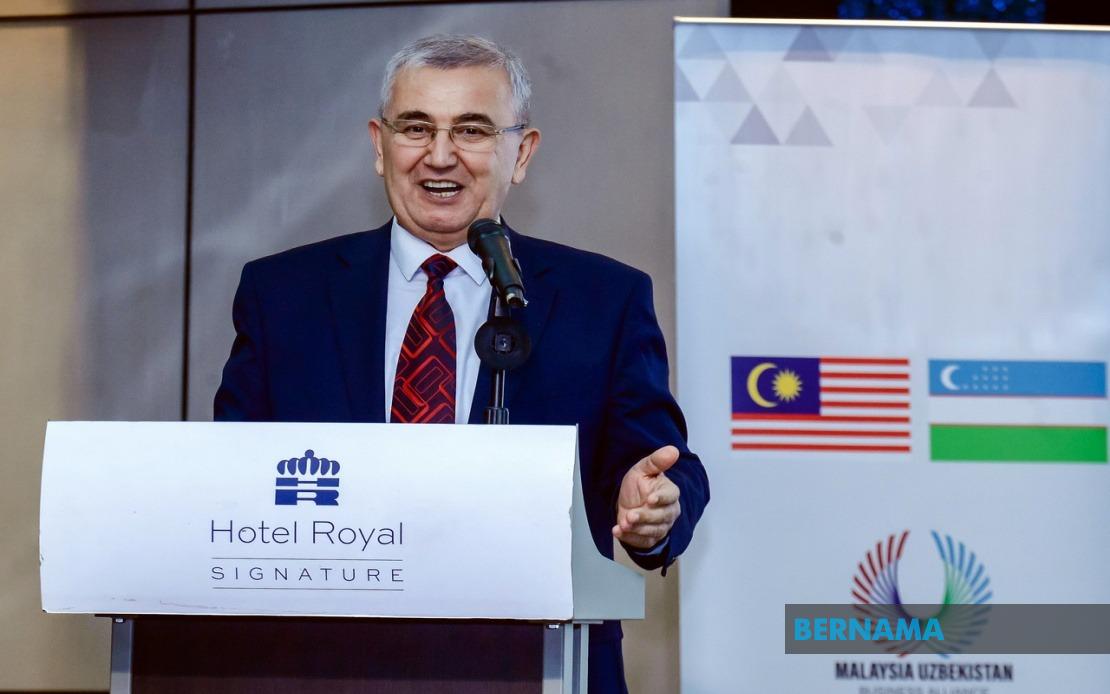
Malaysia and Uzbekistan are moving toward a comprehensive agricultural alliance that leverages technological innovation and complementary strengths to address regional food security challenges. The partnership, underpinned by high-level political engagement and ministerial visits, represents a deliberate strategic shift toward deepening cooperation beyond traditional trade arrangements. Uzbekistan's Ambassador to Malaysia Dr Karomidin Gadoyev emphasised that agriculture has become a consistent priority in bilateral discussions, with the sector featuring prominently during Prime Minister Datuk Seri Anwar Ibrahim's visit to Uzbekistan in May 2024 and President Shavkat Mirziyoyev's Malaysia visit in February 2023, signalling sustained commitment from both capitals.
The relationship gained fresh momentum following Agriculture and Food Security Minister Datuk Seri Mohamad Sabu's recent official visit to Uzbekistan, which opened pathways for concrete collaborative projects across multiple agricultural domains. The timing reflects broader regional concerns about food supply chains and the necessity for Central Asian and Southeast Asian nations to develop integrated strategies. Rather than competing for resources, the two countries are positioning themselves as natural partners whose capabilities align seamlessly. Malaysia's prowess in paddy cultivation, fisheries, and agricultural research and development complements Uzbekistan's established strengths in energy-efficient irrigation methodologies, horticultural production, and large-scale agri-food processing. This sectoral complementarity creates genuine opportunities for knowledge transfer and technological adoption that extend beyond simple commercial transactions.
Digital transformation and artificial intelligence represent critical vectors for this partnership's advancement. Both nations recognise that conventional agricultural practices face mounting pressure from global population growth, climate volatility, and resource constraints. By integrating smart technologies and AI-driven solutions into farming systems, the collaboration aims to enhance productivity while reducing environmental footprints. Gadoyev highlighted Uzbekistan's intention to absorb Malaysian expertise in precision agriculture and digital innovation, acknowledging that technological adoption requires not merely equipment transfer but comprehensive knowledge-sharing frameworks. This recognition demonstrates sophisticated understanding that sustainable agriculture development depends on institutional capacity-building and local adaptation of solutions rather than wholesale importation of foreign methods.
Practical initiatives underscore the partnership's momentum beyond diplomatic statements. Malaysia's Agricultural Research and Development Institute (MARDI) is actively collaborating with Uzbek counterparts to identify and develop agricultural innovations suited to regional conditions. Simultaneously, Malaysian drone technology company Miracule has established its first showroom in Uzbekistan, with immediate plans to scale agricultural drone deployment across Uzbek farming regions and subsequently assemble advanced equipment domestically. This progression from demonstration to local manufacturing embodies sustainable technology transfer that builds indigenous capacity while creating high-value employment opportunities. The drone sector exemplifies how Malaysian agri-tech expertise can address Uzbekistan's mechanisation requirements without creating long-term dependency on foreign imports.
Aquaculture emerges as a particularly strategic cooperation area given Uzbekistan's geographic and demographic circumstances. With a population approaching 40 million inhabitants and double-landlocked geography limiting access to marine fisheries, Uzbekistan faces substantial seafood supply challenges that domestic aquaculture must address. Malaysia possesses sophisticated experience with biofloc technology, an innovation that reduces feed expenses by approximately 30 percent whilst simultaneously increasing productivity and lowering overall production costs. These efficiency gains matter significantly in a Central Asian context where feed expenses constitute major operational overheads. Malaysian companies have already commenced exploratory investments in Uzbek shrimp farming and fisheries projects, suggesting that the partnership extends from governmental coordination into private sector engagement. This multi-level approach, combining state support with commercial incentives, creates sustainable foundations for long-term sectoral development.
Bilateral agri-food commerce has already demonstrated substantial growth, reaching over RM338 million in 2025 with palm oil and derivative products constituting Malaysia's predominant export category to Uzbekistan. However, Gadoyev indicated that current trade volumes represent merely a fraction of potential capacity, with realistic projections suggesting doubling or even tripling bilateral trade within the next five to ten years. Such ambitious targets rest upon structural expansion rather than incremental volume increases. Malaysia could strategically position Uzbekistan as a regional hub for crude palm oil processing and distribution throughout Central Asia, unlocking value-addition opportunities whilst extending Malaysian agricultural products' geographic reach. Conversely, Uzbek companies can leverage Malaysian distribution networks and expertise to commercialise premium fresh fruits, dried products, and processed foods across Southeast Asian markets, effectively creating complementary export ecosystems benefiting both economies.
The partnership's regional implications warrant careful consideration. Central Asia and Southeast Asia represent increasingly interconnected markets where agricultural cooperation carries geopolitical significance. By establishing robust food security partnerships, Malaysia and Uzbekistan contribute to broader regional stability whilst creating frameworks that other nations might emulate. The model demonstrates how countries with distinct geographic advantages and technological capacities can construct mutually beneficial arrangements that transcend zero-sum competition. Uzbekistan's position along historical trade corridors and Malaysia's advanced agricultural technology and aquaculture expertise position this partnership as potentially influential for regional food systems development. Success could catalyse similar collaborations involving other Southeast Asian nations with Central Asian counterparts, gradually building more resilient, integrated food networks less vulnerable to global supply disruptions.
Institutional platforms prove essential for partnership consolidation and expansion. Malaysia's invitation for Uzbekistan to participate in the Malaysia Agriculture, Horticulture and Agrotourism Exhibition (MAHA) 2026 provides crucial opportunities for Uzbek agricultural stakeholders to interface directly with Malaysian businesses and consumers. Trade exhibitions serve simultaneously as showcases for products and catalysts for relationship-building between commercial entities. Gadoyev acknowledged MAHA's value as a platform for implementing planned cooperation initiatives, suggesting that exhibitions function not merely as commercial events but as strategic venues where bilateral agricultural partnerships advance materially. Uzbekistan's participation will likely expose Malaysian agribusiness leaders to Central Asian production capabilities and market opportunities whilst enabling Uzbek exporters to establish direct commercial relationships. The exhibition framework transforms abstract bilateral cooperation into tangible business connections with genuine growth potential.
Looking forward, successful partnership materialisation hinges upon sustained institutional commitment and effective implementation mechanisms. Both governments must establish clear coordination structures, facilitate regulatory harmonisation, and create incentives encouraging private sector participation. Research institutions require adequate funding and personnel to generate innovations applicable to both markets' specific conditions. Educational exchanges and technical training programmes should be prioritised to build human capital capable of operating advanced agricultural technologies. Malaysian companies contemplating Uzbek operations require transparent operating environments and investment protections, while Uzbek enterprises need assured market access and technical support in Malaysian markets. The partnership's architects must translate political will into concrete institutional frameworks that persist beyond individual administrative cycles and ministerial tenures.
The agricultural partnership between Malaysia and Uzbekistan ultimately addresses fundamental concerns regarding food security, technological development, and regional stability. By combining expertise, resources, and market access, both nations can create sustainable competitive advantages whilst contributing to broader Central and Southeast Asian food system resilience. The arrangement suggests that agricultural cooperation offers viable pathways for developing meaningful bilateral relationships that generate tangible economic returns and geopolitical dividends. Success requires patience, investment, and sustained commitment from government bodies, research institutions, and commercial enterprises. If executed effectively, this partnership could become a template for South-South cooperation that delivers prosperity whilst addressing shared vulnerabilities in global food supply chains.

