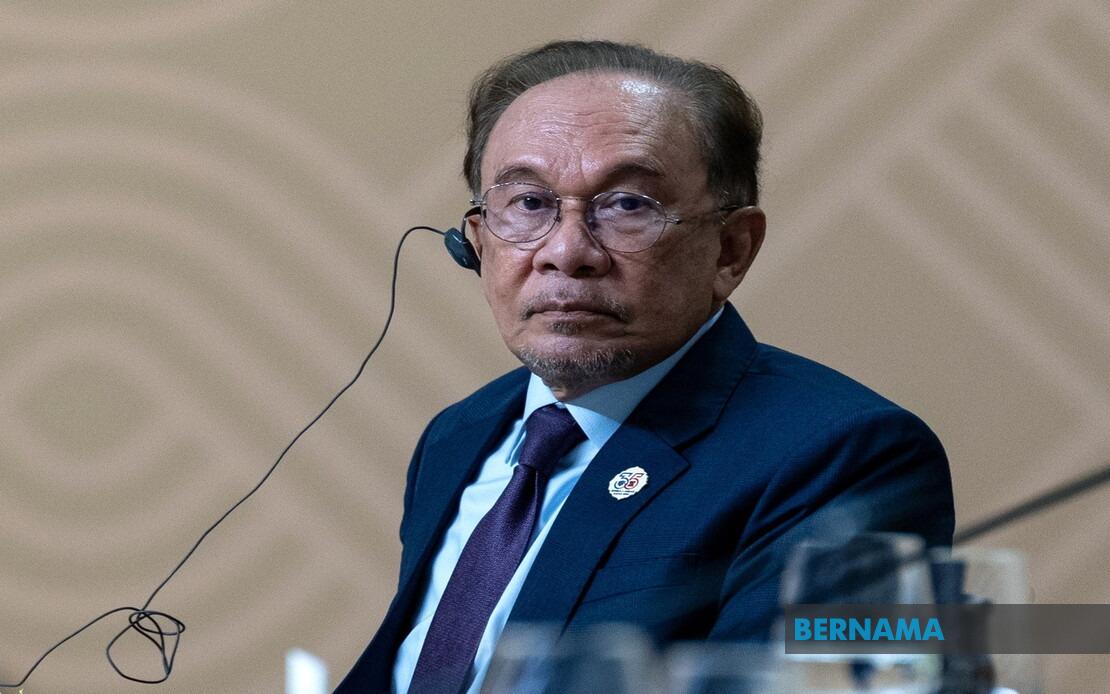
Prime Minister Datuk Seri Anwar Ibrahim has thrown Malaysia's weight behind efforts to broker a comprehensive peace settlement between the United States and Iran, viewing such an agreement as a potential turning point for regional stability in West Asia. Speaking in Kazan following the 35th ASEAN-Russia Commemorative Summit, Anwar articulated a notably upbeat assessment of the negotiation trajectory, suggesting that momentum has shifted in favour of a breakthrough despite the compressed timeframe diplomats are working within.
The optimism hinges on a critical 60-day window for finalising a memorandum of understanding between Washington and Tehran—a compressed schedule that underscores the urgency surrounding these talks. Rather than regarding this deadline as merely aspirational, Anwar framed it as a realistic target, drawing on intelligence gathered from multiple heavyweight regional players who have been intimately involved in steering negotiations forward.
Anwar's confidence draws substantially from communications with Pakistan's Prime Minister Shehbaz Sharif, who has assumed a central mediating function in the broader diplomatic architecture. According to the Malaysian premier, Sharif has engaged extensively and methodically across all negotiation phases, maintaining open channels with both principal parties and carefully monitoring progress at each juncture. This hands-on involvement from Islamabad—itself a crucial regional player balancing relationships with multiple power centres—carries considerable weight in assessing negotiation authenticity and momentum.
Beyond Islamabad's pivotal role, Anwar also gained reassurance from his direct engagement with Russian President Vladimir Putin during the summit proceedings. Putin reportedly conveyed a similar optimistic outlook regarding the trajectory of US-Iran diplomacy, suggesting that growing international consensus exists around the viability of reaching a final agreement. Russia's perspective carries particular significance given Moscow's strategic interests in West Asian stability and its ongoing relationships with both Washington and Tehran, notwithstanding current geopolitical tensions.
The convergence of positive signals from Pakistan, Russia, and other intermediaries has evidently persuaded Anwar that the negotiation environment has fundamentally shifted toward resolution. This represents a meaningful shift from previous failed attempts, which have repeatedly foundered despite international mediation efforts. The Malaysian leader's measured optimism reflects recognition that sustained multilateral pressure, combined with genuine diplomatic engagement from credible intermediaries, can occasionally overcome entrenched positions.
However, Anwar tempered his remarks with appropriate caution regarding variables beyond the control of negotiators or mediators. The involvement of the incoming Trump administration in the United States introduces unpredictable elements that could alter negotiating parameters or strategic calculus at critical moments. Trump's previous withdrawal from the Iran nuclear agreement and his administration's hardline posture towards Tehran during his first term remain pertinent considerations that any realistic assessment must account for.
Malaysia's vocal backing for these negotiations reflects broader Southeast Asian interests in regional de-escalation. A functional US-Iran understanding could substantially reduce proxy conflicts throughout the Middle East and Eastern Mediterranean, thereby diminishing humanitarian costs of ongoing instability and reducing pressures on global energy markets and supply chains that directly affect Southeast Asian economies. Lower geopolitical risk in West Asia typically translates to more stable shipping lanes and energy pricing that benefit trading nations across the region.
Anwar's comments also position Malaysia within the framework of responsible middle-power diplomacy that seeks to amplify stabilising voices without excessive partisanship. By emphasizing the mediating roles of Pakistan and Russia rather than advocating for either the US or Iranian position, Malaysia signals its commitment to inclusive multilateralism that respects all parties' legitimate concerns. This approach aligns with ASEAN's longstanding preference for dialogue over confrontation and its principle of non-interference in others' internal affairs.
The timing of these remarks at an ASEAN-Russia summit carries additional diplomatic weight, underscoring the extent to which West Asian stability concerns now transcend traditional geographic boundaries and regional alignments. Russia's presence at multilateral Southeast Asian forums reflects evolving patterns of great power competition and cooperation, while also highlighting how conflicts in distant regions possess cascading effects throughout the international system. Malaysia's engagement in this discourse demonstrates awareness that sustainable regional prosperity requires conducive conditions in multiple geopolitical zones simultaneously.
The 60-day timeline mentioned by Anwar suggests that negotiations have reached a critical inflection point where breakthrough or breakdown appears equally plausible. During such pivotal moments, supportive rhetoric from credible third parties can sometimes provide psychological reassurance to negotiating teams facing domestic political pressures, and may gently incentivize compromise by signalling that the international community recognises progress and expects final agreement. Malaysia's public backing thus carries subtle diplomatic utility beyond mere expression of preference.
Looking forward, the Malaysian government appears positioned to play a constructive supporting role should mediation efforts require additional channels or good offices. Malaysia maintains reasonable relations across the wider Islamic world and possesses credibility as a moderate voice on regional security matters. Should negotiators encounter deadlock, Malaysian diplomatic resources might contribute to resolution pathways, particularly given the country's consistent advocacy for dialogue-based conflict resolution mechanisms.
The underlying Malaysian perspective reflects understanding that West Asian instability generates ripple effects throughout global commerce, security architecture, and humanitarian circumstances. A durable US-Iran understanding would benefit Malaysia economically through more predictable energy markets and reduced geopolitical risk premiums, while also advancing broader Malaysian commitments to international peace and stability. Anwar's optimism thus represents both genuine diplomatic assessment and enlightened national interest calculations.

