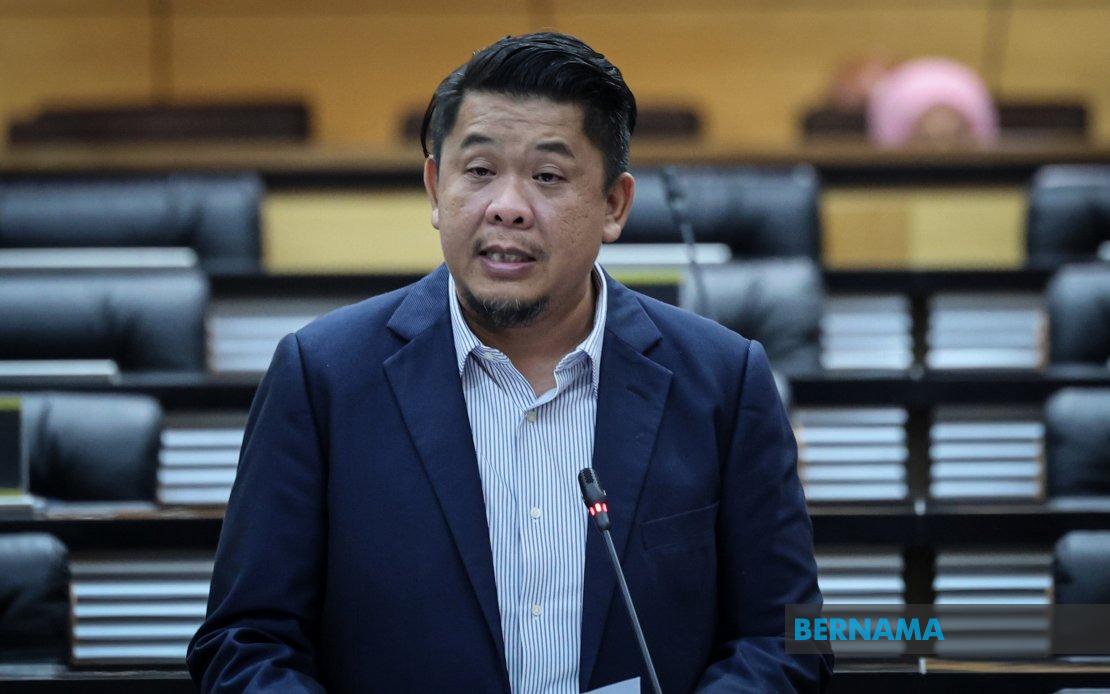
Malaysia has formally declared its candidacy for a non-permanent seat on the United Nations Security Council for the 2036–2037 term, marking a significant diplomatic move that reflects the nation's ambitions to play a larger role in global governance and its commitment to reforming the international body's decision-making structures. The submission, announced by Deputy Foreign Minister Datuk Lukanisman Awang Sauni, positions Malaysia to rejoin an institution where it previously served and where it has consistently championed substantive structural changes.
The candidacy announcement arrives at a moment of heightened global scrutiny regarding the Security Council's effectiveness and legitimacy. Deputy Foreign Minister Lukanisman stated that Malaysia will leverage this renewed bid to maintain veto power abolition at the forefront of its international agenda, establishing it as a cornerstone of the country's foreign policy platform. This positioning suggests that Malaysia views its potential return to the council not merely as a seat at the table, but as a platform from which to advocate for transformative reform in how the world's most powerful nations exercise authority over global security matters.
The Malaysian government's stance on the veto carries particular resonance in the current geopolitical climate, where permanent members have repeatedly wielded this power to block resolutions addressing humanitarian crises and violations of international law. Lukanisman articulated a nuanced position that goes beyond outright abolition, noting that Malaysia would support restricting veto usage in circumstances involving grave breaches of international norms. Specifically, he identified war crimes, genocide, crimes against humanity, and deliberate destruction of civilian infrastructure as categories of violations where the veto should not apply, referencing recent developments in Gaza to illustrate the real-world consequences of the existing system's deficiencies.
Foreign Minister Datuk Seri Mohamad Hasan will formally articulate these principles during Malaysia's National Statement at the upcoming 81st UN General Assembly session in New York this September. This international platform provides an opportunity for Malaysia to broadcast its reformist agenda to the global community and to build coalitions with other nations that share concerns about the Security Council's current structural limitations. The timing of this announcement before the General Assembly debate allows Malaysia to shape the conversation around council reform at a moment when many nations are reassessing the institution's role in responding to contemporary crises.
For Southeast Asia and developing nations more broadly, Malaysia's candidacy and reform advocacy carries significant implications. The nation has positioned itself as a voice for countries that lack permanent representation on the Security Council yet face pressures from major power competition and regional security challenges. Malaysia's historical role as a bridge-builder between developed and developing nations makes its advocacy for structural reform particularly credible, suggesting that the country seeks to advance the interests of the Global South without appearing to challenge the fundamental legitimacy of the international order.
The veto power—originally designed as a mechanism for maintaining Great Power consensus during the Cold War—has become an increasingly controversial feature of the international system. Five permanent members can single-handedly block any substantive Security Council resolution, a capacity that critics argue has prevented timely international responses to humanitarian disasters and geopolitical conflicts. Malaysia's call for at least constraining the veto's application in cases of mass atrocities reflects a growing frustration among many nations with the status quo, though meaningful reform would require support from the very powers that benefit most from the existing arrangement.
The Malaysian government's emphasis on this reform agenda during parliamentary question time, responding to inquiry from a backbench legislator, indicates that UNSC reform enjoys broad-based political support across Malaysia's political spectrum. Datuk Seri Sh Mohmed Puzi Sh Ali's question about disproportionate veto power wielded by major nations provided the government an opportunity to place Malaysia's reformist credentials on the parliamentary record, signalling to domestic constituents that the nation's leadership is attuned to concerns about global inequality and injustice in international institutions.
Historically, Malaysia has demonstrated significant diplomatic engagement with the United Nations and multilateral institutions, having served on the Security Council previously and maintained an active presence in various UN bodies. The 2036–2037 term represents an opportunity to build upon this legacy while adapting Malaysia's diplomatic strategy to contemporary global challenges. The nation's development trajectory and growing economic influence provide it with credibility in advocating for reforms that benefit middle-power and developing nations, positioning Malaysia as a legitimate voice for systemic change rather than a marginal critic.
The candidacy also reflects Malaysia's strategic calculation regarding its place in an evolving international order marked by rising geopolitical tensions, great power competition, and challenges ranging from climate change to transnational terrorism. By securing a non-permanent seat, Malaysia would gain a platform to advocate for the interests of developing nations, contribute to Security Council deliberations on regional security matters affecting Southeast Asia, and advance its reform agenda from within the institution rather than from the outside.
Likewise, Malaysia's focus on UNSC reform aligns with broader discussions within the United Nations about modernizing institutions designed for a mid-twentieth-century context. The inclusion of perspectives from rapidly developing nations that were colonised when the UN was established adds fresh legitimacy to calls for structural change. Malaysia's candidacy thus represents not simply a national diplomatic objective but part of a larger global conversation about whether the international system's foundational institutions can adapt to serve contemporary needs effectively.
The pathway to Malaysia's election remains uncertain, as non-permanent seats are contested among candidate nations from regional groups, and larger powers may influence outcomes through diplomatic pressure. Nevertheless, the formal submission of candidacy allows Malaysia to begin building the necessary diplomatic coalitions and to articulate its vision for what kind of Security Council member it would be—one committed to reform, to representing the interests of middle powers and developing nations, and to holding the international community accountable to standards of justice and accountability in addressing global security challenges.

