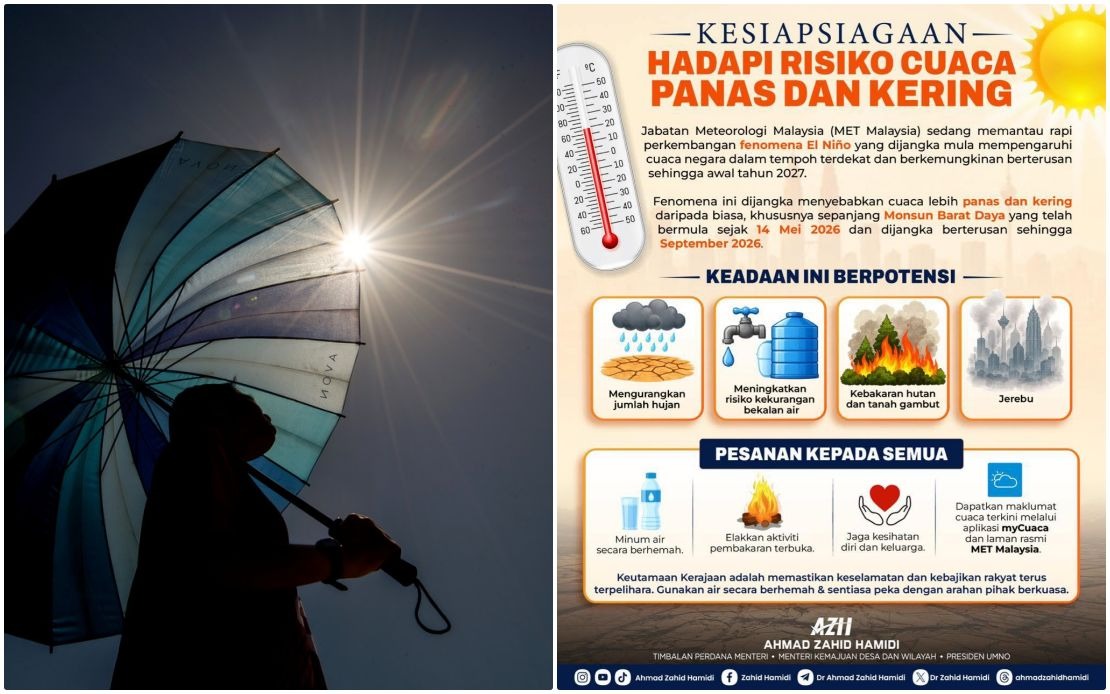
Malaysia faces an extended period of hotter and drier weather as the El Niño phenomenon begins its impact on the country, with conditions potentially lasting until the first quarter of 2027. Deputy Prime Minister Datuk Seri Dr Ahmad Zahid Hamidi issued the advisory, emphasising that preparation and vigilance across all sectors of society will be essential to mitigate the anticipated consequences. As chairman of the Central Disaster Management Committee, Ahmad Zahid stressed that the phenomenon represents a significant meteorological event requiring coordinated government response and individual household awareness.
The El Niño effect is expected to manifest most acutely during the Southwest Monsoon season, which commenced on May 14 and will extend through September this year. This timing places particular pressure on water resources, as the monsoon period typically contributes substantially to Malaysia's rainfall patterns. The combination of El Niño with the Southwest Monsoon creates compounding risk factors that could strain water supplies across both urban and rural regions. MetMalaysia director-general Dr Mohd Hisham Mohd Anip confirmed that precipitation levels will likely fall below historical averages during this critical period, necessitating strategic water management across all consumer segments.
Beyond immediate drought concerns, the phenomenon carries secondary risks that extend into environmental and public health domains. Forest and peatland fires represent a particularly acute concern in a region where vegetation moisture content typically declines during dry spells. The haze resulting from uncontrolled burning episodes can spread across borders, affecting air quality in neighbouring countries and triggering regional health crises. Ahmad Zahid specifically warned against open burning activities, recognising that individual actions during dry periods can cascade into larger environmental disasters. The vulnerability of Malaysia's diverse ecosystems to fire intensifies the urgency of preventative measures and strict enforcement of existing regulations.
Water scarcity during prolonged dry spells carries implications that ripple through industrial production, agricultural output, and domestic consumption. Manufacturing sectors dependent on consistent water supply may face operational disruptions, while agricultural communities relying on seasonal rainfall patterns confront diminished harvests and potential economic losses. Urban water boards will need to implement demand-management strategies and infrastructure optimisations to maintain supply continuity. The extended timeline through early 2027 suggests that planning must account for cumulative depletion of water reserves rather than assuming normal replenishment cycles during interim monsoon periods.
Public health dimensions of the El Niño phenomenon warrant particular attention given Malaysia's tropical climate and vulnerable population segments. Elevated temperatures increase heat-related illnesses, particularly among elderly residents, young children, and outdoor workers. The atmospheric quality degradation from haze exposure compounds respiratory health risks across the population. Healthcare facilities may experience heightened demand during extended dry periods, requiring advance preparation and resource allocation. Ahmad Zahid's specific mention of health safeguards for vulnerable groups reflects understanding that climate phenomena distribute their burdens unevenly across society.
The government's response framework centres on multi-layered monitoring and coordinated action across federal, state, and local governance structures. Ahmad Zahid reiterated commitment to close situational surveillance and implementation of appropriate countermeasures designed to protect public safety and welfare. This institutional commitment must translate into concrete preparedness measures including water rationing protocols, enhanced fire suppression capabilities, and public communication strategies. The Central Disaster Management Committee's involvement signals that preparations extend beyond meteorological advisories into operational emergency response coordination.
Communication and public engagement emerge as critical components of the response strategy. Ahmad Zahid directed Malaysians toward the myCuaca application and MetMalaysia's official channels as primary information sources, enabling real-time awareness of weather developments and relevant advisories. Informed citizens equipped with accurate meteorological intelligence can make prudent decisions regarding water consumption, outdoor activities, and health precautions. Public trust in official information sources becomes particularly important during extended environmental stress periods when misinformation and speculative narratives can proliferate.
Individual responsibility forms the foundation upon which collective resilience rests during environmental challenges. Water conservation at the household level, coupled with strict adherence to burning prohibitions, empowers citizens to contribute meaningfully to risk mitigation. Prioritising personal and family health through awareness of heat risks and air quality impacts represents preventative action that reduces downstream health system burdens. Ahmad Zahid's framing of El Niño as a shared challenge requiring widespread behavioural adjustment reflects recognition that government measures alone cannot address phenomena of this magnitude without complementary public cooperation.
The El Niño phenomenon's projected duration through early 2027 extends well beyond typical seasonal weather patterns, suggesting that Malaysian institutions and households must transition from emergency response mentality toward sustained adaptation frameworks. Water infrastructure investments, agricultural policy adjustments, and emergency preparedness training should reflect the reality of prolonged climatic stress. Regional cooperation mechanisms become relevant given that El Niño affects multiple Southeast Asian countries simultaneously, potentially creating transboundary water disputes and cross-border haze challenges requiring diplomatic engagement and shared environmental protocols.
For Malaysian readers and businesses, the advisory signals necessity for proactive planning rather than reactive crisis management. Agricultural and water-dependent sectors should evaluate operational resilience given reduced precipitation forecasts. Manufacturing and service industries dependent on stable water supplies would benefit from evaluating contingency arrangements and efficiency improvements. Household planning should include water storage strategies and health precautions appropriate for extended heat exposure. The government's clear communication about timeline and probable impacts provides opportunity for measured preparation rather than sudden disruption.