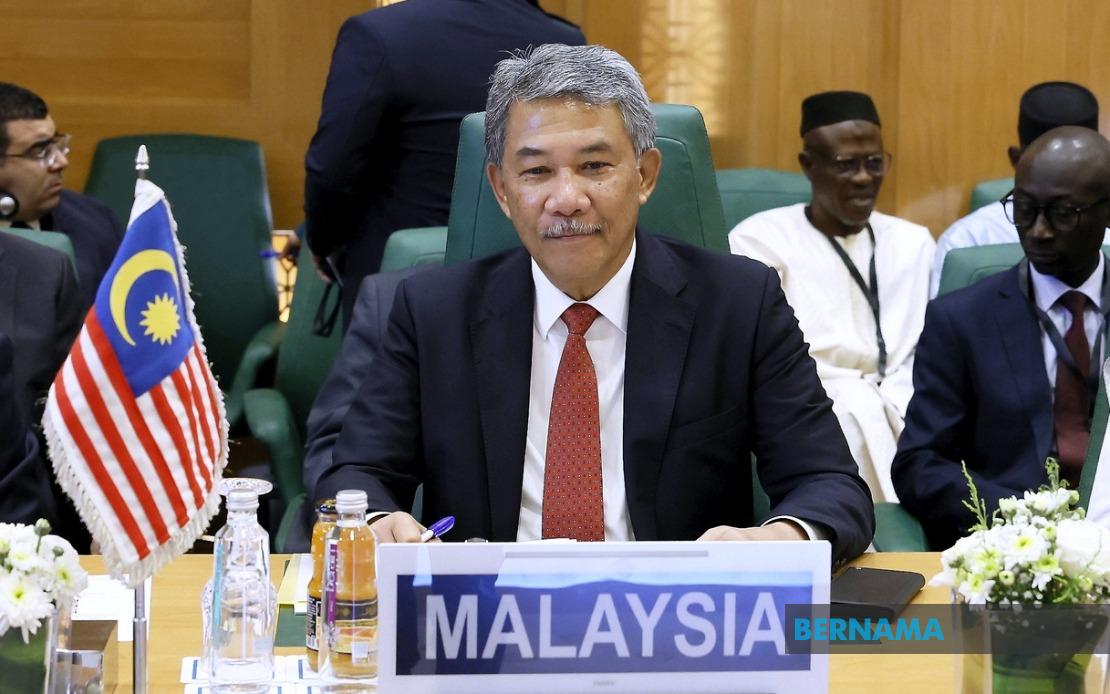
Malaysia has intensified diplomatic pressure within the Organisation of Islamic Cooperation, calling on all member states to categorically reject Israel's controversial US$2.3 billion settlement expansion programme in the occupied Palestinian territories. Foreign Minister Datuk Seri Mohamad Hasan delivered this message at an Extraordinary Meeting of the OIC Council of Foreign Ministers in Jeddah on August 27, positioning Malaysia as a leading voice for Palestinian advocacy within the Islamic bloc and reinforcing Kuala Lumpur's consistent stance on Middle Eastern affairs.
The Malaysian government's statement places particular emphasis on the International Court of Justice Advisory Opinion delivered on July 19, 2024, which addressed the legality of Israeli occupation and settlement activities. By invoking this landmark judicial pronouncement, Mohamad signalled that the OIC should leverage international legal mechanisms to strengthen its position against Israeli settlement policies. This approach reflects a strategic attempt to ground Malaysia's advocacy in internationally recognised legal frameworks rather than relying solely on political rhetoric, lending greater weight to the OIC's collective opposition and potentially influencing how other nations engage with the issue on the global stage.
The E1 settlement plan, which forms a cornerstone of Israel's expansion strategy, represents a particularly acute concern for Malaysian policymakers and their regional counterparts. This scheme would effectively create a continuous Israeli-controlled corridor across the occupied West Bank, a development that would fundamentally alter the territorial dynamics required for Palestinian statehood. Mohamad's condemnation highlights how such expansion undermines not merely Palestinian sovereignty in theoretical terms but destroys the geographical contiguity essential for a functioning Palestinian state, rendering the two-state solution increasingly untenable from a practical perspective. For Malaysia and other OIC nations, this represents an existential threat to what remains the internationally endorsed framework for regional peace.
Beyond settlement expansion, Malaysia has sounded alarms over escalating settler violence and the situation facing Palestinians in Jerusalem, particularly regarding religious sites and demographic changes. The government specifically condemned the July 23 incursion by Israeli ministers and far-right figures into the Al-Aqsa Mosque compound, characterising such actions as religious provocations that inflame tensions and disrespect Islam's third-holiest site. This concern resonates deeply across the Muslim world and represents a dimension of the Israeli-Palestinian conflict that extends beyond territorial disputes into matters of profound religious significance for over a billion Muslims globally. Malaysia's vocal opposition to such incidents underscores how the conflict increasingly intersects with interfaith relations and Muslim identity politics in ways that demand OIC attention.
The Malaysian position on Jerusalem deserves particular scrutiny given the historical Hashemite Custodianship of Islamic and Christian holy sites. By calling on OIC member states to fully support this custodianship framework, Malaysia is emphasising that the future status of Jerusalem cannot be unilaterally determined but must respect the established mechanisms for protecting religious sites. This framing positions the Jerusalem question not merely as a political or territorial matter but as a sacred trust that transcends national boundaries, thereby elevating Malaysia's advocacy beyond bilateral Israeli-Palestinian concerns to encompass the responsibilities of the broader Muslim community.
Regarding the humanitarian crisis in Gaza, Malaysia has articulated a damning assessment of the consequences of prolonged conflict. The reference to over 70,000 lives lost and widespread devastation across Gaza frames the situation not as an abstract geopolitical problem but as a profound humanitarian catastrophe demanding urgent international intervention. Mohamad's invocation of this toll as a test of the international order's credibility suggests that Malaysia views the inadequacy of global response as symptomatic of deeper failures in the rules-based international system, particularly regarding how powerful nations shield allies from accountability. For Southeast Asian observers, this critique carries implications for how international law is applied selectively and what protections regional nations might expect in future conflicts.
Malaysia's emphasis on unhindered humanitarian access and permanent ceasefire reflects frustration with the protracted nature of the Gaza conflict and the failure of incremental diplomatic efforts. The government notes that nearly three years of international calls for civilian protection and humanitarian corridors have yielded insufficient results, indicating that conventional diplomatic pressure requires supplementation by more forceful mechanisms. This assessment implicitly challenges the effectiveness of dialogue-based approaches and suggests Malaysia may be receptive to stronger multilateral enforcement mechanisms, whether through the United Nations or through coordinated OIC action that carries economic and diplomatic consequences for non-compliance.
The Malaysian Foreign Minister's call for greater OIC investment in Palestinian institutional strengthening represents a forward-looking dimension often overlooked in statements focused primarily on Israeli actions. This perspective acknowledges that Palestinian statehood requires not merely the cessation of occupation but the development of robust governmental, economic, and social institutions capable of sustaining an independent state. For Malaysia and fellow OIC members, this implies a practical commitment to state-building assistance, capacity development, and economic support that extends beyond symbolic statements. Such engagement would position the OIC not merely as a reactive critic of Israeli policies but as a proactive architect of Palestinian institutional viability.
Malaysia's reiteration of support for Palestinian statehood based on June 4, 1967 borders with East Jerusalem as capital articulates the consistent regional consensus while underscoring the depth of Malaysia's commitment. This position, framed as "not merely a diplomatic preference but a fundamental imperative," elevates the question from negotiable political position to non-negotiable principle rooted in international law and justice. The language choices here matter considerably, as they signal to both Palestinian and Israeli audiences where Malaysia's red lines lie and that Kuala Lumpur will not compromise on core principles regardless of diplomatic pressure or incentives. This firmness distinguishes Malaysia as a principled actor rather than a purely pragmatic one.
The Malaysian government's demand that the United Nations Security Council enforce international law and protect UNRWA's mandate, following the seizure of the Kalandia Training Centre and Palestinian death penalty legislation, identifies specific institutional mechanisms through which accountability must operate. This focus on UN institutions reflects Malaysia's belief that the international legal and political architecture contains sufficient tools for justice if major powers demonstrate political will. However, the implicit critique embedded in this call acknowledges that such will has been lacking, placing responsibility directly on permanent Security Council members, particularly those providing unconditional support to Israel. For Southeast Asian nations watching from the periphery, this statement reinforces the significance of UN mechanisms and the consequences of great-power disagreement for international justice.
Malaysia's comprehensive diplomatic intervention at the OIC extraordinary meeting positions the country as a leading intellectual and political force within the Islamic bloc on Palestinian questions. Rather than offering incremental adjustments to established positions, Malaysian statements synthesise legal arguments, humanitarian concerns, religious principles, and institutional reform into a comprehensive framework for how the OIC should collectively approach the Israeli-Palestinian question. This diplomatic sophistication reflects not only Malaysia's historical role as a vocal advocate for Palestinian rights but its understanding that regional and global credibility depends on offering practical alternatives, not merely articulating grievances. In the context of Southeast Asian geopolitics, where Malaysia seeks recognition as a bridge between the Muslim world and broader international systems, such leadership on Palestinian questions carries significance extending far beyond Middle Eastern affairs.

