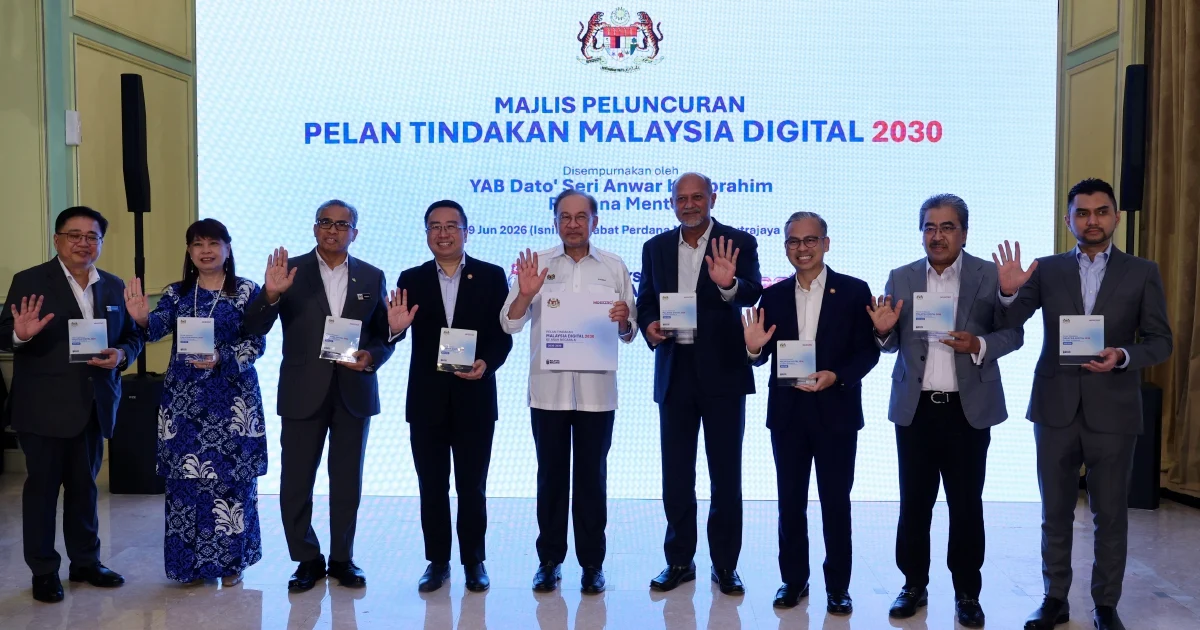
Prime Minister Datuk Seri Anwar Ibrahim formally unveiled Malaysia Digital 2030 (MD2030) in Putrajaya, signalling a fundamental reorientation of the nation's approach to technology development. The framework, designed to guide Malaysia's digital transformation from 2026 through 2030, represents far more than incremental policy refinement—it embodies a strategic pivot toward indigenous technological capability rather than reliance on foreign technology solutions. This repositioning carries significant implications for Malaysia's economic competitiveness, workforce development, and regional standing in the increasingly critical digital economy.
The timing of this initiative reflects growing recognition within policymaking circles that Southeast Asia's rapid digitalization demands more than passive consumption of external technology. Countries that merely adopt foreign digital infrastructure risk perpetual dependency and limited value capture from digital transformation. By contrast, nations developing domestic innovation ecosystems can retain intellectual capital, build higher-value industries, and create sustainable employment opportunities aligned with cutting-edge technological advancement. Malaysia's launch of MD2030 signals official acknowledgment that this distinction matters fundamentally to long-term prosperity.
The action plan's emphasis on artificial intelligence underscores where policymakers believe competitive advantage lies. Rather than competing with established tech giants in consumer electronics or software services where Malaysia enters late, focusing on AI applications tailored to regional contexts—whether in agriculture, manufacturing, financial services, or healthcare—allows the country to leverage existing sectoral strengths while advancing technological sophistication. This vertical specialization strategy, refined through experience across comparable middle-income economies, offers a more realistic pathway than broad-based technology leadership.
Transforming Malaysia from technology consumer to producer requires sustained investment in human capital development. The current framework must necessarily address gaps in specialized technical education, research capacity, and incentive structures encouraging Malaysian talent to remain engaged in domestic innovation rather than pursuing opportunities abroad. Universities, technical institutes, and private sector training programmes face pressure to align curricula with emerging technology demands, a coordination challenge historically difficult for Malaysia's fragmented education and training landscape.
Government support mechanisms will prove critical. Targeted venture capital funds, tax incentives for research and development, intellectual property protection frameworks, and regulatory sandboxes enabling controlled experimentation with emerging technologies all feature in comparable national strategies worldwide. Whether Malaysia adequately funds and implements these enabling instruments will substantially determine MD2030's success. Previous digital initiatives have stumbled partly through insufficient budgetary commitment relative to stated ambitions.
Regional dynamics complicate Malaysia's positioning. Neighbouring Singapore has already established itself as a regional AI hub, attracting research talent and venture investment across Southeast Asia. Thailand, Vietnam, and Indonesia pursue their own digital transformation agendas. Rather than viewing these efforts competitively, MD2030 might benefit from emphasizing complementary specialization—Malaysia developing particular AI applications or sectoral expertise while participating in broader regional technology networks. This collaborative approach, increasingly common among smaller developed economies, often yields better outcomes than attempting comprehensive domestic capability across all emerging technologies.
The private sector's role demands careful consideration. While government directives and funding matter, sustainable innovation ecosystems emerge primarily through entrepreneurial initiative and competitive market dynamics. Regulatory frameworks should encourage rather than prescribe innovation pathways. Malaysian companies across manufacturing, finance, and logistics sectors possess intimate understanding of local market dynamics and operational challenges where AI solutions could generate genuine competitive advantage. Channelling this practitioner knowledge into innovation development, rather than assuming government-led initiatives will drive technological breakthroughs, aligns with successful innovation models internationally.
International partnerships represent another lever. Collaborations with research institutions and companies in advanced economies, carefully structured to protect Malaysian interests while enabling technology transfer, can accelerate capability development. Some of the world's most dynamic innovation ecosystems involve deliberate integration with global knowledge networks rather than autarkic development. The question for MD2030 becomes how to engage international partners in ways that build genuine Malaysian capacity rather than creating extractive relationships where foreign entities capture most value.
Workforce transition poses particular challenges. As Malaysia pursues technology producer status, existing workers in lower-value digital and manufacturing roles face disruption. Reskilling programmes, social safety nets for displaced workers, and clear communication about transition timelines become essential political economy considerations. Economic transformation that concentrates gains among educated elites while imposing costs on working populations faces legitimate public resistance. MD2030's success depends partly on whether implementation includes inclusive mechanisms ensuring broad-based benefit rather than narrow technological advancement benefiting only advantaged cohorts.
Measuring progress requires credible metrics. Published targets for research spending, patent filings, technology startup creation, and high-skill employment in AI-related fields would make MD2030 genuinely accountable. Without transparent measurement frameworks, national technology initiatives easily become rhetorical exercises divorced from operational reality. Malaysia's track record with previous digital transformation plans offers mixed evidence regarding commitment to rigorous implementation and honest assessment of shortfalls.
The international context matters significantly. Global competition for AI leadership intensifies as the technology's economic importance becomes undeniable. China, the United States, and the European Union commit enormous resources to AI capability development. For Malaysia, competing directly at this scale proves impossible, but identifying specialized niches where Malaysian innovation contributes meaningfully to global AI development offers realistic aspiration. This might involve AI applications for tropical agriculture, maritime logistics, or financial inclusion within Southeast Asian contexts—domains where Malaysian institutions possess particular knowledge.
MD2030 ultimately represents Malaysian policymakers taking seriously the transition from technology consumer to producer. Whether this ambition translates into sustained implementation, adequate resource allocation, and genuine innovation outcomes will unfold over the five-year period ahead. The framework's reception within Malaysia's technology community, investment response from venture capitalists and multinationals, and measurable progress against stated targets will reveal whether this represents fundamental strategic reorientation or another well-intentioned plan constrained by familiar implementation challenges.

