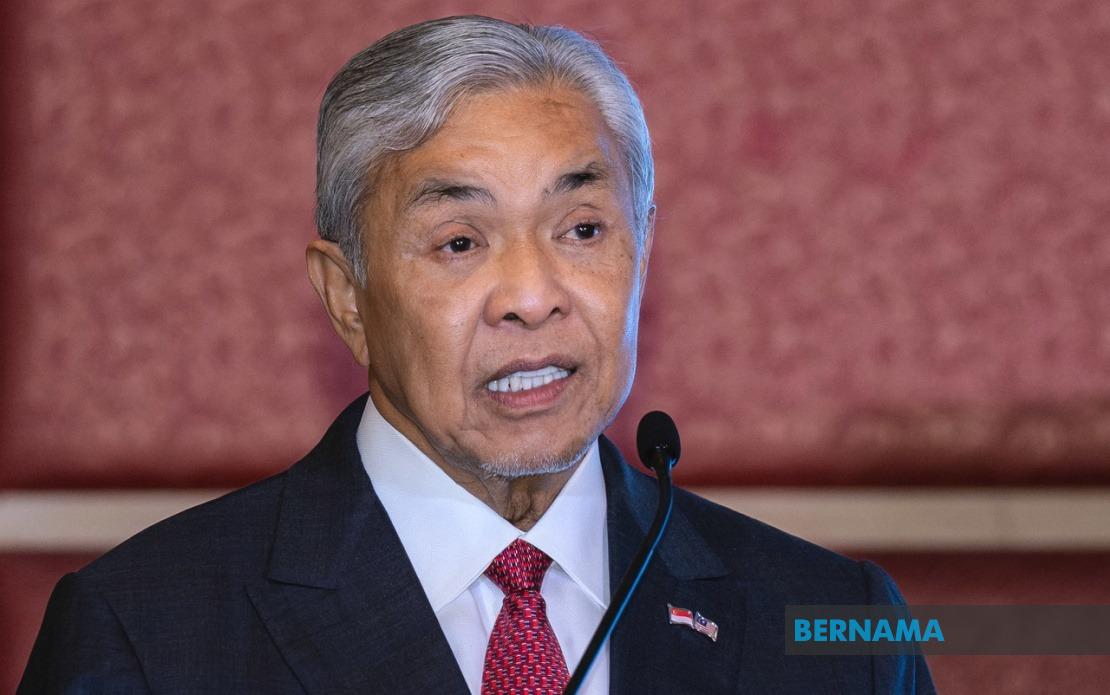
Malaysia is moving toward establishing an independent domestic framework for managing its refugee and asylum seeker populations, signalling a shift toward self-reliant governance rather than dependence on international bodies. Deputy Prime Minister Datuk Seri Dr Ahmad Zahid Hamidi outlined this strategic direction in Parliament, emphasizing that the National Security Council Directive No. 23—formally adopted by Prime Minister Datuk Seri Anwar Ibrahim on June 14, 2023—forms the backbone of Malaysia's revised approach to refugee management and policy coordination across government agencies.
The initiative comes against the backdrop of Malaysia hosting more than 126,000 registered Rohingya refugees, a population that has strained social services and raised persistent security concerns among policymakers. Rather than ceding authority to external humanitarian organizations or relying on international refugee frameworks, the government has chosen to consolidate control through a centralized directive that clarifies institutional responsibilities and operational protocols. Ahmad Zahid, who also serves as Rural and Regional Development Minister, framed this domestically-driven mechanism as essential to balancing humanitarian obligations with Malaysia's sovereign interests and law enforcement priorities.
The directive itself represents a comprehensive reassessment of how Malaysia approaches refugee issues at the structural level. By codifying the functions and roles of every relevant ministry and government agency, the NSC Directive No. 23 aims to eliminate institutional gaps and reduce the fragmentation that has historically plagued refugee governance in the country. This multi-agency coordination model acknowledges that refugee management extends far beyond border security, requiring alignment across health, education, employment, and welfare sectors. The framework explicitly positions national security and sovereignty as foundational principles, ensuring that humanitarian considerations never override Malaysia's capacity to monitor and regulate its refugee populations.
Access to essential services forms a central pillar of Malaysia's reformed mechanism. Eligible refugees will gain recognized pathways to healthcare, education, and employment opportunities—a recognition that warehousing vulnerable populations without livelihood prospects ultimately undermines social stability and increases irregular economic activity. By formalizing these access routes under government oversight, the directive seeks to move refugee populations out of informal channels and into regulated spaces where their activities can be monitored. This approach reflects a pragmatic understanding that refugees cannot remain perpetually stateless and economically excluded without generating secondary problems that ripple through host communities.
A particularly notable dimension of Ahmad Zahid's parliamentary statement addresses the enabling mechanisms that sustain irregular refugee populations. He explicitly criticized local residents and entrepreneurs who profit from refugee populations through rental arrangements and wage exploitation, characterizing these actors as undermining government enforcement efforts. This candid acknowledgment reveals that Malaysia's refugee challenge is not solely a matter of managing external populations but also involves disciplining domestic actors whose economic incentives conflict with national policy. The directive implicitly targets these enablers by formalizing the regulatory environment, making it riskier and more legally exposed for residents to harbor undocumented workers or facilitate cash economies beyond government purview.
The welfare and social responsibility dimension highlights an important philosophical reorientation in Malaysian policy discourse. Rather than treating refugee management as purely a security and enforcement matter, the framework acknowledges reciprocal obligations: if refugees are to remain in Malaysia, they require access to basic services and dignified living conditions. Conversely, host communities and their institutions must bear the costs of accommodating refugee populations. This social contract framing is intended to reduce the perception that refugees represent unmitigated burdens, potentially building greater public acceptance for government policies that distinguish between security screening and humane treatment.
For Malaysia's regional position, this independent framework carries subtle but significant implications. By developing autonomous management capacity rather than outsourcing refugee governance to the United Nations High Commissioner for Refugees (UNHCR) or international NGOs, Malaysia reasserts state authority over a sensitive policy domain. This stance aligns with broader Southeast Asian trends toward limiting external influence over migration and security matters. Neighbouring countries including Thailand and Indonesia have similarly pursued national-level refugee protocols, suggesting a regional pattern of states consolidating governance rather than deferring to international humanitarian architecture.
Implementation challenges remain substantial, however. The directive's success depends on sustained inter-agency coordination, adequate funding, and political will to enforce regulations evenly across ministries and regions. Historical experience suggests that comprehensive policy directives often encounter resistance at operational levels, where competing institutional interests and resource constraints create friction. Additionally, the framework must navigate tensions between security-focused enforcement and service provision—maintaining refugee access to healthcare and education while simultaneously implementing surveillance and registration requirements.
The mechanism also carries implications for Malaysia's international standing in humanitarian circles. While positioning refugee management as a sovereign prerogative, Malaysia risks appearing to retreat from international humanitarian norms if enforcement becomes coercive or if service provision remains inadequate. The distinction between independent governance and isolation will depend on whether the directive's implementation demonstrates genuine commitment to refugee protection alongside security management. Regional and international observers will assess whether Malaysia's framework represents pragmatic state capacity-building or protectionist closure.
Looking forward, the NSC Directive No. 23 framework will require periodic revision as refugee populations shift, security environments change, and socioeconomic pressures on host communities evolve. The government has signalled its intention to treat this as a living policy document rather than a static institutional arrangement. Success ultimately hinges on demonstrating that Malaysia can protect its national interests while managing refugee populations in ways that prevent humanitarian crises, community tensions, and irregular migration networks from proliferating. The coming months and years will reveal whether this domestically-designed mechanism can deliver on both fronts simultaneously.

