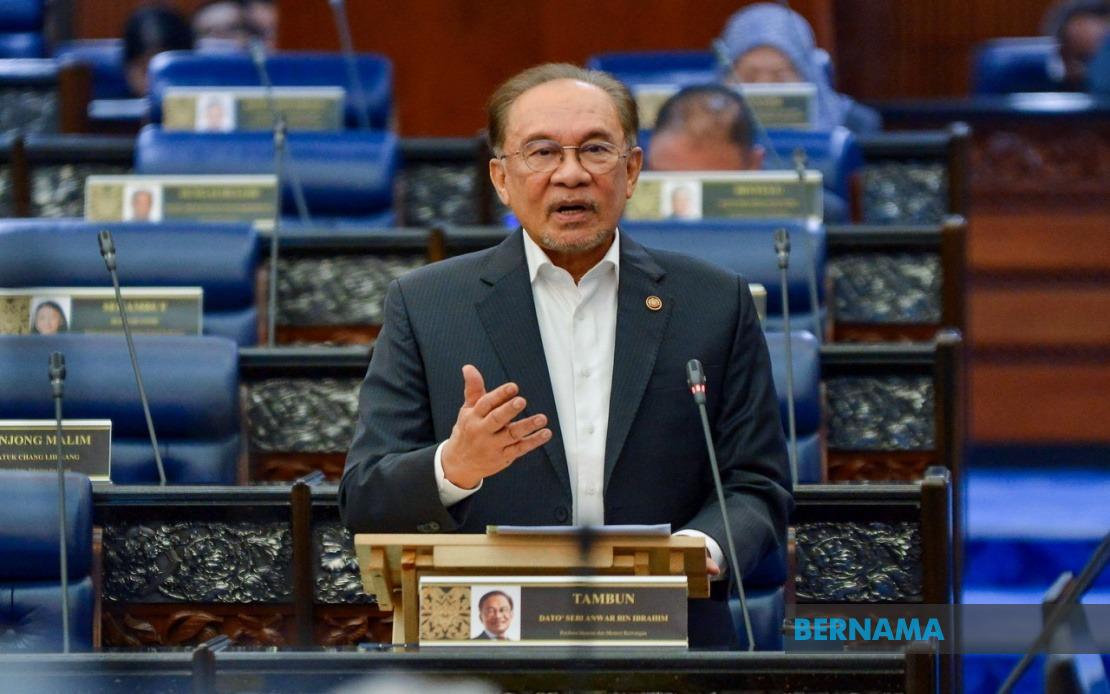
Malaysia will persist in pursuing diplomatic channels and the legal framework provided by the 1982 United Nations Convention on the Law of the Sea to address maritime boundary disputes affecting its relations with neighbouring states, Prime Minister Datuk Seri Anwar Ibrahim declared during parliamentary proceedings on July 14. The reaffirmation comes as maritime tensions remain elevated across Southeast Asia and the broader Indo-Pacific region, where competing territorial claims and resource interests have periodically tested regional stability.
While acknowledging the International Maritime Organization's role in maritime governance, Anwar emphasized that even this specialized United Nations agency operates within UNCLOS 1982's overarching legal structure. The convention itself establishes the foundational principles governing maritime zones, navigational rights, and dispute resolution mechanisms that have become internationally recognized standards since its adoption. However, Anwar candidly recognized a fundamental challenge that complicates straightforward implementation: different nations interpret UNCLOS provisions in ways that reflect their strategic interests and historical claims, meaning the convention alone cannot serve as a universal solution to every territorial disagreement that arises.
The Prime Minister's comments assume particular significance regarding the South China Sea, where ASEAN members and China have invested considerable diplomatic effort into negotiating a Code of Conduct designed to manage tensions and reduce the risk of accidental escalation. ASEAN's collective position, Anwar explained, centres on applying UNCLOS as the negotiating foundation while simultaneously working with Beijing to complete the conduct framework. Nevertheless, these parallel processes face complications when individual member states—particularly the Philippines—carry unresolved bilateral disputes that extend beyond maritime dimensions, such as the longstanding Sabah claim that intersects with maritime sovereignty questions.
Anwar's parliamentary response to Datuk Seri Hasni Mohammad's question about seeking IMO expertise on Straits of Malacca security highlighted the government's deliberate preference for bilateral and multilateral negotiation over external mediation. This stance reflects Malaysia's experience that sustained dialogue, despite requiring multiple rounds of talks and occasional adjournments, ultimately produces workable arrangements that preserve each nation's underlying sovereignty claims while enabling practical cooperation. The Prime Minister illustrated this principle through Malaysia's successful joint development arrangements with Thailand and Vietnam, demonstrating that nations need not resolve ownership questions entirely to derive mutual economic benefit from contested zones.
The Vietnamese experience exemplifies Malaysia's pragmatic diplomatic model. Although maritime areas remain formally disputed and both countries maintain their respective legal arguments rooted in historical evidence and international law interpretations, the establishment of a Joint Development Authority permitted coordinated resource management and profit-sharing without either party surrendering its claim. This mechanism allows economic activity to proceed in contested waters while the underlying sovereignty question remains unresolved—a temporary but sustainable compromise that reflects regional realities where complete resolution may prove politically impossible.
Malaysia's maritime boundary situation extends across a complex web of relationships involving six neighbouring countries: Brunei, Thailand, Indonesia, Singapore, the Philippines, and China. Each bilateral relationship carries distinct characteristics, historical contexts, and complicating factors. Negotiations with Brunei have reportedly achieved substantial progress, with most outstanding issues concentrated in areas affecting Sarawak's territorial jurisdiction. Discussions with Indonesia similarly focus on delineation zones impacting Sabah, conducted in close consultation with the state government given the federal structure of Malaysian governance and the constitutional position of Peninsular Malaysia's states.
The government's consistent choice of diplomacy reflects Malaysia's identity as a maritime nation whose prosperity depends on freedom of navigation, secure shipping lanes, and stable relationships with multiple countries across contested waters. Escalating maritime disputes into military confrontations or political crises would fundamentally damage Malaysia's interests in regional peace and economic cooperation. This calculation explains why Malaysia has resisted militarization of boundary disagreements despite provocations that might justify harder responses, instead channeling disagreements into structured negotiation frameworks where legal arguments and diplomatic skill determine outcomes rather than coercive power.
Anwar's emphasis on preventing disputes from widening into broader regional tensions carries implications for how Malaysia positions itself within ASEAN and its relationships with major powers. As a moderate voice advocating negotiated settlement, Malaysia influences regional norms toward peaceful dispute resolution even as some members pursue more assertive stances. The ASEAN consensus approach, despite its limitations, has prevented maritime disagreements from metastasizing into open conflict—an achievement reflected in years of unresolved disputes continuing without military escalation.
The interpretation challenges Anwar identified represent genuine obstacles to UNCLOS-based settlement. While the convention established mechanisms for maritime zone delimitation, provisions for continental shelf claims, and procedures for dispute resolution, its text accommodates multiple reasonable interpretations regarding precisely where maritime boundaries should fall between adjacent or opposite coastlines. Scientific evidence about continental margins, historical usage patterns, and strategic geography all feed into these competing interpretations, meaning that sophisticated legal arguments exist on multiple sides of most boundary questions.
Looking forward, Malaysia's continued commitment to UNCLOS-based negotiation must contend with rising great power competition in the region and increasing resource scarcity that intensifies boundary disputes. The framework that worked reasonably well in earlier decades faces pressure from states seeking to maximize territorial claims and from external powers with interests in regional outcomes. Malaysia's diplomatic approach assumes good faith engagement from negotiating partners, a assumption that becomes more tenuous as geopolitical competition sharpens. Nevertheless, Anwar's parliamentary statement reaffirms that Malaysia sees no viable alternative to sustained negotiation, whatever its frustrations and limitations.

