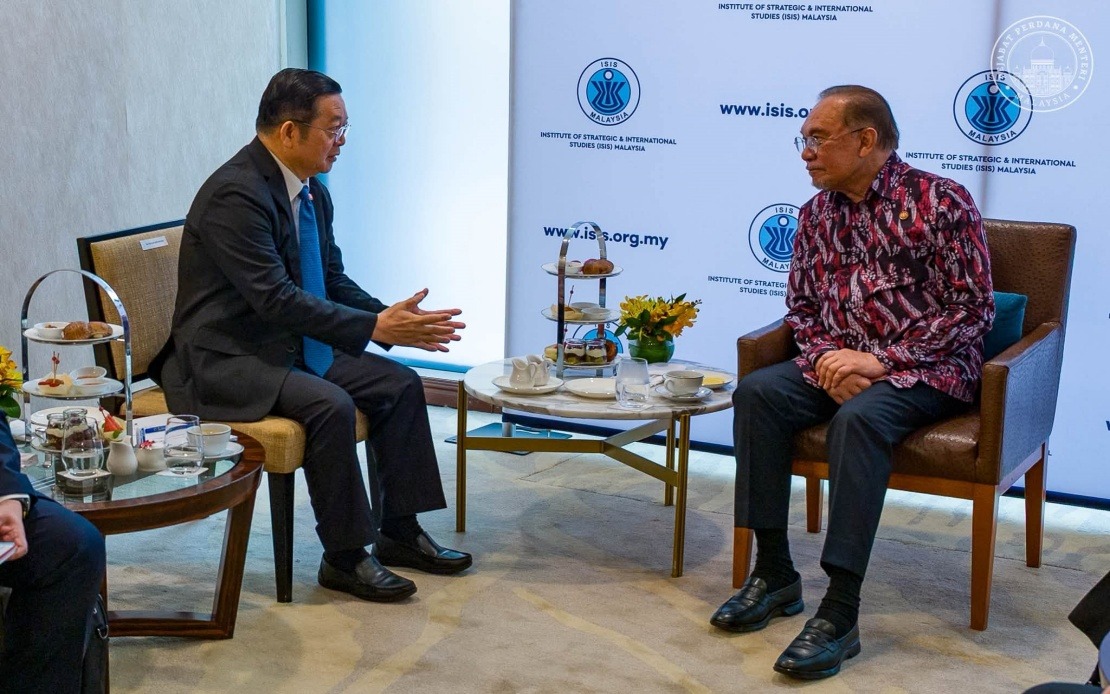
Prime Minister Datuk Seri Anwar Ibrahim has reaffirmed Malaysia's dedication to advancing ASEAN's institutional resilience and cohesion, pledging that the nation will maintain its constructive engagement within the regional body as it confronts mounting geopolitical and economic headwinds. Speaking during a courtesy visit from ASEAN Secretary-General Dr Kao Kim Hourn on the sidelines of the 39th Asia-Pacific Roundtable in Kuala Lumpur, Anwar underscored the importance of the bloc remaining sufficiently cohesive and adaptable to serve the collective interests of its 680 million people in an era of intensifying strategic competition and economic uncertainty.
The Prime Minister's reassurance carries particular weight given Malaysia's historical role as a founding member and consistent advocate for ASEAN centrality in regional affairs. His remarks follow the delivery of a keynote address at the prestigious roundtable forum, where he engaged directly with regional security experts, policymakers, and analysts on the continent's most pressing concerns. The timing of such a statement reflects growing international scrutiny of ASEAN's capacity to navigate fractures within its own membership while maintaining credibility with major powers vying for influence across Southeast Asia.
Among the substantive matters raised during the exchange with Dr Kao Kim Hourn was the deteriorating humanitarian crisis in Myanmar, where a military junta has consolidated power following a coup d'état in February 2021. Myanmar's internal conflict has displaced hundreds of thousands and created refugee flows destabilising neighbouring nations, including Malaysia, which hosts substantial migrant populations. Anwar's explicit reference to Myanmar suggests Kuala Lumpur views the crisis as a test of ASEAN's capacity for meaningful intervention, though the bloc's consensus-based decision-making model has long constrained its ability to take decisive action on members' internal affairs.
The discussion also encompassed the fraught situation in the South China Sea, a waterway through which trillions of dollars in global trade passes annually and which remains contested by multiple claimants, including China, Vietnam, the Philippines, and Malaysia itself. The strategic waters represent a persistent flashpoint where ASEAN unity is regularly tested by competing commercial interests and security concerns. Anwar's commitment to addressing this issue within multilateral forums signals Malaysia's preference for dialogue-based mechanisms over unilateral posturing, a stance that distinguishes it from more assertive regional actors.
Artificial intelligence emerged as a surprisingly prominent theme in the high-level dialogue, reflecting how rapidly technological disruption has become embedded in discussions of regional competitiveness and security. As AI capabilities increasingly influence everything from surveillance to economic productivity, ASEAN member states face pressure to establish common standards and governance frameworks to prevent the technology from exacerbating existing inequalities or creating new security vulnerabilities. Malaysia's engagement on this front positions it as an active participant in shaping the region's technological future rather than a passive recipient of external innovation.
The conversation also turned to Timor-Leste's full accession to ASEAN, completed in 2023 after the young nation graduated from observer to candidate to full membership status. This transition opens a new chapter for the bloc, requiring adjustment of internal processes and diplomatic protocols to accommodate the Portuguese-speaking Southeast Asian nation. The post-accession phase demands careful integration efforts to ensure Timor-Leste benefits from membership while ASEAN manages the practical complications of expanding from ten to eleven members.
Implementation of the ASEAN Community Vision 2045 framework represents another critical domain where Malaysia sees itself contributing meaningfully. This long-term strategic blueprint commits the organisation to deepening integration across political, economic, and socio-cultural pillars through 2045. As a relatively developed economy with significant manufacturing and financial sectors, Malaysia stands to benefit from deepened intra-ASEAN trade and investment flows, making its rhetorical commitment to the vision consistent with national interest.
The conflict engulfing West Asia, with its humanitarian catastrophe and global ramifications, also featured in their discussion. The implications of Middle Eastern instability reverberate across Southeast Asia through multiple channels: fluctuating energy prices, disrupted shipping routes, refugee movements, and ideological currents that occasionally inflame communal tensions in multiethnic societies like Malaysia. Anwar's attention to these external shocks demonstrates sophisticated understanding that regional stability cannot be cordoned off from turbulence occurring elsewhere.
Anwar's emphasis on unity, centrality, and close cooperation reflects the diplomatic vocabulary that has anchored ASEAN since its founding in 1967 through the ASEAN Way framework. Yet behind this rhetorical consistency lies substantive challenge: how to maintain consensus and cohesion when member states increasingly diverge in their relationships with great powers, economic development levels, and domestic political systems. Malaysia's own complex position—balancing ties with China, the United States, ASEAN neighbours, and former colonial powers—makes it naturally positioned to advocate for inclusive, rather than exclusionary, regional architecture.
The broader context underscoring Anwar's remarks involves global power competition intensifying across Southeast Asia. China's regional assertiveness, American efforts to maintain strategic influence through the Quad and bilateral partnerships, and European engagement through Indo-Pacific strategies create a complex environment where ASEAN's collective voice and institutional coherence carry genuine strategic value. By reaffirming Malaysia's commitment to strengthening ASEAN's institutional capacity and decision-making processes, Anwar signals that Kuala Lumpur views the bloc's success as essential to Malaysian security and prosperity.
Looking ahead, the challenge for ASEAN and Malaysia specifically involves translating diplomatic commitments into tangible policy outcomes that benefit ordinary citizens through job creation, poverty reduction, improved education, and environmental protection. The aspirations of ASEAN's population extend beyond geopolitical positioning to encompass concrete improvements in living standards and opportunities. Anwar's dual role as Prime Minister and Finance Minister places him at the intersection of these economic and political considerations, positioning Malaysia to influence both ASEAN's collective economic strategy and its diplomatic engagement with the wider world.

