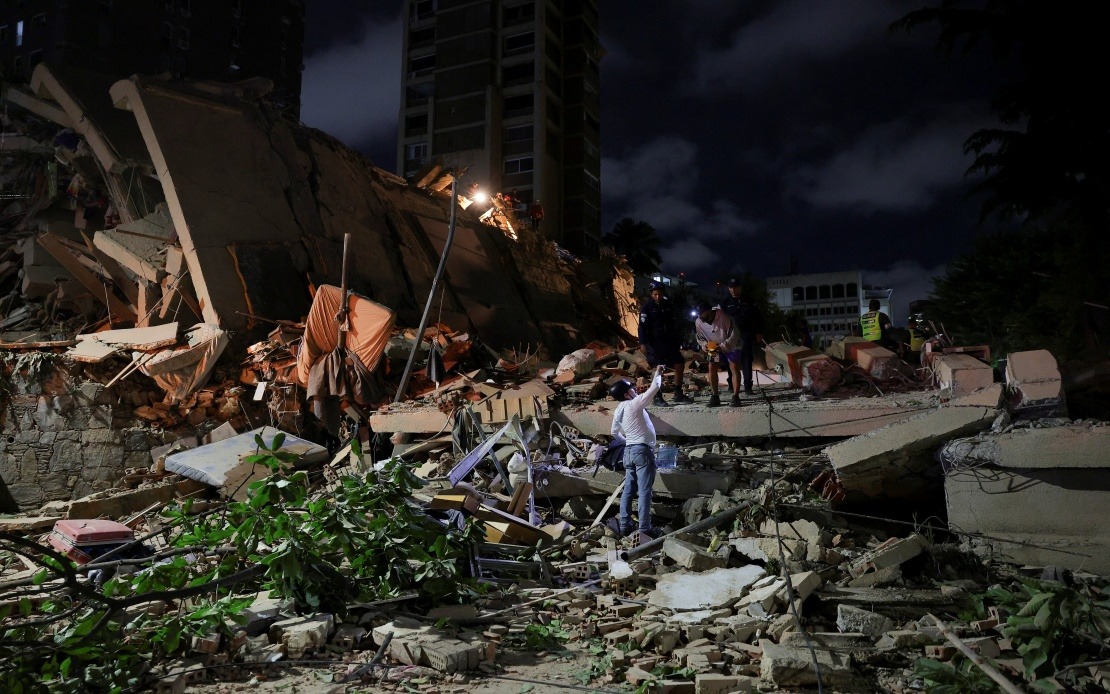
The Malaysian government has moved swiftly to reassure the public that its citizens in Venezuela remain secure and accounted for in the aftermath of devastating seismic activity that shook the country this week. Wisma Putra, the nation's Foreign Ministry, issued an official statement on Thursday morning local time confirming the welfare of all registered Malaysians following the twin earthquakes that impacted central Venezuela, with preliminary readings indicating magnitudes of 7.2 and 7.5 on the Richter scale.
The tremors originated approximately 21 kilometres away from Moron and roughly 168 kilometres west of the capital Caracas, making them significant regional events. The shaking was experienced across a wide geographical area, with impact felt not only in Caracas but extending to the states of Trujillo, Carabobo, Miranda, and La Guaira. Initial reports indicate structural damage with several buildings collapsing, though Venezuelan authorities are still in the process of conducting comprehensive damage assessments and determining casualty figures.
Wisma Putra maintains active communication with Venezuelan authorities and continues to gather information as the situation develops. The ministry's statement emphasised that local emergency services are the primary source of authoritative information regarding the full scale of destruction and humanitarian impact. This coordinated approach reflects Malaysia's established protocols for managing crises affecting its citizens abroad, prioritising safety verification while deferring to host nation expertise for broader damage assessment.
Malaysian expatriates and visitors currently in Venezuela or in areas affected by the earthquakes have been issued formal guidance to exercise heightened vigilance and strictly follow all safety instructions issued by local emergency management agencies. This advisory recognises that aftershocks commonly follow major seismic events and that structural damage may render buildings unstable, necessitating caution even as the immediate crisis phase subsides. The ministry's clear messaging aims to ensure that Malaysians in the region prioritise personal safety whilst maintaining communication with official channels.
A significant aspect of the ministry's response involves encouraging unregistered Malaysian nationals to complete their registration immediately through the e-Konsular online platform. This system, accessible at https://ekonsular.kln.gov.my, enables the government to maintain accurate records of citizens abroad and ensures that all Malaysians can be reached if future emergencies arise. The registration process also facilitates consular assistance during crises and helps authorities provide targeted support to those requiring help.
To facilitate immediate assistance, the Embassy of Malaysia in Caracas has established direct communication channels for Malaysians needing urgent support. Citizens can contact the embassy via telephone at (+58-212) 720 4257 or (+58-424) 222 1338, or via email at [email protected]. These multiple contact methods acknowledge the communication challenges that often accompany major disasters, when telephone networks may be congested or partially disabled. The embassy's readiness to receive information about Malaysian nationals in affected areas also helps compile comprehensive welfare data.
Venezuela's position as a developing nation with established Malaysian diaspora communities means that seismic events there warrant particular attention from Kuala Lumpur. The country has historically hosted Malaysian professionals, business people, and students, many working in oil and gas sectors or engaged in bilateral trade activities. The relatively quick confirmation of safety suggests that the Malaysian community there is relatively small and well-documented, enabling rapid verification procedures.
The earthquakes highlight the vulnerability of the South American region to seismic activity, reflecting its position along the Caribbean Plate boundary. For Malaysian nationals considering relocation to Venezuela or other Latin American countries, such natural hazards represent an important consideration in risk assessment. The swift and transparent response from Wisma Putra demonstrates Malaysia's institutional capacity to respond to crises affecting its citizens regardless of geographical distance, reinforcing confidence in the government's ability to manage overseas emergencies.
The ministry's commitment to provide continuing updates as the situation develops reflects the fluid nature of post-earthquake environments. Damage assessment often takes several days to complete as rescue teams access affected areas and conduct structural surveys. Venezuelan authorities will likely release updated casualty figures and damage estimates over coming days, and Wisma Putra will disseminate relevant information to Malaysian stakeholders through official channels.
This incident underscores the importance of consular registration for Malaysians abroad, a matter that receives insufficient attention during normal times. Emergency situations demonstrate the concrete value of registration systems, enabling governments to rapidly account for citizens and provide targeted assistance. Malaysia's Foreign Ministry will likely use this incident to encourage greater registration uptake among the estimated 1.2 million Malaysians living and working internationally.

