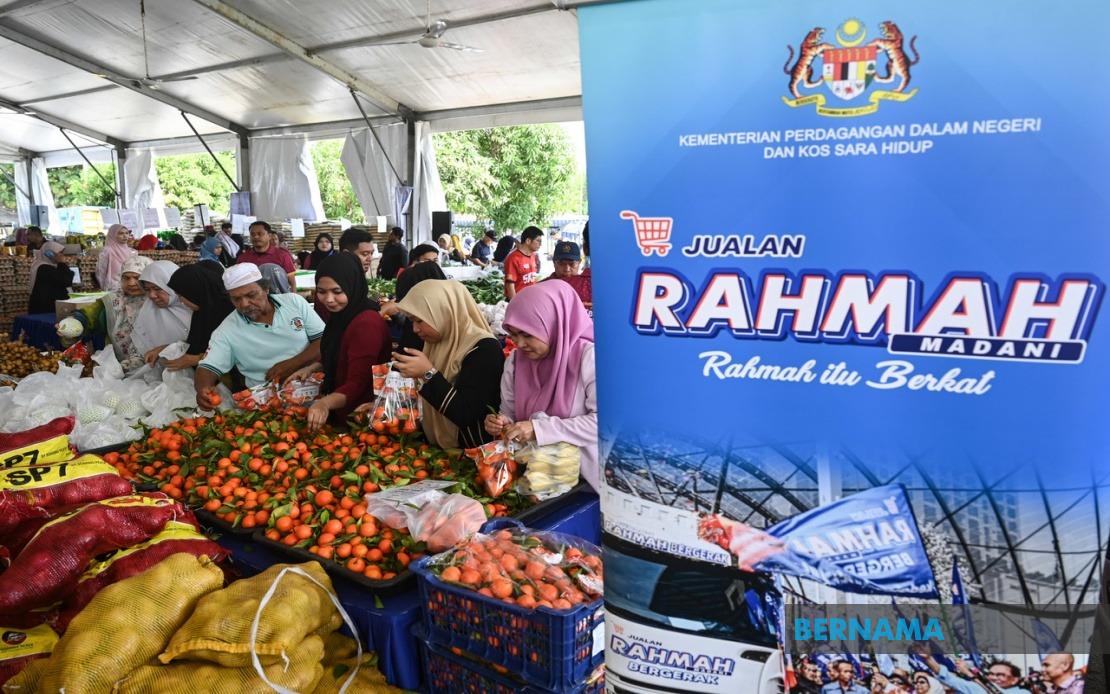
Prime Minister Datuk Seri Anwar Ibrahim has unveiled plans for the government's Ihsan Rahmah 9.9 online sale, scheduled to commence on September 9 as part of Malaysia Day 2026 celebrations. The announcement was made following his officiating of the TikTok Shop Summit Malaysia in Kuala Lumpur, signalling a strategic shift towards digital commerce in the government's cost-of-living support programme. The initiative represents the first occasion the popular Jualan Rahmah scheme will transition into an entirely online format, leveraging e-commerce platforms to reach a broader demographic across the country.
The Prime Minister characterised the sale as a comprehensive demonstration of governmental support extending to Malaysia's entire population of 34.5 million citizens. By merging the Ihsan Rahmah programme with national celebrations, the government seeks to reinforce the connection between economic policy and patriotic observance. The timing and scale of the initiative underscore the administration's commitment to ensuring that economic growth translates into tangible benefits for ordinary households, particularly those struggling with inflationary pressures on essential goods and services.
Implementation of the online sale will require coordinated efforts across multiple government agencies and private sector partners. Communications Minister Datuk Seri Fahmi Fadzil, Entrepreneur and Cooperative Development Minister Steven Sim Chee Keong, and Domestic Trade and Cost of Living Minister Datuk Armizan Mohd Ali were present at the announcement, reflecting the whole-of-government approach required for such an undertaking. This inter-ministerial collaboration highlights the complexity of delivering a nationwide discount programme through digital channels while maintaining price controls and ensuring equitable access across different regions and demographics.
The Jualan Rahmah programme, administered by the Ministry of Domestic Trade and Cost of Living (KPDN), has established a track record of providing price reductions ranging from 10 to 30 percent below regular market rates on everyday essentials. These discounts apply to categories critical for household budgets, including food staples, cooking oils, rice, and basic household products. The transition to an online platform presents both opportunities and challenges: while digital channels can facilitate broader participation and reduce administrative overhead, they also risk excluding elderly populations and those with limited internet access unless accompanied by complementary offline mechanisms.
Anwar emphasised that strong macroeconomic indicators alone are insufficient without corresponding improvements in citizens' quality of life. The Prime Minister articulated a holistic vision of development encompassing education, healthcare, infrastructure, and cost management. This framing positions the Ihsan Rahmah 9.9 initiative within a broader development agenda rather than presenting it as a temporary relief measure. By linking consumption subsidies to sustainable economic growth, the government signals that affordability interventions form a permanent pillar of its economic policy framework.
The Prime Minister stressed the importance of extensive promotional activities to maximise awareness and participation in the September 9 sale. Given Malaysia's diverse linguistic and cultural landscape, ensuring that information about the programme reaches all demographic segments will require targeted communications strategies tailored to different regions and communities. The challenge of achieving equitable participation is particularly acute in rural areas and among populations with limited digital literacy, necessitating complementary awareness campaigns through traditional media alongside online promotional efforts.
Transitioning the Jualan Rahmah programme to a digital platform aligns with Malaysia's broader digital economy ambitions and the government's vision of leveraging technology for social policy delivery. The partnership with TikTok Shop and other e-commerce platforms represents pragmatic engagement with private sector entities that command substantial user bases and transaction capacity. However, this reliance on private platforms also introduces considerations regarding data privacy, consumer protection, and the regulatory frameworks governing online commerce, particularly concerning vulnerable populations who may be unfamiliar with digital transactions.
For regional observers, Malaysia's approach to integrating digital commerce with social protection demonstrates an emerging model for Southeast Asian economies grappling with similar affordability challenges. As inflation affects consumer purchasing power across the region, government-led initiatives that harness e-commerce infrastructure to deliver targeted subsidies present a potentially scalable approach. The success or challenges encountered by the Ihsan Rahmah 9.9 initiative will likely inform policy discussions in neighbouring countries considering comparable interventions.
The Malaysia Day timing carries symbolic significance beyond mere calendar convenience. By anchoring the sale to national celebrations, the government intertwines economic welfare with national identity and citizenship. This framing suggests that cost-of-living support constitutes not merely a welfare function but a fundamental aspect of the social contract between government and citizens. The initiative reflects growing recognition that economic inclusivity forms a cornerstone of national cohesion and political stability in diverse, multicultural societies.
Successful execution of the online sale programme will require sustained coordination among numerous stakeholders, from vendor recruitment and inventory management to payment processing and dispute resolution. The government's willingness to embrace digital platforms suggests confidence in Malaysia's digital payment infrastructure and e-commerce ecosystem maturity. Potential outcomes could include valuable data about online consumer behaviour patterns, preferences among different income segments, and the efficacy of digital channels for delivering targeted policy benefits, insights that could inform future government interventions in the digital economy space.
The announcement also reflects broader trends in how governments worldwide are utilising digital technologies to modernise service delivery and expand programme reach. For Malaysia, the transition from periodic physical Jualan Rahmah events to a continuous online platform could eventually yield efficiencies and improved accessibility. However, maintaining the programme's core objective of ensuring affordability for lower-income households while embracing digital distribution requires careful calibration to prevent digital exclusion from undermining social policy objectives.

