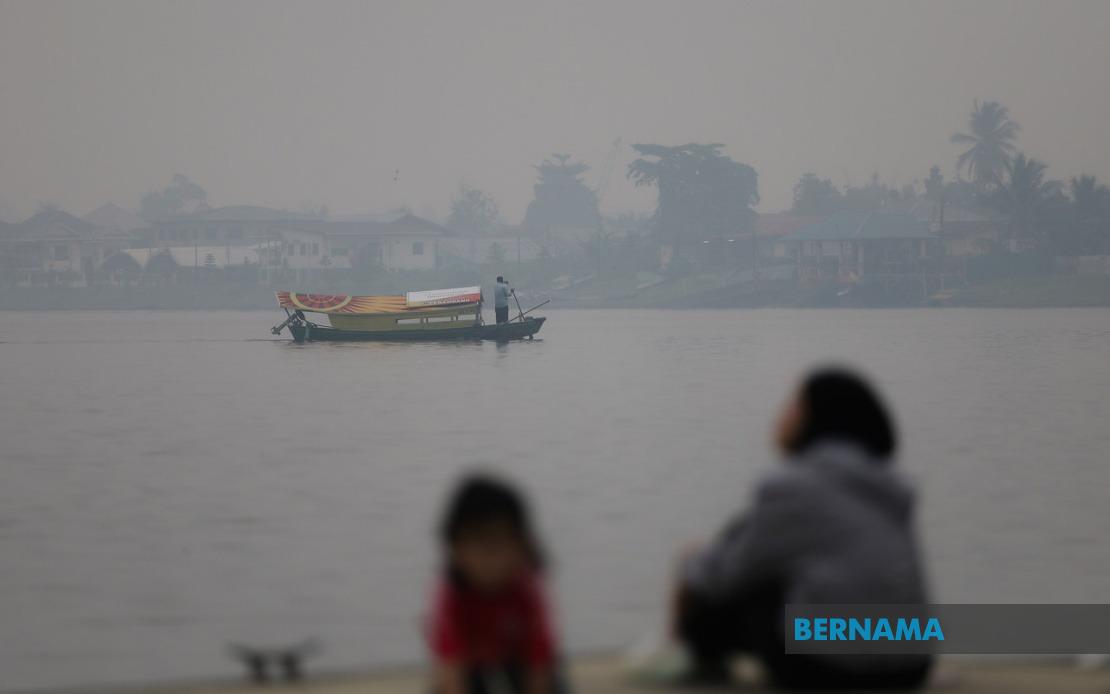
The Malaysian government has mobilized cloud seeding operations across multiple haze-affected regions, targeting areas where air quality has deteriorated to hazardous levels and water reserves are dwindling due to prolonged dry conditions. Deputy Prime Minister Datuk Seri Dr Ahmad Zahid Hamidi outlined the strategy during a visit to Serdang on August 30, emphasizing that the intervention aims to address two interconnected challenges: deteriorating air quality and falling water levels at critical dams across the country.
The initiative represents a coordinated response involving Malaysia's key meteorological and defence agencies. The Malaysian Meteorological Department and Royal Malaysian Air Force are collaborating to execute the cloud seeding programme, with operations already underway in Putrajaya and scheduled to expand to Sarawak, Kedah and Perlis from September 3 to 5. This geographic spread reflects the widespread nature of the haze phenomenon affecting multiple states simultaneously, particularly in peninsular Malaysia and East Malaysia.
The targeting criteria of an Air Pollutant Index reading above 150 reflects escalating health concerns. At this threshold, air quality transitions from unhealthy to hazardous, posing significant risks to vulnerable populations including children, the elderly, and those with respiratory conditions. The government's emphasis on this specific benchmark indicates a proactive stance rather than merely reactive measures, attempting to intervene before air quality reaches critical levels that would necessitate broader lockdown measures or public health emergencies.
Sarawak has emerged as a particular flashpoint, with three monitoring stations recording alarming readings at midday on August 30. The Serian Police headquarters station registered an API of 412—nearly three times the hazardous threshold—while Samarahan and Kuching recorded 332 and 304 respectively. The Sri Aman area, though slightly lower at 228, still registered in the very unhealthy category. These readings suggest a concentrated pollution event affecting the state's eastern reaches, likely stemming from transboundary haze sources given the geography and prevailing wind patterns during this season.
The water security dimension of this intervention underscores deeper climate vulnerabilities facing Malaysia. Falling dam levels during the annual dry season constrain hydroelectric generation and threaten water supply to major urban centres. Cloud seeding serves a dual purpose: increasing precipitation recharges these critical reservoirs while simultaneously clearing airborne particulates. This dual benefit makes the intervention economically rational despite the operational complexity and costs involved.
However, the effectiveness of cloud seeding depends heavily on atmospheric conditions that officials cannot control. As Dr Ahmad Zahid explained, successful operations require not merely the presence of clouds but precise timing and spatial alignment. Cloud formations must move over targeted regions at the right moment—a constraint that makes the programme inherently probabilistic rather than guaranteed. This reality explains why the government frames cloud seeding as complementary to other measures rather than a comprehensive solution.
The timing of this announcement, made during the launch of an agricultural initiative at the MAHA 2026 exposition, reflects broader government priorities. Agricultural productivity suffers acutely during severe haze episodes due to reduced solar radiation and respiratory stress on livestock and workers. Enhanced water security also directly benefits Malaysia's farming sector, which remains vulnerable to drought conditions. The government's visibility in addressing these interconnected challenges serves both practical and political functions.
For Malaysian businesses and citizens, the implications extend beyond immediate air quality concerns. Sustained haze conditions increase healthcare expenditures, reduce workplace productivity across sectors dependent on outdoor activity, disrupt logistics and supply chains, and dampen consumer spending as people restrict movement. The water security angle particularly matters for industrial users and urban planners facing potential rationing scenarios. Manufacturing operations requiring consistent water supply face operational uncertainty during extended dry spells.
The transboundary nature of Southeast Asian haze pollution remains a structural challenge that cloud seeding addresses only symptomatically. While Malaysia's technical interventions have improved, the fundamental drivers—agricultural burning in neighbouring regions, open burning practices, and industrial emissions—persist across the region. Regional diplomatic mechanisms like the ASEAN Agreement on Transboundary Haze Pollution provide frameworks for cooperation, yet enforcement remains inconsistent. Malaysia's investment in cloud seeding reflects pragmatic acknowledgment that unilateral technical solutions, while valuable, cannot fully resolve problems rooted in regional development patterns and governance challenges.
Looking forward, the September expansion of cloud seeding to Kedah and Perlis suggests officials anticipate the haze moving northward into peninsular Malaysia—a seasonal pattern consistent with monsoon dynamics. These states, with significant agricultural sectors and multiple water supply infrastructure, represent strategically important regions for intervention. The decision to schedule operations over a multi-day window indicates meteorologists detected suitable weather windows and cloud formations in their forecasts.
Stakeholders should monitor official air quality updates through the Department of Environment's APIMS portal, as the decision to expand or contract cloud seeding operations will depend on real-time API readings and meteorological data. The effectiveness of current operations will likely determine public confidence in this technological approach to managing seasonal haze, influencing future investments in Malaysian atmospheric engineering capabilities.

