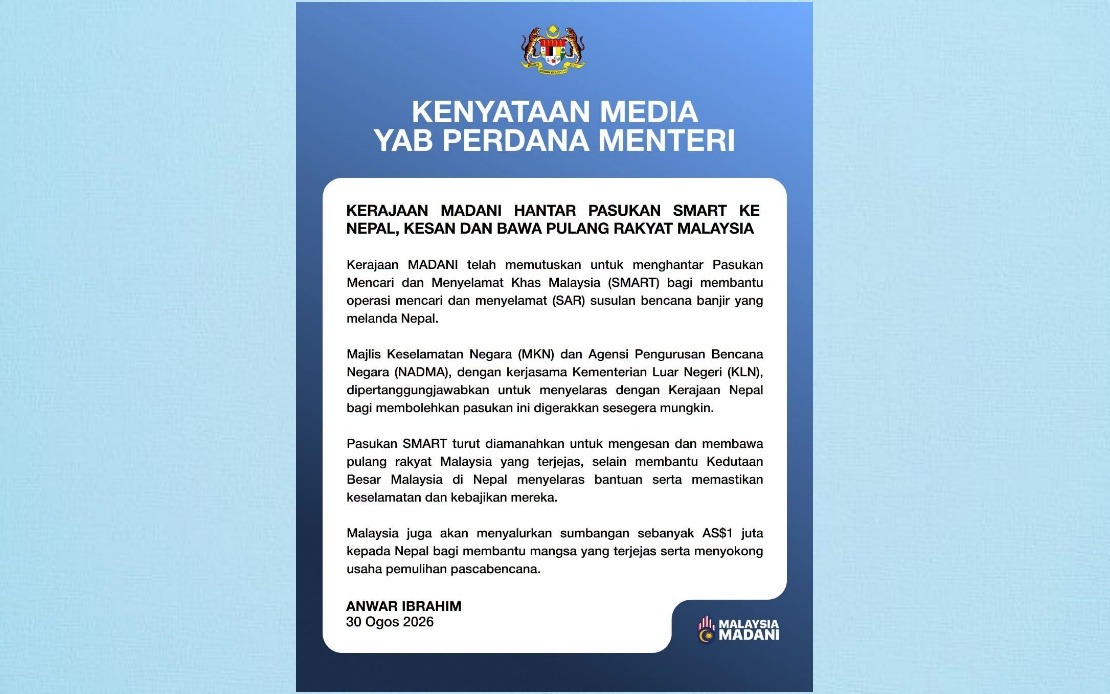
Malaysia is marshalling significant resources to aid Nepal in the aftermath of devastating floods that swept through the Himalayan nation, with Prime Minister Datuk Seri Anwar Ibrahim announcing the immediate deployment of the Special Malaysian Disaster Assistance and Rescue Team (SMART) to support search and rescue operations. The decision reflects Malaysia's commitment to regional disaster response and underscores the interconnectedness of Southeast Asia, where nationals from one country frequently find themselves caught in natural disasters across borders. The floods and accompanying landslides struck Rasuwa district on August 26, leaving a trail of destruction that has prompted urgent international assistance.
Coordination of the deployment has been assigned to multiple government agencies working in tandem, demonstrating the comprehensive approach taken by the MADANI Government. The National Security Council and the National Disaster Management Agency are collaborating closely with the Foreign Ministry to expedite negotiations with Nepalese authorities and ensure smooth passage of Malaysian rescue personnel and equipment into the affected region. This multi-agency coordination is crucial in disaster response, where delays in bureaucratic processing can cost lives and reduce the effectiveness of rescue efforts. The emphasis on rapid facilitation underscores how seriously Malaysian officials view the humanitarian window following the initial disaster.
Beyond the immediate search and rescue mandate, the SMART team has been tasked with a dual responsibility that reflects the government's concern for its own citizens caught in the calamity. The team will actively locate and repatriate Malaysians affected by the floods, addressing a pressing humanitarian concern given that 55 nationals have been reported as uncontactable since the disaster struck. This personal dimension of the response—bringing fellow citizens home safely—carries particular weight in Malaysian society, where such incidents often dominate domestic media and public discourse. The government's explicit prioritisation of locating these individuals demonstrates responsiveness to domestic stakeholders' concerns.
The Malaysian Embassy in Nepal will be supported by SMART personnel in coordinating broader assistance efforts, a practical arrangement that leverages the embassy's existing local networks and diplomatic standing. Embassies typically serve as crucial hubs during disasters, helping coordinate aid distribution, maintain communication with local authorities, and track the status of nationals. By positioning SMART team members to work alongside embassy staff, Malaysia ensures that rescue operations integrate smoothly with diplomatic efforts and that humanitarian assistance reaches intended recipients efficiently. This coordination also facilitates information flow back to Malaysia, enabling government agencies and families to obtain timely updates on missing persons.
The financial commitment accompanying the deployment reinforces Malaysia's contribution to Nepal's recovery. The pledge of US$1 million represents a substantial commitment that will support both immediate relief operations for affected populations and longer-term reconstruction efforts. Financial aid in the disaster's aftermath is often as critical as physical rescue operations, as it enables local authorities to provide emergency shelter, medical care, food, and water to displaced populations. For a country like Nepal, where disaster recovery infrastructure may be limited compared to more developed economies, international financial assistance provides crucial bridging support during the critical weeks and months following major disasters.
The scale of the catastrophe in Rasuwa district underscores why such rapid international response is necessary. Flash floods and landslides are particularly devastating in mountainous terrain, where water flows with tremendous velocity and secondary hazards like debris flows can destroy entire communities. The Nepalese district's geography, combined with the intensity of the weather event, created conditions where rescue efforts are exceptionally challenging and time-sensitive. The fact that 55 Malaysians remain uncontactable five days after the initial disaster suggests the scale of disruption and the difficulty of communication in affected areas. Some of these individuals may have been trekking or hiking in remote areas where mobile networks are unreliable or destroyed.
Nepal's vulnerability to such disasters has deep roots in its geography and climate patterns. The monsoon season brings heavy rainfall that regularly triggers flash floods and landslides across the country. The nation's mountainous terrain, combined with deforestation in many regions and the impacts of climate change, has increased the frequency and severity of such events in recent years. For Malaysian nationals who venture to Nepal for tourism, mountaineering, or other activities, understanding these seasonal risks is crucial. The August disaster serves as a stark reminder of the hazards that outdoor enthusiasts and adventurers face in the Himalayan region during monsoon season, potentially prompting Malaysian authorities to issue updated travel advisories.
The deployment of SMART represents a significant logistical undertaking that requires careful planning and international coordination. The team brings specialized equipment, trained personnel, and operational expertise developed through previous disaster response missions. Malaysia's experience deploying SMART in previous regional disasters, including the 2004 Indian Ocean tsunami and various floods across Southeast Asia, has created institutional knowledge that facilitates rapid mobilisation. However, each deployment to Nepal presents unique challenges related to terrain, local infrastructure, security considerations, and coordination with Nepalese authorities. The speed with which Malaysian officials have committed to deployment suggests confidence in their ability to navigate these complexities.
The regional implications of Malaysia's response extend beyond bilateral Nepal-Malaysia relations. Southeast Asian nations frequently collaborate on disaster management through established frameworks and bilateral agreements. Malaysia's swift action may set expectations for other countries in the region and reinforces the importance of maintaining robust disaster response capabilities. For Malaysian policymakers, such incidents underscore the need for continued investment in SMART's training, equipment, and readiness. Similarly, the presence of Malaysian nationals in Nepal highlights the importance of consular services and emergency protocols that can quickly mobilise assistance when disasters strike abroad.
Looking forward, the SMART deployment's effectiveness will likely influence Malaysia's approach to future regional disasters. Success in locating nationals, coordinating with Nepalese authorities, and contributing meaningfully to relief efforts could strengthen Malaysia's reputation as a dependable partner in regional crisis response. Conversely, challenges encountered will generate lessons that inform future operational procedures and policy frameworks. For Malaysian families with relatives in Nepal, the government's rapid response provides reassurance that official channels are actively engaged in locating missing persons. The coordination between rescue operations and diplomatic efforts also signals that Malaysia takes the safety and welfare of its citizens abroad seriously.

