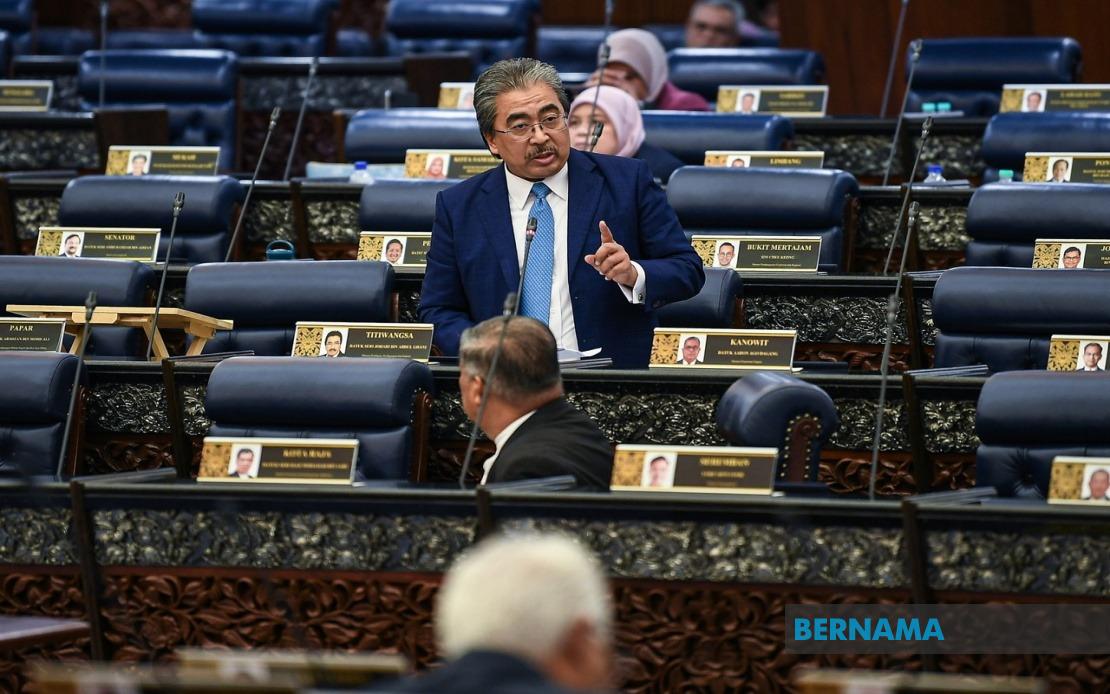
Malaysia is moving to establish a comprehensive system for preventing the entry of goods manufactured through forced labour, marking a significant shift in the country's approach to international trade standards and labour compliance. Investment, Trade and Industry Minister Datuk Seri Johari Abdul Ghani announced the development during parliamentary proceedings, emphasising that the mechanism reflects Malaysia's commitment to aligning with global trade requirements and meeting the expectations of major trading partners who increasingly demand stringent labour protections.
To execute this ambitious initiative, the government has created an Inter-Agency Task Force on Forced Labour chaired by the Ministry of Investment, Trade and Industry. The composition of this task force underscores the complexity of the challenge, drawing together representatives from the Ministry of Finance, the Ministry of Foreign Affairs, the Ministry of Home Affairs, the Ministry of Human Resources and the Ministry of Transport. This cross-ministerial approach recognises that combating forced labour requires coordination across multiple regulatory domains, from customs and border security to diplomatic engagement and labour standards.
Beyond government ministries, the task force incorporates crucial enforcement and development agencies including the Attorney-General's Chambers, the Royal Malaysian Customs Department, the Malaysian Border Control and Protection Agency, the Royal Malaysian Police, the Malaysian Investment Development Authority and the Malaysian External Trade Development Corporation. This assembled expertise positions Malaysia to develop a mechanism that is both legally sound and practically implementable at ports and trading checkpoints throughout the country.
Currently, Malaysia operates without dedicated legislation or administrative machinery to block imports produced through forced labour, a gap that Johari acknowledged candidly. This absence leaves Malaysian importers and consumers potentially complicit in global supply chains tainted by labour exploitation, and it creates vulnerability to international criticism and trade pressure. The development of such a mechanism therefore represents not merely a regulatory modernisation but also a recognition that Malaysia's trading relationships increasingly depend on demonstrating credible commitment to labour standards.
The urgency of this initiative cannot be separated from escalating pressure from the United States. In early June 2026, the US released preliminary findings from an investigation encompassing 60 countries regarding their enforcement of import restrictions on forced labour goods. Malaysia featured prominently in these findings, identified among 54 countries assessed as lacking specific legal prohibitions against the entry of such merchandise. Six additional countries were found to possess relevant laws but to have failed in enforcement.
More pressingly, the US has signalled that Malaysia faces the prospect of a 10 percent indicative tariff to be imposed following July 24. While termed preliminary, such a tariff would impose significant financial costs on Malaysian exporters and importers relying on US markets, affecting industries from electronics to palm oil to garments. The threat serves as both warning and incentive, concentrating political will behind the task force's work.
According to Johari, investigations into forced labour concerns are nearing completion, whereas separate inquiries into market access issues remain ongoing. The distinction matters for Malaysia's strategic response: addressing forced labour accusations becomes the more immediate priority given the identified tariff timeline. Officials are monitoring US developments closely and designing the mechanism with explicit attention to anticipated American expectations and enforcement patterns.
For Malaysian businesses, particularly manufacturers and exporters engaged in supply chains where labour practices are difficult to monitor, the impending framework will demand new due diligence procedures and documentation requirements. Companies sourcing materials or labour-intensive inputs from countries with elevated forced labour risks will face heightened scrutiny. This regulatory tightening aligns Malaysian enterprises with practices already common among multinational corporations serving developed markets, though smaller firms may struggle with compliance costs and complexity.
The initiative also reflects broader regional dynamics. Southeast Asian nations face coordinated pressure from developed economies to strengthen labour protections and environmental standards as conditions for preferential trade access. Malaysia's proactive stance positions it ahead of less responsive neighbours and demonstrates awareness that labour standards have become integral to trade diplomacy. Other ASEAN members contemplating similar mechanisms may observe Malaysia's approach as an instructive model or cautionary tale.
Geopolitically, Malaysia's move sits within the context of evolving US trade enforcement strategies. The Biden administration and its successor have emphasised labour standards as central to commerce frameworks, linking trade privileges to demonstrated commitment to eliminating exploitative practices. For Malaysia, characterised by substantial migrant worker populations and complex supply chains, navigating these expectations requires genuine institutional reform rather than cosmetic compliance.
The task force's formulation of the mechanism will necessarily grapple with definitional questions: how to identify forced labour in transnational supply chains, what standards to apply, how to balance enforcement with trade facilitation, and how to avoid undue burdens on legitimate commerce. These technical challenges will determine whether the resulting mechanism becomes a credible tool for protecting workers and markets or a bureaucratic hurdle that merely creates procedural compliance without substantive change.
Implementation timelines remain unclear, though the July 24 tariff trigger suggests the government anticipates finalising the mechanism within coming weeks. Success will depend not only on legislative drafting but on building institutional capacity, training customs personnel, and establishing credible verification partnerships with suppliers and third-party auditors. The complexity of this agenda means the real work extends well beyond the task force's initial deliberations.

