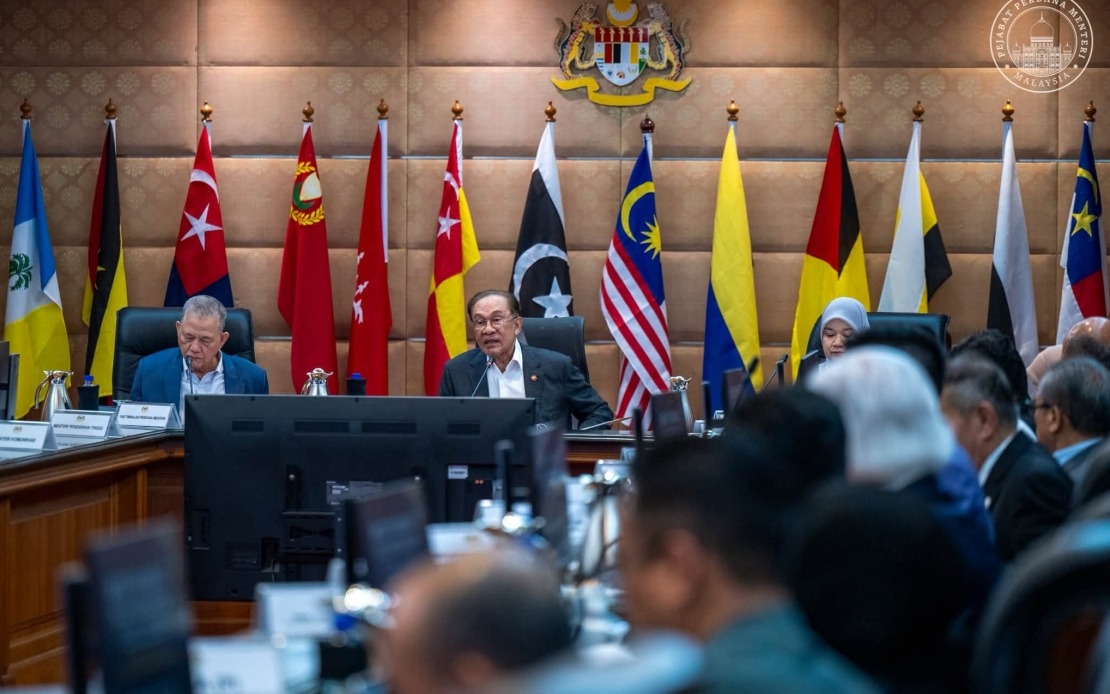
Prime Minister Datuk Seri Anwar Ibrahim has announced the formation of a National Education Council tasked with orchestrating significant reforms across Malaysia's education landscape. The initiative signals the government's intent to modernise the system and ensure it remains responsive to evolving societal and economic demands. Anwar chaired the council's inaugural meeting on 30 June 2026, where key policy directions were mapped out for both primary and secondary schooling as well as higher education institutions across the nation.
The council's mandate extends beyond mere incremental improvements, focusing instead on substantive restructuring of how education is delivered and assessed. Among its primary responsibilities will be overhauling content standards and revising curricula to better align with contemporary requirements. This reflects a growing recognition within government circles that Malaysia's educational offerings have drifted from meeting the skill demands of modern employers and a knowledge-based economy that increasingly values adaptability and innovation over rote memorisation.
English language development represents a key pillar of the reform agenda, with the council charged with strengthening proficiency in the language as a second tongue. This priority reflects Malaysia's position as a multilingual nation competing in global markets where English remains the lingua franca of business, science, and technology. However, the government has been careful to frame this initiative in a way that does not diminish the status of Bahasa Malaysia or erode cultural values. Anwar emphasised that language reforms must be pursued in tandem with preserving national identity, moral development, and the philosophical foundations enshrined in Malaysia MADANI, the government's comprehensive development framework.
A significant component of the council's work involves elevating educational quality at the district level, suggesting recognition that disparities in school resources and teaching standards persist across different regions of the country. This localised approach acknowledges that a centralised, one-size-fits-all policy may prove inadequate in addressing the varied needs of communities across Peninsular Malaysia, Sabah, and Sarawak. By empowering district-level initiatives, the council aims to foster more responsive and contextually appropriate education delivery.
The Bumiputera education agenda represents another focal point for the council's deliberations. This emphasis reflects the government's commitment to ensuring that Malaysia's indigenous populations and Malays benefit equitably from educational advancement and the opportunities that follow. Strengthening this dimension of policy seeks to address historical disparities and create pathways for these communities to participate more fully in the nation's economic and social progress.
Development of a robust pipeline for STEM talent has emerged as a critical priority as Malaysia seeks to position itself as a regional hub for science, technology, engineering, and mathematics expertise. The council will examine how schools and universities can better cultivate interest in these disciplines from an early age and provide students with relevant skills for careers in emerging sectors. This focus reflects global trends where nations are competing intensely for talent in high-value fields, and Malaysia recognises that its future competitiveness depends on producing graduates equipped for technological and scientific leadership.
Anwar's comments underscore the government's belief that education requires objective evaluation informed by diverse perspectives and specialist knowledge. Rather than relying solely on existing frameworks, the council will bring together stakeholders from academia, industry, civil society, and government to critically assess current practices and chart new directions. This consultative approach suggests a departure from top-down decision-making, though implementation will ultimately depend on government resources and political will.
The Prime Minister explicitly warned against complacency with the status quo, signalling that incremental adjustments will prove insufficient to meet Malaysia's educational challenges. His rhetoric suggests a willingness to undertake more transformative changes, though specifics regarding timeline and resource allocation remain undisclosed. The success of reform initiatives frequently hinges on adequate funding, teacher training, and sustained commitment across successive administrations—factors that remain to be fully articulated.
For Malaysian educators and students, the council's formation represents both opportunity and uncertainty. Teachers may face demands for professional development and adaptation to new curricula, while students could benefit from learning approaches better suited to contemporary employment landscapes. However, the implementation phase will prove decisive in determining whether the council becomes a genuine catalyst for systemic improvement or another institutional layer with limited practical impact on classroom experiences.
Regionally, Malaysia's educational reform agenda carries implications for ASEAN nations also grappling with similar modernisation challenges. Should the National Education Council produce demonstrable improvements in learning outcomes and graduate preparedness, its experiences may offer valuable lessons for neighbouring countries seeking to enhance their own systems. Conversely, implementation difficulties could inform discussions about realistic timelines and resource requirements for large-scale educational transformation in developing and middle-income economies.

