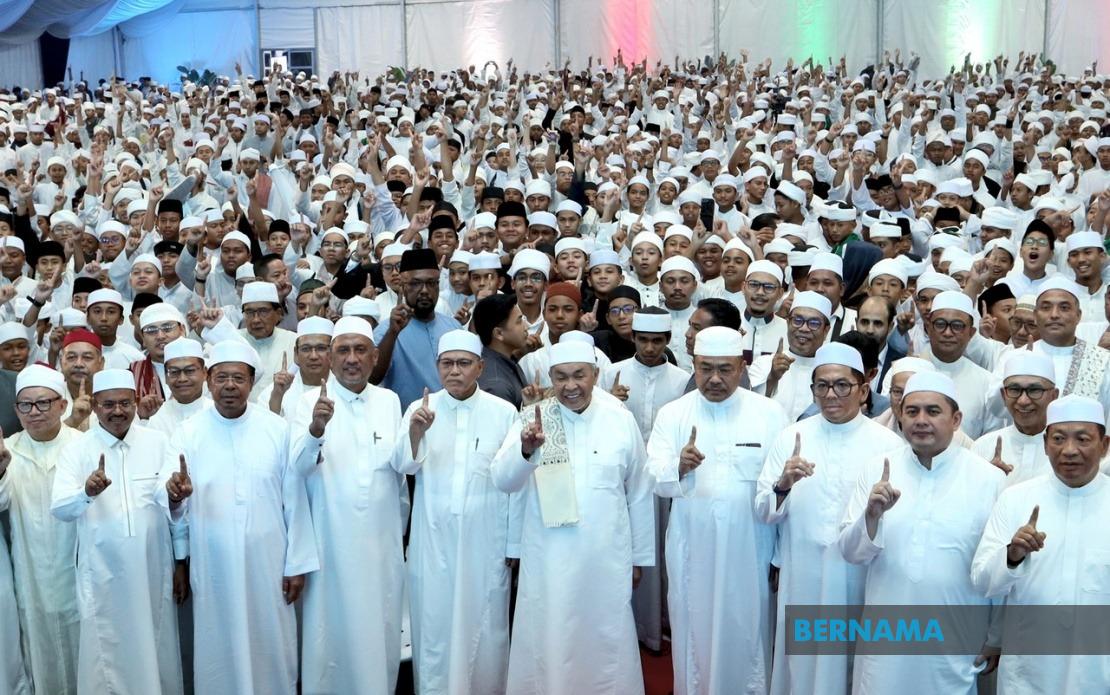
Malaysia's federal government has taken a significant step toward institutionalising Quranic memorisation education by approving the establishment of a National Tahfiz Council. The approval came during a Cabinet meeting last week, as announced by Deputy Prime Minister Datuk Seri Dr Ahmad Zahid Hamidi at the Pahang State Huffaz Gathering 2026 in Kuantan on June 18. The initiative represents a coordinated national effort to establish consistent standards, define clear educational pathways, and elevate the status of tahfiz institutions within Malaysia's broader education ecosystem.
The council will be chaired by Ahmad Zahid, a responsibility assigned directly by Prime Minister Datuk Seri Anwar Ibrahim. This appointment underscores the government's commitment to treating tahfiz education as a strategic priority rather than a peripheral concern. The council's establishment follows years of discussions about how to integrate religious education into the mainstream system while maintaining academic rigour and international standards. By formalising this structure, the government aims to create coherence across dozens of tahfiz institutions operating independently throughout the country, each with varying curricula, assessment methods, and progression criteria.
One of the council's core mandates involves redefining the trajectory available to tahfiz students. Currently, many huffaz who complete their memorisation face limited formal recognition and struggle to transition into conventional universities or professional careers. Ahmad Zahid articulated an ambitious vision during his speech: enabling students to progress seamlessly from madrasah to university, to transform pure memorisation skills into applied competencies, and ultimately to enter the workforce with credentials that employers and academic institutions recognise and value. This represents a departure from the historical separation between religious and secular education streams in Malaysia.
Pahang state has emerged as a model for this integrated approach. The state has developed a comprehensive tahfiz pathway beginning in early childhood through Tadika Tahfiz Negeri Pahang, an initiative inspired by Sultan Al-Sultan Abdullah Ri'ayatuddin Al-Mustafa Billah Shah. This foundation allows young children to develop familiarity and affection for the Quran before progressing through structured tahfiz education at the secondary level and beyond. Ahmad Zahid cited this progressive structure as evidence that Pahang demonstrates how tahfiz education can be positioned not as a narrow specialisation but as a complete knowledge trajectory comparable to other educational pathways.
The government is simultaneously implementing the National Tahfiz Policy 2.0, which introduces several concrete mechanisms to support this vision. The TVET Tahfiz initiative creates vocational and technical training options for huffaz, acknowledging that not all students will pursue traditional academic routes. The Malaysian Tahfiz Certificate 2.0 establishes a nationally recognised qualification framework, while the Graded Hafazan Certification provides tiered recognition reflecting different levels of Quranic memorisation. These credentials address a critical gap: previously, tahfiz qualifications held little weight outside religious circles, limiting students' employment prospects and academic mobility.
Financial support represents another dimension of the policy framework. The Huffaz Financing Scheme aims to reduce the economic barriers that force talented students to abandon their studies due to inability to pay fees or support themselves while engaged in memorisation. This acknowledges the reality that many tahfiz students come from lower-income families in rural areas. By providing financial assistance, the government removes a significant obstacle to completing tahfiz education and progressing further, thereby democratising access to what has historically been available primarily to those with family wealth or institutional sponsorship.
The Malaysian Tahfiz Recognition Standard creates quality benchmarks that institutions must meet to receive official endorsement. This standardisation matters enormously for a sector that has grown organically without coordinated oversight. Parents and students can now identify which institutions meet national criteria, and employers can understand what credentials from different tahfiz backgrounds actually represent. The recognition standard also creates incentives for institutions to improve their teaching methodologies, facilities, and faculty qualifications, ultimately raising standards across the sector.
Strategic partnerships between tahfiz institutions and higher learning institutions represent a crucial innovation within the policy framework. These collaborations create concrete pathways whereby huffaz can transition into universities to pursue degrees in Islamic studies, education, law, finance, and other fields. Skills institutes similarly provide outlets for students interested in practical training. Without these partnerships, even students with excellent memorisation credentials might find university admission gates effectively closed to them due to different entry pathways and qualification structures.
The Pahang State Huffaz Gathering 2026, which brought together more than 5,000 huffaz from across the state, provided the platform for Ahmad Zahid to announce these developments. The gathering itself demonstrates the scale and vitality of tahfiz education in Malaysia. Assembling thousands of memorisers showcases a significant population of students engaged in intensive religious study, yet historically many have lacked clear pathways beyond religious teaching roles. The event also witnessed the signing of a memorandum of understanding between Yayasan Pahang, the Community Development Department (KEMAS), and Majlis Amanah Rakyat (MARA), signalling institutional commitment to implement the new framework at the state level and expand skills training opportunities.
For Malaysian policymakers, the National Tahfiz Council addresses a demographic and economic challenge. Malaysia has a large population of young people engaged in Quranic memorisation but limited mechanisms to harness their dedication and intellectual capacity within the formal economy. By creating recognised qualifications and professional pathways, the council could enable this talent pool to contribute more broadly to society while maintaining their religious commitment. The integration of tahfiz education into the mainstream system also reflects evolving Malaysian identity politics, where religious education is increasingly viewed as compatible with, rather than separate from, secular professional achievement.
Regionally, Malaysia's move places it among Southeast Asian Muslim-majority countries actively reconsidering how to position religious education. The approach differs from purely traditional models that emphasise theological mastery over professional qualification, yet also avoids marginalising religious study within secular-dominated systems. This balanced philosophy could influence how neighbouring countries structure their own religious education sectors. The explicit linkage between memorisation and skills development, between classical religious knowledge and contemporary professional capability, suggests a framework others might adapt.
The appointment of Ahmad Zahid as council chairman, combined with the government's investment in multiple supporting mechanisms including financing, certification, and institutional partnerships, indicates genuine resource commitment rather than symbolic gestures. The unveiling of these initiatives at a major state gathering amplifies their visibility among students, parents, and institutions. Going forward, implementation will prove critical. The council must develop detailed standards, accredit institutions, manage the various certification schemes, and facilitate the university and skills institute partnerships. How effectively it executes these functions will determine whether tahfiz students genuinely gain access to expanded opportunities or whether bureaucratic hurdles persist.

