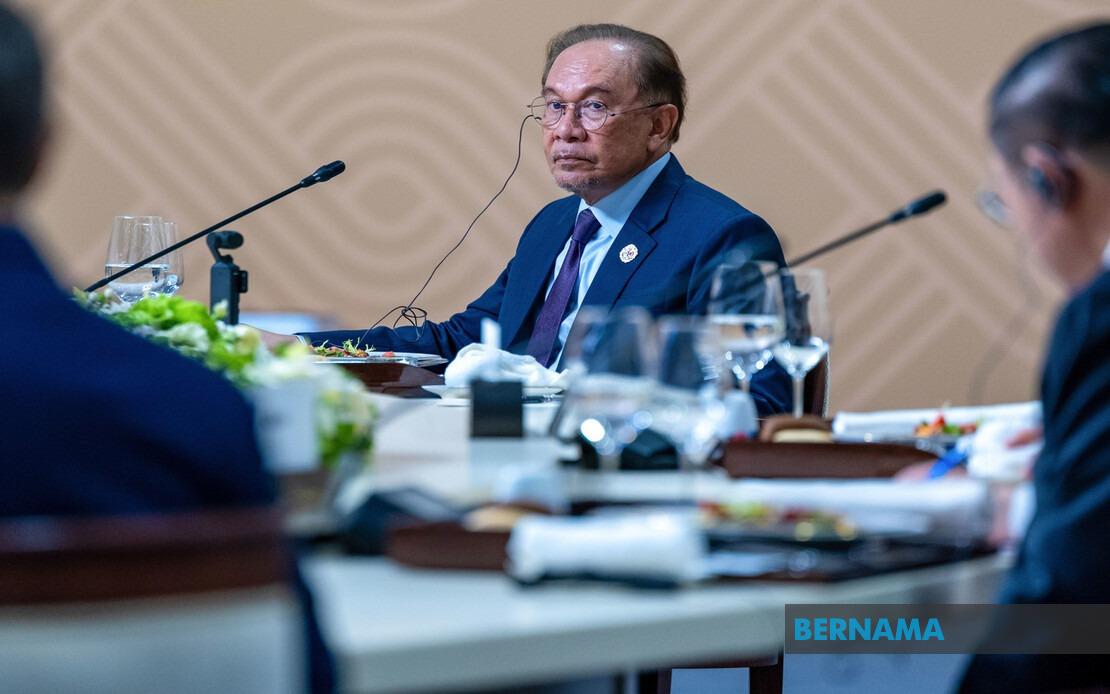
Malaysia is deliberately widening its economic horizons across Central Asia and Russia, as evidenced by Prime Minister Datuk Seri Anwar Ibrahim's recent four-day diplomatic tour spanning Tashkent, Kazan, and Ashgabat. The carefully sequenced visits represent far more than ceremonial handshakes; they reflect a strategic recalibration of Malaysia's external economic engagement at a moment when the international system itself is undergoing fundamental transformation. For a trading nation whose prosperity depends on open connectivity and stable supply chains, this diversification addresses mounting pressures from great-power competition, rising protectionism, and the fragmentation of previously integrated global markets.
The timing of these engagements cannot be separated from the broader context of accelerating geopolitical shifts. Since the end of the Cold War, the international economic architecture has been relatively stable, anchored by predictable multilateral frameworks and established patterns of trade and investment. That architecture is now fracturing. Major powers are deploying trade restrictions, sanctions regimes, export controls, and state-directed industrial policies as routine instruments of statecraft. For middle powers like Malaysia, this environment presents simultaneous opportunities and threats—opportunities to engage new partners and markets, but threats to the stability of existing arrangements and the predictability upon which long-term planning depends.
The Prime Minister's stopover in Tashkent, initially conceived as a courtesy call on President Shavkat Mirziyoyev, evolved into substantive working discussions that built upon initiatives launched during Malaysia's previous official visit in 2024. These conversations traversed multiple sectors of economic cooperation, with both parties committed to delivering concrete outcomes. The shift from symbolic ceremony to substantive negotiation underscores how contemporary economic diplomacy operates—the personal relationships between leaders can catalyse institutional arrangements and commercial opportunities, transforming brief encounters into productive partnerships. What began as a scheduled courtesy visit became a platform for advancing a longer-term engagement strategy.
The participation in the ASEAN-Russia Commemorative Summit in Kazan provided a broader regional platform for Malaysia to articulate its vision for expanded cooperation. Although Russia remains a relatively modest trade and investment partner for ASEAN compared to other major economies, both sides recognise substantial untapped potential in energy, agriculture, digital technologies, advanced manufacturing, and food security. The summit also underscored a principle that has long defined ASEAN's approach: the maintenance of strategic autonomy through engagement with multiple external partners rather than subordination to any single power bloc. This philosophy of centrality—engaging competing centres of influence while preserving independent decision-making—remains increasingly vital as the global order becomes more polarised.
Particularly noteworthy were the discussions between Malaysian officials and leaders from the Republic of Tatarstan, a region that has emerged as one of Russia's most technologically sophisticated and economically dynamic centres. Conversations encompassed biotechnology, the halal industry, maritime capabilities, Islamic finance, and industrial cooperation. This engagement illustrates an often-underappreciated dimension of modern economic statecraft: the rise of sub-national actors as significant participants in international economic networks. Regions, provinces, industrial clusters, and innovation hubs now function as quasi-independent economic entities, capable of forging relationships and generating opportunities that complement traditional government-to-government diplomacy. Building connections with these centres can yield practical commercial outcomes that transcend conventional state-level engagement.
The substantive framework for ASEAN-Russia economic cooperation was codified in the Strategic Programme on Trade and Investment Cooperation 2026-2035, a document that acknowledges future competitiveness will increasingly hinge on innovation, technological sophistication, and economic adaptability. This recognition reflects a shared understanding that traditional comparative advantages—based on natural resources or labour costs—are no longer sufficient in a rapidly evolving global economy. Both ASEAN and Russia acknowledge that deepening bilateral ties requires mutual investment in human capital, research and development, and technological capacity-building.
The concluding leg to Ashgabat focused on energy partnership, an engagement rooted in three decades of Petronas operations in Turkmenistan. This relationship has transcended the conventional foreign investor model. Petronas's presence, representing an estimated USD12 billion in cumulative investment, has contributed to infrastructure development, technological advancement, skills transfer, and human capital development. The landmark agreements concluded during the visit position Petronas with a major stake in one of the world's largest gas fields, effectively cementing long-term cooperation spanning new production-sharing arrangements and expanded exploration activities. Both governments characterised this deepening engagement as entering a critically important new phase, reflecting their mutual commitment to sustained energy cooperation extending well into the future.
This deepening energy partnership carries implications that extend far beyond commercial metrics. Recent geopolitical crises have exposed the vulnerability of energy supplies concentrated among limited providers and transported through contested corridors. When disruptions occur in one region, effects ripple through global energy markets, transportation networks, and production costs worldwide. For a nation heavily dependent on energy imports like Malaysia, ensuring diversified supply partnerships becomes a central component of economic resilience and strategic flexibility. Turkmenistan's vast hydrocarbon reserves and Malaysia's capital and technical expertise represent a natural complementarity that serves both nations' long-term energy security.
A fundamental characteristic of contemporary economic diplomacy is its multidimensional nature. Trade and investment considerations intersect with food security, technology development, infrastructure investment, and financial services. Energy cooperation overlaps with industrial development and human capital advancement. Digitalisation creates simultaneous opportunities for innovation and concerns about technological dependence and governance standards. The Prime Minister's consistent emphasis across all bilateral discussions that economic partnership extends beyond commercial statistics alone reflects recognition that successful long-term relationships require trust-building across multiple domains, with what observers increasingly term soft power—the cultivation of mutual confidence and shared interests—now an essential component of statecraft.
The discussions across all three capitals incorporated education and research collaboration, halal ecosystem development, and financial services advancement as prominent agenda items. These spheres have become integral to contemporary economic diplomacy precisely because they reflect broader societal dimensions of partnership. A nation investing in another's educational institutions, facilitating scholarly exchange, and supporting research collaboration creates multiple points of connection that extend beyond government officials to universities, research institutes, and civil society organisations. Such multifaceted engagement generates resilience through institutional depth rather than reliance on fluctuating political leadership or trade flows alone.
Malaysia's strategic orientation across these three cities represents a deliberate pivot toward what might be termed civilisational engagement—relationships grounded not merely in transactional commercial benefit but in shared values, complementary needs, and mutual respect. This approach acknowledges that in an increasingly contested international environment, national resilience depends not on isolation or concentration of partnerships but on breadth and depth of connection. By simultaneously engaging Uzbekistan's reformist administration, Russia's diverse regional economies, and Turkmenistan's energy sector, Malaysia positions itself within a broader network of relationships that collectively enhance its flexibility and options.
The immediate commercial outcomes—new investment frameworks, expanded energy partnerships, enhanced research collaboration—constitute the tangible results of these four days of intensive engagement. Yet the longer-term significance lies in the signal Malaysia sends to both established and emerging powers about its international orientation. Rather than restricting itself to traditional partnerships or choosing sides in great-power competition, Malaysia actively cultivates relationships across different regions and political systems. This strategy reflects confidence that Malaysia's interests are best served through maintaining maximum flexibility and multiple options rather than through exclusive alignment with any single bloc. In a world increasingly characterised by uncertainty and competition, such diversification represents rational statecraft.

