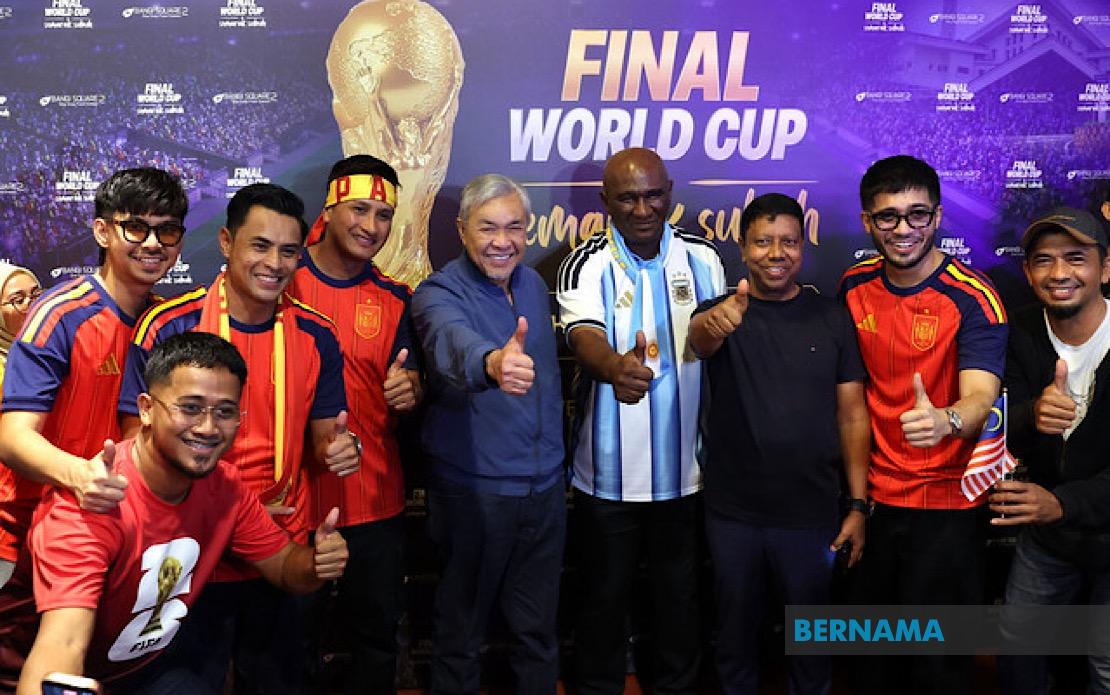
Deputy Prime Minister Datuk Seri Dr Ahmad Zahid Hamidi has articulated Malaysia's aspirational goal of hosting the FIFA World Cup, positioning the nation as a potential future venue for football's most prestigious quadrennial spectacle. Speaking at a public viewing event for the World Cup final between Argentina and Spain in Bangi, Ahmad Zahid outlined the dual vision of securing hosting rights while simultaneously elevating the Malaysian national team to World Cup-calibre standards. The remarks underscore a broader strategic vision connecting infrastructure development with sporting excellence at the highest level.
The Deputy Prime Minister, who also holds the Rural and Regional Development portfolio, framed the World Cup hosting ambition within a regional context, emphasising Malaysia's capacity to represent Southeast Asia on the global stage. His comments reflect aspirational thinking about the nation's sporting future, though transforming such ambitions into concrete reality requires substantial investment in stadium infrastructure, transportation networks, and institutional capacity. The Malaysian government has historically positioned major sporting events as catalysts for national development and regional positioning.
Malaysia's football credentials have shown modest improvement in recent years. The Harimau Malaya, the national squad's nickname, currently occupy 136th position in the FIFA World Rankings according to the latest assessment. This ranking represents a two-place climb from the previous 138th position, achieved through an accumulated tally of 1,086.22 points. While such incremental improvements signal positive momentum, the gap between Malaysia's current standing and World Cup-participating nations remains substantial, with most qualified teams ranked significantly higher globally.
The viewing event at Bangi Square 2 drew hundreds of Malaysian football enthusiasts eager to witness the Argentina-Spain final, demonstrating enduring public appetite for world-class football. The gathering transformed a commercial venue into a community space centred on sporting passion, reflecting how international tournaments mobilise collective interest across diverse demographics. Ahmad Zahid's strategic attendance at the event signalled government recognition of football's cultural resonance within Malaysian society.
Organisers enriched the viewing experience through "Borak Bola", a discussion session featuring football luminaries from Malaysia's sporting heritage. The panel included Datuk Zainal Abidin Hassan, Mohd Farizal Marlias, and Mohamad Zaquan Adha Abdul Radzak, respected figures whose playing careers represented peaks of Malaysian football achievement. Their presence provided historical context and aspirational reference points, illustrating that Malaysia has produced players capable of competing at elevated standards. Hafizal Hamad moderated discussions that likely traversed the nation's football trajectory and future potential.
Achieving World Cup hosting status represents an extraordinary objective requiring decades of preparation and substantial governmental commitment. Countries successfully bidding for World Cup hosting must demonstrate advanced infrastructure capabilities, security arrangements, accommodation facilities, and administrative systems. The bidding process itself remains intensely competitive, with prosperous nations typically securing hosting privileges. Malaysia would need to position itself against other developing nations similarly harbouring World Cup ambitions, necessitating strategic infrastructure investment extending well beyond football-specific facilities.
Equally challenging is the objective of qualifying the national team for World Cup participation. Currently, Malaysia's 136th ranking places the squad outside qualification contention for upcoming tournaments. Bridging this performance gap requires sustained investment in player development, coaching expertise, and competitive exposure at increasingly sophisticated levels. The FIFA qualification process involves regional and continental rounds that demand consistent excellence, technical sophistication, and mental resilience—attributes requiring systematic cultivation through comprehensive national football development systems.
Regional context shapes Malaysia's positioning within Southeast Asian football hierarchy. Nations like Thailand, Vietnam, and Indonesia possess comparable FIFA rankings, suggesting the region's general exclusion from World Cup participation reflects continental competitive depth rather than individual national deficiency. Hosting a World Cup would elevate Malaysia's regional profile substantially, positioning the nation as a continental leader in sporting infrastructure and organisational capability. Such positioning carries diplomatic and economic implications extending beyond football itself.
The Ahmad Zahid comments also reflect broader Malaysian development aspirations linking major sporting events with national modernisation narratives. Hosting the Commonwealth Games in Kuala Lumpur during 1998 demonstrated Malaysia's capacity to organise international sporting spectacles, providing institutional experience and infrastructure legacies that endure today. World Cup hosting would represent an exponentially larger undertaking, requiring transformation of multiple cities and unprecedented investment levels.
Public engagement at the Bangi viewing event suggested Malaysian audiences remain enthusiastic about world football despite the national team's modest competitive standing. This enthusiasm provides potential foundations for grassroots football development and increased participation rates. Converting spectator passion into elite-level performance capacity represents a long-term developmental challenge requiring coordinated effort across grassroots coaching, youth academies, professional infrastructure, and competitive exposure.
Ahmad Zahid's remarks should be understood within Malaysia's broader sporting ambitions rather than immediate policy commitments. The comments articulate inspirational objectives that align with governmental positioning of Malaysia as a modern, capable nation. Whether such aspirations translate into concrete bidding strategies and World Cup hosting remains dependent on future political decisions, financial allocations, and international competitive dynamics.
The Deputy Prime Minister's subsequent participation in the Semarak Subuh programme at Surau Al-Hamidiah demonstrated integration of religious observance with public engagement, reflecting Malaysia's cultural values alongside secular sporting interests. This approach illustrates how Malaysian governance frequently synthesises multiple identity dimensions within public events.

