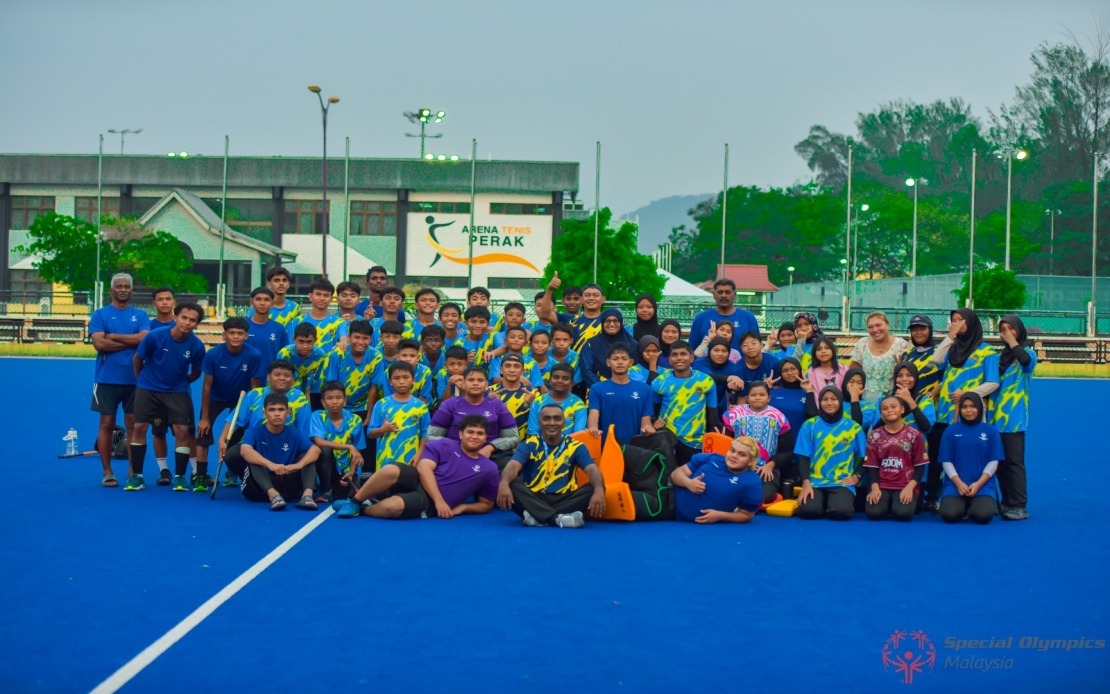
Malaysia's participation in the inaugural FIH Para Hockey ID World Cup 2026 represents a landmark moment for the nation's para sports development, with a carefully selected 10-member squad set to compete against the world's elite intellectual disability hockey teams from August 20 to 25 in Belgium and the Netherlands. The contingent, comprising six men and four women, will carry national pride into a tournament that draws together 16 of the planet's strongest para hockey nations, offering Malaysian athletes a significant international platform to demonstrate their capabilities on sport's grandest stage.
Assistant head of delegation Shanker Retinam outlined the rigorous selection methodology that culminated in the final squad composition. The identification process commenced in December 2025, with prospective players evaluated across multiple criteria extending beyond raw athletic ability. Performance metrics, training commitment, and disciplinary standards formed the cornerstone of the selection framework, ensuring that the 10 representatives embody not only technical excellence but also the character and dedication expected of national team ambassadors. This methodical approach reflects the Malaysian delegation's understanding that para sports success hinges equally on mental resilience and institutional discipline as on physical prowess.
The months preceding the tournament have witnessed intensive preparation centred in Ipoh, where the national squad has undergone monthly centralised training blocks. This structured conditioning programme is designed to fine-tune team cohesion, tactical understanding, and individual skill refinement in the specific context of mixed-gender competitive hockey at the international level. The concentration of preparation in Perak demonstrates Malaysia's commitment to establishing sustainable para sports infrastructure, creating regional hubs of excellence that can support athlete development across multiple disability classifications and sports disciplines.
The tournament's significance extends beyond mere participation, as the event's timing and venue create unprecedented visibility for para hockey. Holding the FIH Para Hockey ID World Cup simultaneously with the Men's and Women's Hockey World Cups at identical venues in Belgium and the Netherlands amplifies media coverage and public awareness. This co-location strategy positions intellectual disability hockey at the forefront of global hockey discourse, elevating the sport's profile and potentially inspiring increased investment in para hockey programmes across participating nations, including Malaysia.
Malaysia's draw in Pool B alongside the Netherlands, Argentina, England, Spain, India, Chile, and Bulgaria establishes a genuinely competitive grouping. The maiden fixture against Bulgaria in the Netherlands will set the tone for the campaign, providing crucial momentum in what observers regard as an exploratory mission for Malaysian para hockey. Although the team enters as debutants, the calibre of opposition—particularly established para sports nations such as Argentina, England, and Spain—offers invaluable benchmarking opportunities to assess Malaysia's standing relative to global competition.
The logistics of the campaign reflect meticulous planning befitting the occasion. The national delegation is scheduled to depart for Europe on August 17, allowing adequate acclimatisation time before competition commences. This preparation window permits the team to manage travel fatigue, adjust to European conditions, and conduct final tactical rehearsals in the tournament environment. Such attention to detail in team management often differentiates elite programmes from those lacking comprehensive support structures.
The participation commands high-level institutional endorsement, with Sultan Nazrin Shah, the Sultan of Perak, officiating at a flag-handover ceremony at the Royal Perak Golf Club. This royal engagement underscores the state's investment in para sports development and signals governmental acknowledgment of the tournament's importance to Malaysia's international sporting reputation. Such ceremonial recognition, while symbolic, carries meaningful implications for future funding and policy prioritisation regarding para sports initiatives.
From a broader Southeast Asian perspective, Malaysia's participation positions the region as an increasingly active participant in global para sports ecosystems. The presence of India in Pool B, another South Asian heavyweight, suggests the FIH's deliberate strategy to cultivate para hockey competitiveness across Asian markets traditionally dominated by football and badminton. Malaysia's participation exemplifies how strategic investment in emerging para sport disciplines can yield competitive representation and international standing within relatively compressed timeframes.
The intellectual disability classification distinguishes this tournament from other para hockey competitions, focusing on athletes with specific cognitive and intellectual impairments rather than physical disabilities. This categorisation requires distinct rule modifications and training methodologies, positioning Malaysia's team as pioneers in developing expertise within this particular classification framework. The experience gained through this World Cup debut will generate invaluable institutional knowledge applicable to long-term para hockey programme development.
Looking beyond August 2026, this inaugural campaign establishes baselines against which future Malaysian para hockey performance can be measured. While immediate medal expectations may be modest given the debutant status, the experience of competing alongside elite intellectual disability hockey nations will inform strategic planning for subsequent international competitions. The data generated regarding player performance, team dynamics, and tactical efficacy will prove instrumental in refining selection criteria and training methodologies for future tournaments.

