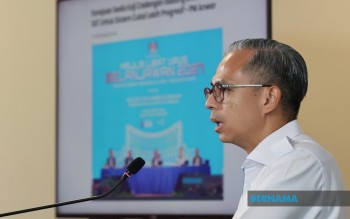
The Malaysian government is giving its Finance Ministry extended time to conduct a thorough examination of a controversial proposal to blend elements of the Goods and Services Tax with the existing Sales and Services Tax regime. Finance Minister II Datuk Seri Amir Hamzah Azizan has been assigned to lead the comprehensive study, which will subsequently be presented to the Cabinet for deliberation, according to MADANI Government spokesperson Datuk Seri Fahmi Fadzil during the weekly post-Cabinet press conference in Putrajaya on Tuesday.
The announcement underscores the government's cautious approach to tax reform, reflecting acknowledgment that such structural changes cannot be implemented hastily or without thorough consideration of their potential consequences. Fahmi, who simultaneously serves as Communications Minister, stressed that the evaluation encompasses both historical insights gained from the previous GST implementation and persistent difficulties encountered under the current SST framework. These complexities necessitate deliberate analysis before any proposal advances to ministerial discussion or wider parliamentary consideration.
Prime Minister Datuk Seri Anwar Ibrahim has directed the Finance Ministry to undertake this exploratory work, emphasizing the importance of developing a system that would serve Malaysia's long-term economic and social objectives. The hybrid approach under examination would maintain SST as the foundational national taxation mechanism whilst selectively incorporating specific GST features deemed compatible with Malaysia's fiscal policy goals. This middle-ground strategy represents an effort to balance revenue generation with broader social progressivity concerns.
The tax reform debate carries particular significance given Malaysia's recent history with goods and services taxation. The previous GST implementation, introduced in 2015, became a politically contentious issue and was ultimately replaced by SST in 2018 following a change in federal government. That experience has made policymakers understandably reluctant to pursue rapid changes to the taxation architecture without extensive preparation and public consultation frameworks. The proposed hybrid model attempts to learn from those past mistakes whilst exploring whether selective policy borrowing could strengthen the current system.
Fahmi declined to confirm whether Prime Minister Anwar had established a specific completion date for the Finance Ministry's report or whether findings might feature in the upcoming federal budget presentation. This ambiguity suggests the government is maintaining flexibility regarding the timeline and potential announcement strategy, avoiding any public commitment that could constrain decision-making if the study reveals significant implementation challenges or generates unforeseen stakeholder opposition.
The study's scope extends beyond simple technical tax adjustments, requiring examination of how GST and SST mechanisms function differently across various economic sectors and business scales. Understanding these distinctions proves essential for designing a hybrid system that avoids unintended consequences for small and medium enterprises, manufacturing competitiveness, and consumer price stability. The Finance Ministry must also evaluate international experiences with blended tax approaches and assess whether lessons from other jurisdictions apply to Malaysia's distinctive market structure.
Progressivity concerns represent a central element of this policy inquiry. A taxation system designed with progressive characteristics would theoretically place greater burdens on higher-income earners and larger corporations whilst protecting lower-income households from excessive tax pressures. The government's stated objective of achieving a more progressive national taxation system suggests awareness that the current SST framework may inadequately address income inequality or may generate regressive outcomes affecting lower-income consumer groups disproportionately.
Industry stakeholders and business groups have expressed keen interest in the tax reform direction, recognizing that structural changes could significantly affect operating costs, pricing strategies, and competitive positioning across sectors. The extended timeline for the Finance Ministry's work provides space for consultative engagement with affected parties, potentially reducing the risk of implementation backlash and allowing businesses time to prepare compliance frameworks if changes proceed.
The Cabinet's eventual decision-making process will likely involve reviewing the Finance Ministry's recommendations alongside broader policy considerations, including political feasibility assessments and macroeconomic impact projections. Any fundamental taxation restructuring requires not merely technical soundness but also sufficient political consensus to achieve legislative passage, a factor that undoubtedly influences the government's deliberative pace on this matter.
For Malaysian businesses and consumers, this announcement suggests that significant taxation changes remain under active government consideration, though implementation remains uncertain and likely several months away. The measured approach provides stakeholders with opportunity to monitor developments and prepare contingency planning, whilst the government builds the analytical foundation necessary for informed policy decisions on matters that substantially affect the nation's fiscal revenue streams and economic competitiveness positioning.

