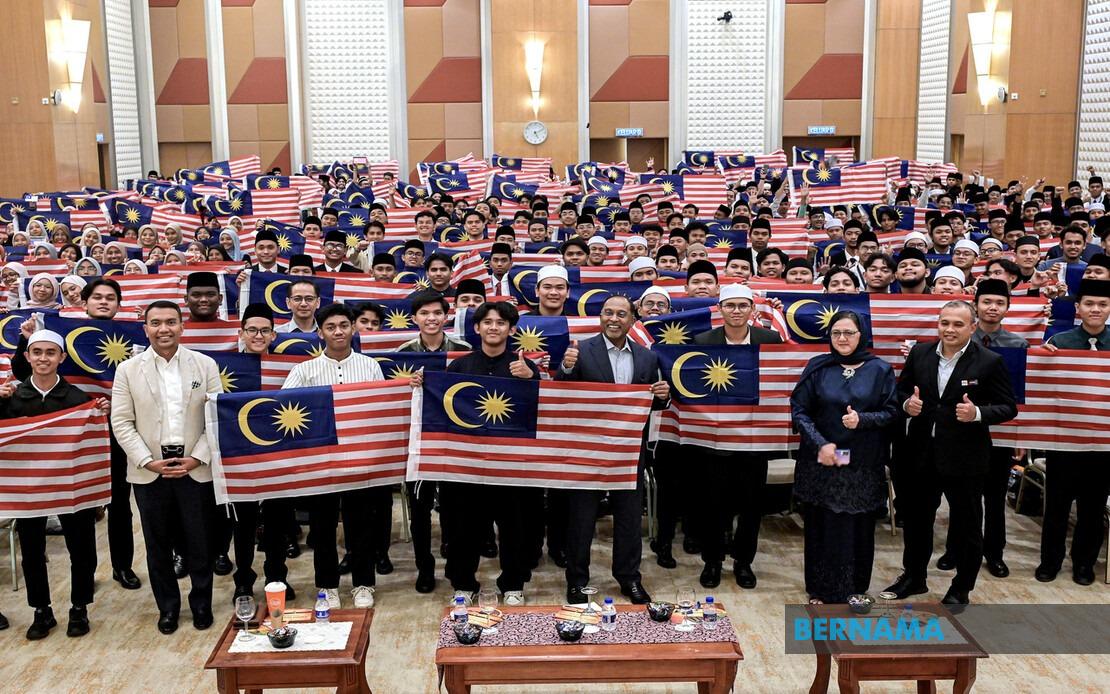
The Ministry of Higher Education has initiated heightened surveillance protocols to safeguard Malaysian students spread across the West Asian region, responding to mounting geopolitical instability that has prompted international powers to reconsider their presence in the area. Higher Education Minister Datuk Seri Dr Zambry Abd Kadir outlined the government's comprehensive approach during remarks at an International Charisma Programme closing ceremony in Putrajaya, emphasising that protecting citizens abroad remains a priority even as the security landscape shifts rapidly.
The timing of these measures reflects genuine concern about escalating tensions, particularly following the United States' advisory instructing American nationals to evacuate the region. Malaysia recognises that while such pronouncements can change swiftly depending on diplomatic developments and foreign policy shifts, the underlying volatility warrants sustained vigilance. Dr Zambry characterised the situation as inherently unpredictable, noting that decisions made today may be reversed tomorrow as circumstances evolve in what remains one of the world's most volatile geopolitical zones.
The Ministry's strategy hinges on close collaboration with Wisma Putra, the Foreign Ministry, which serves as the primary intelligence and guidance source for assessing conditions on the ground. This institutional arrangement ensures that information about student whereabouts, welfare, and any emerging threats flows through established diplomatic channels, allowing rapid response if circumstances deteriorate. Rather than operating independently, MOHE has structured its monitoring framework around expert foreign policy assessments, recognising that educational officials lack the specialised intelligence apparatus necessary for security decisions.
Significant cohorts of Malaysian students are distributed throughout Egypt, Jordan, and Morocco, with 456 individuals scheduled to commence studies in these three destinations beginning September 1. These students have recently participated in the International Charisma Programme, a joint initiative between MOHE and the Malaysia Nationhood Academy that provides pre-departure orientation, direct engagement with ministry personnel, and welfare briefings. The programme functions as both a practical induction mechanism and an opportunity to assess students' readiness for life abroad while establishing clear communication channels for future support.
Egypt hosts the largest Malaysian student population in the region, with thousands currently enrolled across multiple disciplines. The concentration extends beyond Islamic studies, which traditionally dominated Malaysian student recruitment to Egyptian institutions, to encompass medicine, dentistry, pharmacy, and other professionally-oriented fields that address Malaysia's domestic skills requirements. Jordan hosts between 1,000 and 2,000 Malaysian scholars, making it another significant educational hub, while Morocco's enrolment remains comparatively modest but demonstrates consistent growth trajectories. This geographic dispersion across three distinct countries complicates monitoring efforts but reflects Malaysia's strategy of diversifying educational partnerships throughout the Arab world.
To facilitate oversight, MOHE maintains Education Malaysia offices in both Egypt and Jordan, which function as primary contact points for students requiring assistance. Morocco, lacking a dedicated office, operates under administrative coordination through the Egyptian mission, requiring slightly more indirect communication pathways. These institutional presences underscore Malaysia's commitment to maintaining on-site capacity for immediate intervention should circumstances warrant emergency measures or student relocations. The government has explicitly confirmed it stands prepared to implement rapid response protocols if any developments directly compromise student safety.
Dr Zambry indicated no current evidence suggesting that deteriorating conditions in Egypt, Jordan, or Morocco have materially affected Malaysian students enrolled there. This assessment carries significant weight given the institutional networks monitoring the situation, suggesting that despite headline-grabbing regional tensions, educational operations in these specific countries have not experienced disruption. Nevertheless, the precautionary stance reflects prudent risk management, anticipating that situations can deteriorate unexpectedly or that broader regional developments might eventually impact previously stable educational environments.
The Minister framed Malaysian students pursuing education abroad as strategic national assets deserving protection and investment. This perspective transcends typical student welfare rhetoric, positioning international education as integral to Malaysia's human capital development and competitive positioning in knowledge-based sectors. Students completing degrees in specialised fields abroad are expected to repatriate their qualifications and expertise, contributing to domestic professional capacity and economic advancement. This long-term perspective justifies the government's active engagement in student safety monitoring, as attrition through unforeseen crises represents both humanitarian concern and national economic loss.
Beyond security considerations, Dr Zambry articulated an educational philosophy emphasising holistic development encompassing not merely academic achievement but also character formation grounded in Islamic principles. The concept integrates ta'lim, tarbiah, and ta'dib—knowledge imparting, personal development, and ethical value cultivation—suggesting that Malaysian education abroad should produce graduates distinguished by both expertise and moral integrity. This framework signals expectations that students will represent Malaysia through conduct and values, reinforcing that overseas educational experiences carry cultural as well as professional significance.
Malaysia's position as a study destination for approximately 180 nationalities demonstrates the competitive quality of its higher education sector, generating substantial international confidence in institutional standards. This global attraction creates reciprocal benefits, as foreign student enrolments support Malaysian universities financially while enhancing campus diversity and international rankings. The Ministry noted that this achievement reflects genuine institutional merit rather than dependence on particular geographic markets, suggesting resilience in Malaysia's educational competitiveness regardless of regional disruptions affecting outbound Malaysian students.
The coordinated approach combining diplomatic intelligence sharing, on-site institutional presence, student orientation programming, and ministerial engagement represents measured responsiveness to genuine security concerns without succumbing to panic. By anchoring decision-making to Foreign Ministry guidance rather than autonomous determinations, MOHE maintains appropriate humility about its expertise while ensuring decisions reflect broader diplomatic understanding. This arrangement also provides political insulation, distributing responsibility across relevant agencies and preventing single-ministry ownership of potentially controversial decisions regarding student safety or evacuation protocols.

