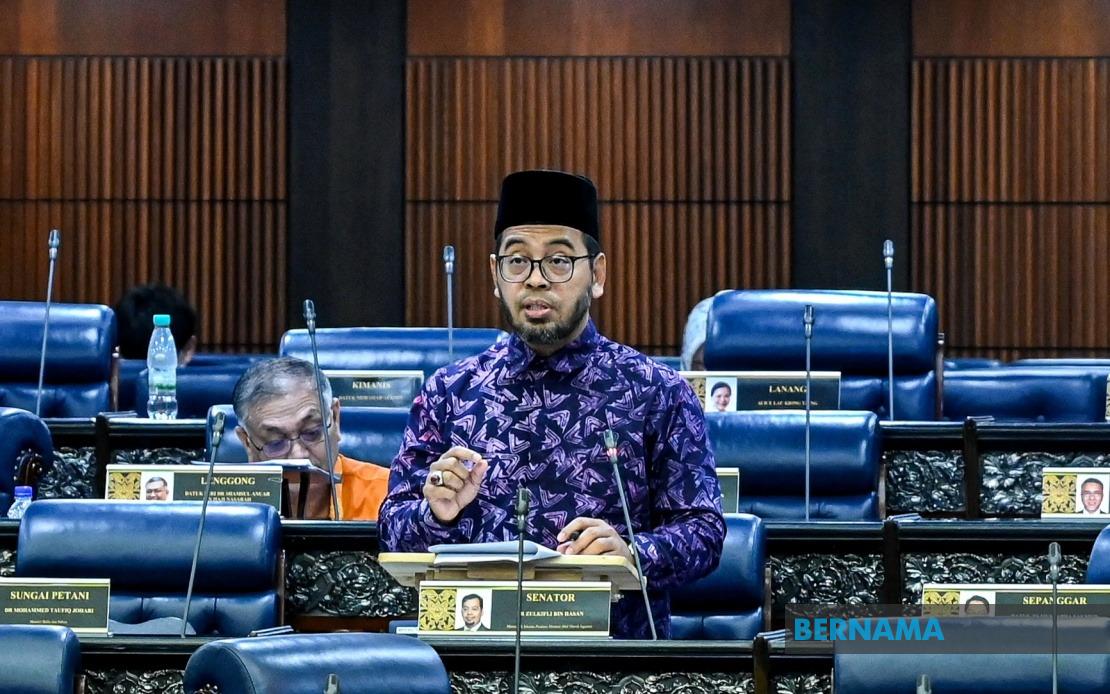
Malaysia's government is mobilising a coordinated multi-agency response to address the growing challenge of unorthodox Islamic teachings spreading through digital channels and across international borders. The strategy reflects mounting concerns that deviant doctrines, once confined to clandestine gatherings, have migrated to social media platforms, messaging applications and online forums where they circulate with increasing sophistication and reach. Minister in the Prime Minister's Department (Religious Affairs) Dr Zulkifli Hasan outlined the scope of this challenge during parliamentary questioning, emphasising that Malaysia's enforcement landscape has fundamentally transformed as purveyors of heterodox teachings adapt their methods to exploit technological platforms while obscuring their intentions beneath layers of seemingly legitimate activities.
The sophistication of contemporary outreach campaigns designed to propagate these teachings underscores the complexity facing authorities tasked with protection of Islamic orthodoxy. Groups promoting doctrines that diverge from Ahli Sunnah Wal Jamaah theology now employ psychological techniques, motivational narratives, wellness rhetoric and the credibility of influential personalities to attract adherents. Some deliberately position their material as personal development coaching, charitable work or alternative health interventions—camouflage that complicates identification and intervention by regulators. This repackaging strategy has proven particularly effective in attracting younger demographics and urban professionals who might initially engage with content without recognising its theological foundations, creating pathways toward deeper involvement with unorthodox communities.
JAKIM, Malaysia's Department of Islamic Development, remains the institutional anchor for this multi-layered enforcement operation, working alongside state-level Islamic religious authorities responsible for implementing religious law within their jurisdictions. The enforcement architecture extends considerably beyond religious agencies, however. The Malaysian Communications and Multimedia Commission monitors digital content distribution channels, while the National Security Council coordinates broader security implications. Police, immigration authorities and the National Registration Department contribute enforcement capacity focused on identifying participants and tracking movement across state and national boundaries. This institutional breadth reflects recognition that combating online religious heterodoxy requires capabilities spanning content moderation, law enforcement investigation, border security and information management.
Recent enforcement operations illustrate the scale of intervention. In May, authorities detained 288 followers of Ahmadiyya Qadiani in Sabah, representing one of the largest single operations against this particular Islamic community. Additionally, a coordinated raid on a Syiah gathering point in Petaling Jaya resulted in detention of 226 foreign nationals, many of whom had migrated to Malaysia to participate in religious learning communities considered doctrinally problematic by Malaysian authorities. These operations underscore the transnational dimensions of the challenge—Malaysia has become a destination for international Islamic study communities that local regulatory frameworks categorise as theologically deviant. The presence of significant foreign participant populations complicates enforcement responses, introducing immigration and diplomatic considerations alongside religious regulatory concerns.
Beyond enforcement actions, the government acknowledges that sustainable management of heterodox beliefs requires addressing underlying vulnerabilities that make individuals susceptible to unorthodox teachings. Rehabilitation programming forms the counterbalance to enforcement operations. Faith rehabilitation centres overseen by Islamic authorities provide structured reorientation for individuals and community leaders identified as having drifted significantly from mainstream Islamic understanding. These facilities employ Syariah court-ordered placement mechanisms, granting them legal authority while embedding interventions within Malaysia's established Islamic jurisprudential framework. Targeted counselling provided by religious specialists aims to restore theological alignment with orthodox positions while simultaneously addressing psychological factors that may have facilitated attraction to heterodox communities.
The government has established the National Steering Committee to Address Threats to Faith, a coordinating body bringing together representatives from the Education Ministry, Higher Education Ministry, Home Affairs Ministry and JAKIM. This committee explicitly prioritises youth religious socialisation, recognising that younger generations represent both vulnerability and opportunity. Early inculcation of robust Islamic understanding within formal education systems potentially inoculates students against later recruitment by unorthodox communities. The National Steering Committee's formation signals institutional commitment to preventive intervention spanning the full lifecycle of religious education and formation.
Central to this preventive strategy is IPHAM (Institut Pemantapan dan Perkaderan Akidah Malaysia), a dedicated institution focused on strengthening Islamic doctrinal understanding among Malaysian Muslims. IPHAM operates complementary programming emphasising Islamic identity and theological resilience. The My Insaniah Programme extends similar educational objectives through community engagement channels, while the Rakan Masjid Programme leverages mosque infrastructure to deliver consistent religious messaging and community cohesion within local Islamic contexts. These initiatives reflect the government's assessment that community-based religious education, when coordinated and consistently delivered, creates environments inhospitable to heterodox recruitment.
Curricular enhancement represents another pillar of the preventive architecture. The revised KAFA 2.0 curriculum, addressing Quranic instruction and foundational Islamic obligations, has been strengthened to foster firmer religious identity and greater resilience against doctrinal deviation. KAFA programmes reach students during formative years when theological understanding is still developing and susceptibility to alternative interpretations remains high. By ensuring that mainstream Islamic education provides intellectually satisfying engagement with theological questions, authorities aim to reduce appeal of unorthodox communities that position themselves as offering deeper or more authentic Islamic knowledge.
For Southeast Asian observers, Malaysia's experience illustrates challenges facing the broader region as unorthodox Islamic movements establish footholds across Muslim-majority nations. Indonesia, with its larger Muslim population and more decentralised religious authority structures, confronts similar proliferation of heterodox communities. Singapore's tight geographic constraints and highly regulated information environment create different enforcement possibilities but comparable underlying tensions between protecting religious orthodoxy and respecting religious pluralism. The transnational movement of adherents between Malaysia, Indonesia and other regional countries means that enforcement actions in one jurisdiction necessarily affect communities across borders, creating implicit pressures for coordinated regional approaches that remain only partially formalised.
Malaysia's whole-of-government strategy also reflects broader questions about state relations with religious authority and community autonomy. The government's explicit responsibility for maintaining Islamic theological orthodoxy distinguishes Malaysia's constitutional framework from secular states, yet simultaneously creates tensions regarding appropriate boundaries between state enforcement power and religious community self-determination. The coordination mechanisms linking JAKIM, state authorities, secular law enforcement agencies and educational institutions suggest confidence in institutional capacity to manage heterodoxy threats without excessive heavy-handedness. Yet the scale of detention operations and rehabilitation placements also raises questions, particularly among international human rights organisations, regarding due process protections and proportionality of interventions based on doctrinal classification alone.
The evolution of heterodox teachings toward digital platforms represents an adaptation that Malaysian authorities continue processing institutionally. MCMC's involvement in the enforcement coalition reflects recognition that traditional physical surveillance and geographic-based interventions prove insufficient when adherents coordinate across messaging applications and virtual communities operating across borders. This enforcement gap has become particularly acute as younger cohorts navigate religious questions primarily through digital channels rather than mosque-based learning or formal religious education. The government's acknowledgment that enforcement approaches must evolve alongside technological change suggests ongoing institutional learning, though the specific mechanisms for adapting surveillance and content moderation capabilities to religious heterodoxy remain partially opaque in public discourse.
Moving forward, Malaysia's approach appears oriented toward simultaneous strengthening of mainstream Islamic institutional capacity and expansion of monitoring infrastructure. The emphasis on youth religious education and doctrinal resilience suggests confidence that robust orthodox religious formation provides the most sustainable protection against heterodox attraction. Simultaneously, the comprehensive enforcement coalition and detention operations indicate that authorities view active suppression of unorthodox communities as essential complement to preventive education. This dual-track strategy reflects the government's assessment that Malaysian society faces genuine theological challenges requiring both institutional strengthening and law enforcement response working in coordinated partnership.

