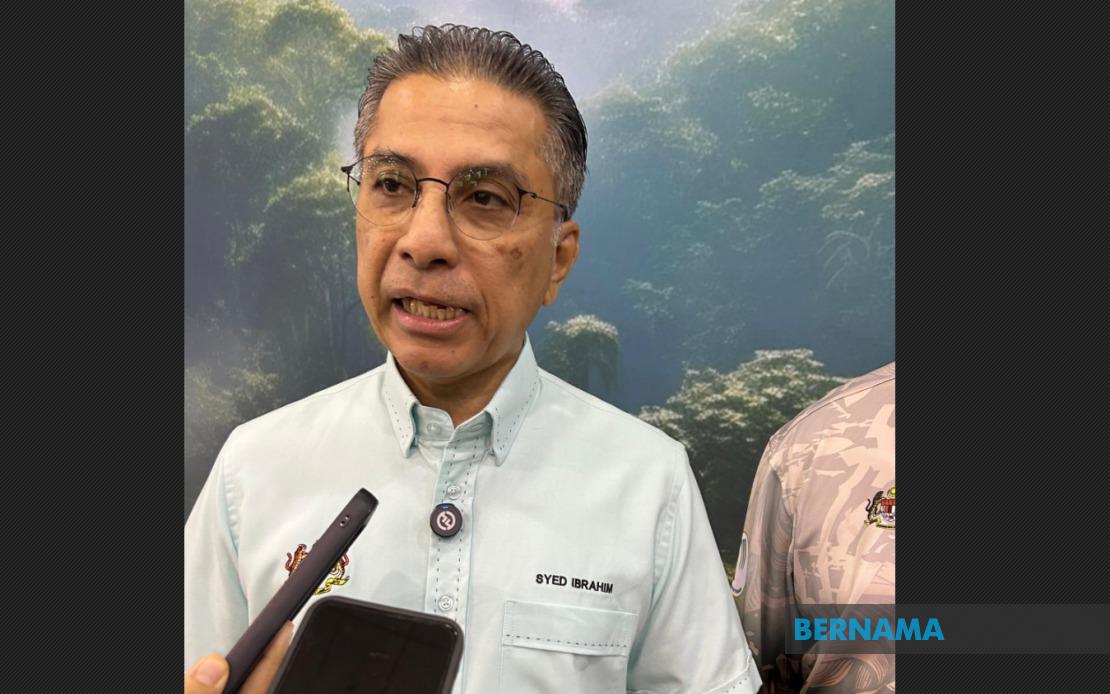
The Malaysian government has intensified its oversight of three Asian elephants relocated to Tennoji Zoo in Osaka, Japan, by extending the deployment of trained mahouts to ensure their continued welfare during an extended acclimatisation period. Deputy Minister of Natural Resources and Environmental Sustainability Syed Ibrahim Syed Noh confirmed on June 25 that the Ministry is maintaining active supervision of Dara, Amoi and Kelat, which arrived at the Japanese facility in March as part of a significant conservation initiative spanning two and a half decades.
The transfer represents a strategic collaboration between Taiping Zoo and Night Safari (ZTNS) and Tennoji Zoo to advance Asian elephant conservation through ex-situ programmes designed to maintain genetic diversity and support breeding efforts. Prior to finalising the arrangement, Malaysia's Department of Wildlife and National Parks (Perhilitan) undertook rigorous evaluations encompassing both physical and psychological assessments to verify that Tennoji Zoo meets internationally recognised standards for animal care and management. This preparatory phase underscores the government's commitment to ensuring that any international animal relocation adheres to best practice protocols before transfer occurs.
To facilitate the elephants' transition to their new environment, Perhilitan deployed seven specially trained mahouts on a rotating schedule immediately following the March arrival, maintaining continuous presence throughout a two-month initial adaptation window. These handlers, who possess intimate knowledge of each elephant's behaviour and requirements, proved instrumental in minimising stress during the critical early phase of relocation. Recognising that the acclimatisation process extends well beyond the initial weeks, the ministry extended this support by dispatching two additional mahouts to Tennoji Zoo for the entire month of June, demonstrating a sustained commitment to the elephants' psychological and physical stability as they acclimate to their new facility, climate, and social environment.
The deployment strategy reflects understanding within Malaysian wildlife authorities that elephant relocation demands extended oversight periods. The animals must adjust not only to geographical and climatic differences between Malaysia and Japan but also to altered social hierarchies, unfamiliar keeper interactions, and different dietary regimens. The presence of Malaysian mahouts familiar to the elephants serves dual purposes: it provides continuity of care that reduces anxiety and behavioural complications, whilst simultaneously enabling direct reporting on the animals' progress to Malaysian oversight bodies. This hands-on approach distinguishes the programme from more passive monitoring arrangements.
Parliamentary questioning from Bentong representative Young Syefura Othman, a member of the Pakatan Harapan opposition, brought the elephant relocation into public scrutiny and prompted government clarification on monitoring procedures. Young Syefura raised concerns about the welfare protocols governing animals sent abroad, particularly elephants, and requested documentation of previous international transfers. The deputy minister's parliamentary responses revealed official Perhilitan records indicating that only ten elephants have been exported overseas since 1977, contrasting sharply with unofficial claims circulating in public discourse suggesting nineteen elephants had been lost to previous overseas programmes. This discrepancy highlights tensions between official government data and perceptions within animal welfare advocacy communities.
Government positions on potential repatriation requests reflect Malaysia's balancing act between animal welfare advocacy and diplomatic considerations. When Young Syefura raised calls from public campaigns and non-governmental organisations urging the return of the three elephants to Malaysia, Deputy Minister Syed Ibrahim emphasised that the government prioritises adherence to contractual obligations and maintenance of bilateral relations with Japan. The master agreement between ZTNS and Tennoji Zoo forms the legal framework governing the partnership, and any modifications would require formal negotiations between both institutions rather than unilateral Malaysian action. This stance demonstrates how international conservation agreements, while serving ostensibly humanitarian purposes, can constrain the flexibility of participating governments to respond to domestic pressure.
The possibility of independent verification remains potentially available under the existing partnership framework. NRES indicated willingness to facilitate visits by independent observers or representative non-governmental organisations to assess elephant welfare conditions at Tennoji Zoo, provided both Taiping Zoo and Tennoji Zoo mutually agree to such arrangements within the parameters of their contractual relationship. This conditional openness suggests the ministry recognises value in third-party assessment whilst respecting the binding commitments already established. Such arrangements could provide transparency that might assuage advocacy community concerns whilst preserving the formal structure of the bilateral conservation partnership.
The three-elephant transfer sits within broader patterns of international wildlife cooperation involving Southeast Asian nations. Malaysia, Thailand, Indonesia and other regional countries maintain various ex-situ conservation partnerships with zoological institutions in developed nations, justified on grounds of genetic diversity maintenance and species preservation. Yet these arrangements invariably provoke debate regarding whether captive breeding and overseas relocation truly serve conservation objectives or primarily serve institutional interests of host zoos. The case of Dara, Amoi and Kelat exemplifies this tension: the elephants may contribute to international breeding programmes and scientific knowledge, but their removal from Malaysian care raises questions about national capacity and sovereignty over indigenous wildlife resources.
The situation also underscores differences in conservation philosophy between advocacy groups and government authorities. Campaigners arguing for repatriation often emphasise emotional and psychological dimensions of elephant welfare, noting the species' complex social structures and preference for family group stability. Government officials, conversely, frame decisions within technical compliance frameworks emphasising physical health standards and contractual obligations. These divergent perspectives reflect broader tensions in international conservation whereby species are treated simultaneously as national heritage deserving protection in native habitats and as biological resources subject to scientific management and international cooperation.
Looking forward, the extended mahout deployment through June 2024 represents a testing period for the longer-term viability of the partnership. If the elephants demonstrate successful acclimatisation with continued good health and appropriate behaviour, the model may establish precedent for future Malaysian-Japanese wildlife cooperation. Conversely, if difficulties emerge, pressure for repatriation will likely intensify. The government's commitment to regular monitoring and willingness to facilitate independent observation suggests confidence in current arrangements, yet also indicates sensitivity to accountability concerns. The coming months will prove crucial in determining whether this conservation experiment satisfies both scientific cooperation objectives and welfare standards demanded by increasingly mobilised animal advocacy constituencies within Malaysia.

