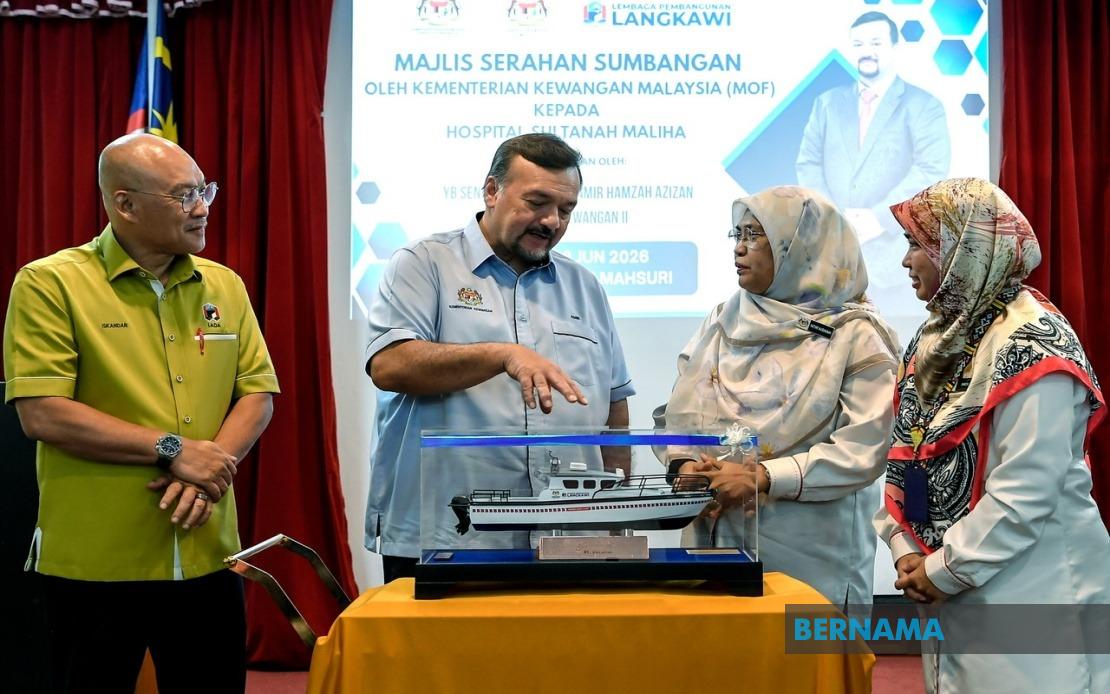
The Malaysian Ministry of Finance has committed RM5.5 million to establish a dedicated sea ambulance service for Langkawi, marking a significant step toward modernising healthcare infrastructure on the island. Finance Minister II Datuk Seri Amir Hamzah Azizan announced the funding allocation on June 28, with operations expected to begin in the first quarter of 2025. The investment underscores the government's recognition of Langkawi's unique geographical challenges and its importance as a major tourism destination requiring robust medical services.
Currently, transferring patients from Langkawi to specialist facilities on the mainland relies on conventional passenger ferry services, a system with inherent limitations during medical emergencies. When ferry schedules are reduced—a frequent occurrence during monsoon seasons or due to operational constraints—critically ill patients face dangerous delays in accessing advanced treatment. This gap in emergency response capacity has long been identified as a vulnerability in Langkawi's healthcare system, particularly for cases requiring intensive care or specialised surgical intervention available only at larger hospitals across the Strait of Malacca.
The new sea ambulance will be operated by Hospital Sultanah Maliha, the island's primary government healthcare facility, transforming how urgent patient transfers are coordinated. Rather than waiting for regular ferry departures, emergency medical teams will have immediate access to a dedicated vessel equipped with life-support systems and staffed by trained personnel. This capability addresses a critical healthcare access issue that has affected both local residents and the millions of international visitors who come to Langkawi annually, enhancing the island's appeal as a safe and well-serviced destination.
Amir Hamzah detailed the vessel's specifications, noting it will accommodate two stretchers and up to twelve personnel, including medical staff and support workers who will ensure patients receive continuous monitoring and care during transit. This configuration reflects international standards for maritime medical transport, balancing capacity with the need to maintain a controlled medical environment. The presence of multiple trained staff members ensures that complex interventions can be performed if patient conditions deteriorate during what may be a 30-minute to one-hour crossing, depending on sea conditions and the specific destination hospital.
Beyond the ambulance vessel itself, the broader investment in Langkawi's healthcare infrastructure demonstrates a comprehensive approach to island healthcare development. The Ministry of Finance simultaneously presented RM700,000 worth of medical equipment to Hospital Sultanah Maliha, encompassing diagnostic devices, information technology systems, furniture, vehicles, and security infrastructure. This complementary funding recognises that improved emergency transport capacity must be supported by corresponding advances in hospital capabilities and efficiency.
The equipment donation specifically includes computers on wheels—mobile workstations designed for ward rounds—representing the government's push toward digital healthcare transformation. The Electronic Medical Record system being rolled out across Malaysian hospitals will enable doctors and nurses to access and update patient information in real-time during clinical encounters. For a regional hospital like Langkawi's, this connectivity with the broader hospital network means that patient histories, test results, and previous treatment records become instantly available, regardless of whether a patient was initially treated locally or was transferred from the mainland.
This digital integration carries particular significance for continuity of care in a tourism-dependent region. International visitors suffering medical emergencies often have complex prior medical histories held in overseas healthcare systems. Improved domestic digital infrastructure helps Malaysian hospitals better manage such cases by at least capturing complete local treatment records that can be transmitted between facilities. For returning tourists who may experience complications from previous Langkawi treatments, having accessible medical records accelerates diagnosis and prevents redundant testing.
The initiative also addresses patient dignity and safety concerns that have been overlooked in previous transfer arrangements. Emergency ferries designed primarily for commercial passenger transport lack the climate control, privacy provisions, and medical amenities necessary for comfortable patient transfer. The dedicated sea ambulance will provide a controlled environment that preserves patient confidentiality, reduces discomfort during transit, and minimises exposure to weather conditions that could compromise their clinical status. These factors prove especially important for elderly patients, those requiring oxygen support, or individuals in distress who benefit psychologically from a professional medical environment.
From a regional healthcare perspective, Langkawi's upgraded emergency transport capacity may establish a model for other Malaysian island communities facing similar geographic isolation. Penang, despite its bridge connection, and Sabah and Sarawak regions could benefit from studying this initiative. The investment reflects evolving government thinking about equitable healthcare access across diverse geographical terrains, acknowledging that islands and remote areas require tailored solutions beyond standard terrestrial ambulance services.
The timing of the announcement, alongside broader digitalisation initiatives, indicates strategic coordination between the Ministry of Finance and the Health Ministry. The government appears to be bundling infrastructure improvements—physical transport assets, medical equipment, and digital systems—to create comprehensive healthcare upgrades rather than addressing gaps piecemeal. This integrated approach potentially improves cost-effectiveness and ensures that new transport capacity is matched by supporting clinical infrastructure and information systems.
For Langkawi specifically, the sea ambulance service addresses a longstanding concern among residents and business operators. The island hosts over 3 million tourists annually alongside a permanent population of approximately 65,000 people. A medical emergency affecting a tourist could previously result in significant delays; now, dedicated emergency maritime transport provides competitive advantage compared to other regional tourist destinations. Malaysian hospitals will be positioned to deliver faster emergency response to international patients, potentially influencing medical tourism decisions and overall destination perception.
The service launch in early 2025 will be observed closely by healthcare administrators across Southeast Asia, where island nations and archipelagic countries manage similar challenges. Singapore and Thailand operate sophisticated maritime medical services, but Malaysia's approach—scaling solutions to fit regional budgets while leveraging existing hospital infrastructure—may offer practical lessons for neighbours. The RM5.5 million investment, while substantial for Langkawi, remains a cost-effective solution compared to building duplicate specialist facilities on the island, reflecting pragmatic healthcare planning.

