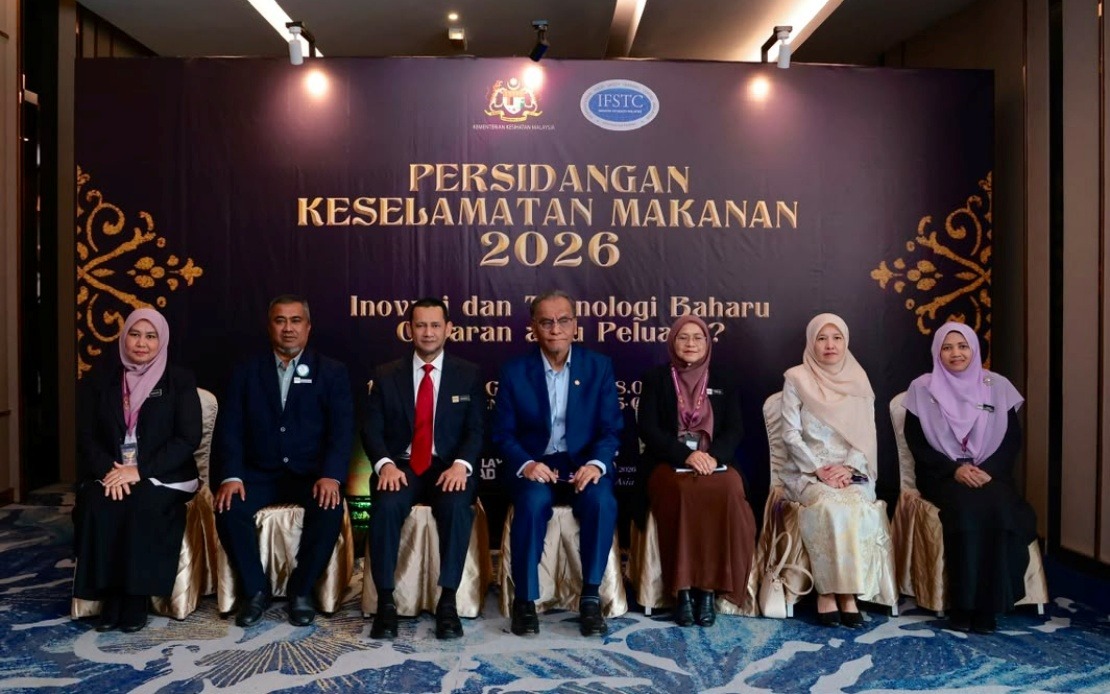
Malaysia has taken a significant step in regional food governance by formally joining the Asia-Pacific Food Regulatory Authority Summit (APFRAS), marking a strategic pivot toward digitalised food safety oversight across Southeast Asia. Health Minister Datuk Seri Dr Dzulkefly Ahmad announced the Cabinet's approval of Malaysia's membership at a signing ceremony in Putrajaya, signalling a commitment to modernise how the nation manages food security in an era of complex international supply networks. The decision reflects growing recognition that domestic food safety cannot be addressed in isolation when the vast majority of Malaysia's food supply originates from or transits through multiple countries.
The Cabinet's approval, formally granted on June 12, positions Malaysia to leverage APFRAS as a platform for advancing regional harmonisation of food regulatory standards. This is particularly critical given the dramatic expansion of Malaysia's food import bill, which has surged 85 percent over the past decade, climbing from RM42.6 billion in 2013 to RM78.9 billion in 2023. Such exponential growth underscores a fundamental shift in how Malaysia sources its nutrition, moving away from self-sufficiency toward deeper integration into global agrifood systems. The trajectory reflects not only population growth and changing dietary patterns but also economic constraints that make importing certain food categories more viable than domestic production.
Dr Dzulkefly emphasised that Malaysia's involvement in APFRAS strengthens the country's positioning as a "Smart Gatekeeper" at the regional level, a designation that carries both responsibility and opportunity. As a major food trading hub in Southeast Asia, Malaysia sits at a critical juncture where oversight decisions ripple across the region. The minister articulated three specific ambitions: leading digital transformation of food safety governance, regulating biodegradable packaging materials, and harmonising legislative frameworks for emerging food technologies. These objectives extend beyond Malaysia's borders, suggesting that the nation intends to shape regional standards rather than merely comply with them.
The APFRAS initiative directly supports two of Malaysia's flagship policy frameworks: the National Food Safety Policy and the National Food Security Policy. Integration with these domestic agendas ensures that regional participation translates into concrete improvements at the local level. However, the RM78.9 billion annual import bill represents both a vulnerability and an enforcement challenge. Products traversing long, complex supply chains across multiple nations create numerous points where contamination, fraud, or safety breaches can occur undetected. Traditional inspection methods, relying on physical sampling and documentation verification, become increasingly inadequate when the volume and complexity of imports scale exponentially.
To manage this challenge, the Health Ministry has begun exploring advanced technological solutions including artificial intelligence and predictive analytics. These tools promise to enhance monitoring and control efficiency at Malaysia's entry points—ports, airports, and border crossings—by identifying risk patterns that human inspectors might overlook. AI systems can analyse supplier histories, trade patterns, and past incidents to flag high-risk shipments for intensive scrutiny, while predictive analytics can anticipate emerging contamination threats based on seasonal trends and disease outbreaks in supplier countries. This technological pivot represents a recognition that traditional gatekeeping is insufficient for the 21st-century food system.
The timing of Malaysia's APFRAS entry coincides with the 2026 Food Safety Conference, a two-day gathering that attracted over 300 participants from across the region. The conference theme, "New Innovations and Technologies – Challenges or Opportunities?," directly addresses the ambiguity surrounding technological transformation in food safety. While digital tools and automation promise efficiency gains, they also introduce new vulnerabilities: cybersecurity risks, algorithmic bias in risk assessment, and the digital divide between well-resourced corporations and smallholder producers in partner countries. Malaysia's engagement with APFRAS positions the nation to navigate these tensions while shaping standards that balance innovation with inclusivity.
The biodegradable packaging dimension of Malaysia's APFRAS agenda reflects growing consumer and regulatory concern about food safety that extends beyond microbial and chemical hazards to environmental impact. Packaging materials that decompose after use could reduce plastic waste accumulating in landfills and oceans, particularly significant for Southeast Asia, which handles substantial volumes of food packaging. However, transitioning to biodegradable alternatives requires careful assessment of food preservation properties, cost implications for producers, and standardised testing protocols. Malaysia's commitment to regulate this domain suggests the nation recognises that modern food safety encompasses sustainability dimensions that previous generations of food policy did not address.
Harmonising legislative frameworks for new food innovations—such as plant-based proteins, fermented ingredients, and novel processing techniques—represents another pillar of Malaysia's APFRAS agenda. Currently, products approved in one country may face regulatory obstacles in another, fragmenting the regional market and encouraging regulatory arbitrage. A unified approach would facilitate trade while ensuring safety standards do not vary capriciously across borders. For Malaysia, which hosts numerous food technology startups and innovation hubs, harmonisation could unlock commercial opportunities by providing a larger market for locally developed products and attracting investment from firms seeking access to standardised Southeast Asian regulatory environments.
The surge in food imports has not occurred randomly; it reflects deliberate policy choices, trade agreements, and market dynamics that Malaysian policymakers have largely endorsed. However, this dependency introduces food security vulnerabilities. Disruptions in exporting countries—whether from climate shocks, geopolitical tensions, or disease outbreaks—can cascade into Malaysian supermarkets with limited warning. APFRAS membership offers a forum for coordinating regional responses to such disruptions, potentially including agreements on preferential trade access during crises and shared early warning systems for emerging food safety threats. Malaysia's position as a regional trading hub gives it particular leverage in such negotiations.
The Food Safety and Quality Programme (PKKM), which organised the 2026 conference, represents the institutional machinery through which Malaysia will operationalise its APFRAS commitments. This programme coordinates among various agencies with food safety responsibilities—the Health Ministry, Agriculture and Agro-based Industry Ministry, and local authorities—ensuring coherent implementation of standards and regulations. APFRAS membership elevates this coordination to the regional plane, requiring PKKM to engage with counterpart agencies across Asia-Pacific, share methodologies, and contribute to collective problem-solving on cross-border food safety crises.
For Malaysian consumers and businesses, APFRAS membership carries tangible implications. Enhanced safety monitoring at import points could reduce foodborne illness outbreaks linked to imported products, protecting public health. For food exporters, alignment with regional standards reduces compliance costs and simplifies market access across Asia-Pacific. Small and medium enterprises in food manufacturing and distribution may face adjustment costs if new standards require upgraded facilities or training, though harmonisation could ultimately reduce the fragmentation they currently navigate. The regional dimension suggests that Malaysia is betting on standardisation and integration as superior to the current patchwork of national regulations.
The challenge ahead involves translating membership benefits into measurable outcomes. APFRAS participation requires sustained resource commitments, staff training, and institutional coordination. Malaysia must balance its domestic enforcement capacity—already stretched managing RM78.9 billion in annual imports—with new obligations arising from regional leadership roles. The digitisation agenda, while promising, requires investment in infrastructure, cybersecurity, and data governance that developing economies sometimes struggle to sustain. Success will depend on whether Malaysia can leverage APFRAS resources to strengthen its own Food Safety and Quality Programme, creating a virtuous cycle where regional engagement enhances domestic capacity rather than straining it.

