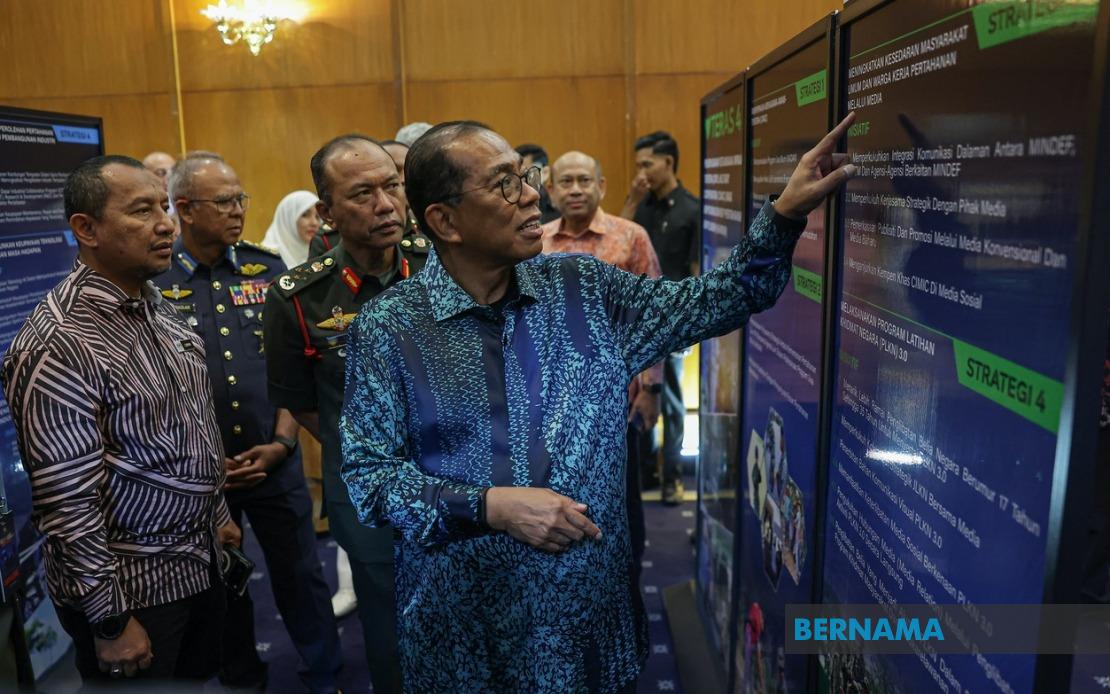
Malaysia's Defence Ministry has taken a significant step to reinforce the nation's security posture by simultaneously launching two complementary frameworks: the National Defence Strategic Plan and the Defence Capacity Blueprint covering the 2026-2030 period. Defence Minister Datuk Seri Mohamed Khaled Nordin unveiled these documents today in Kuala Lumpur, positioning them as essential tools to navigate an increasingly unpredictable global security environment whilst ensuring the country's defence architecture remains contemporary and responsive.
The timing of this dual initiative reflects a deliberate strategic approach to defence planning. Rather than treating defence strategy and implementation capacity as separate concerns, Malaysia's Ministry recognises that articulating ambitious defence objectives means little without corresponding institutional, financial, and technological resources to realise them. Mohamed Khaled characterised the relationship between the two frameworks as complementary: whilst the Strategic Plan establishes the destination and direction, the Capacity Blueprint functions as the enabling mechanism that provides the pathway and resources necessary to arrive there.
The Strategic Plan rests upon seven foundational pillars that collectively address the full spectrum of Malaysia's defence requirements. These encompass the operational readiness of the Malaysian Armed Forces, enhancement of existing and future defence capabilities, personnel welfare including support for serving members and veterans, technological advancement, and innovation in military applications. This multi-dimensional framework acknowledges that modern defence challenges extend beyond traditional military readiness to encompass human capital management, technological sophistication, and institutional adaptation.
Mohamed Khaled identified three principal drivers of strategic change that necessitated this comprehensive planning exercise. The contemporary global order is characterised by mounting geopolitical tension and uncertainty, particularly relevant given Southeast Asia's position amid great power competition. Simultaneously, disruptive technologies including artificial intelligence and automated systems are fundamentally reshaping military capabilities and operational methodologies. Beyond these two domains sits a third category of threat: non-traditional security challenges that conventional force structures and doctrines were not originally designed to address, ranging from transnational terrorism to maritime piracy and cyber operations.
The Defence Capacity Blueprint specifically addresses the critical gap between aspiration and execution that often undermines strategic plans. The ministry identifies four cornerstone capacity areas requiring sustained investment and development. Financial resources remain foundational, as ambitious defence programmes require commensurate budgetary allocation. Human capital—encompassing recruitment, training, retention, and professional development—represents the irreplaceable core of any effective military institution. Technological expertise and innovation capabilities enable Malaysia to leverage cutting-edge systems whilst maintaining organic capacity for adaptation and self-sufficiency. Finally, inter-agency coordination ensures that defence efforts align with broader national security objectives and that resources are deployed efficiently across government entities responsible for complementary security functions.
The Capacity Blueprint's emphasis on a comprehensive whole-of-government and whole-of-society approach represents a notable philosophical shift in how Malaysia conceptualises national defence. This framing moves beyond the traditional model of defence as an exclusively military domain, instead positioning defence as a national endeavour requiring contribution from multiple institutions, private sector expertise, civil society participation, and public understanding. Such an approach acknowledges that contemporary security threats transcend the conventional boundaries of military responsibility and increasingly demand cross-sector coordination and broader societal resilience.
Since the mid-point review of the overarching Defence White Paper, strategic planners examined existing gaps in Malaysia's defence posture and identified areas requiring enhanced responsiveness and adaptability. This analytical process informed both the Strategic Plan and Capacity Blueprint, ensuring these frameworks directly address deficiencies identified during the comprehensive assessment. The review process thus functioned not merely as a retrospective evaluation but as a forward-looking diagnostic that shaped the subsequent strategic documents.
Equipment modernisation represents a tangible manifestation of these strategic intentions. The Defence Ministry has already received three ANKA Medium Altitude Long Endurance Unmanned Aircraft Systems, which arrived in March and have since been operationalised at Labuan Air Base. These systems significantly extend Malaysia's surveillance and reconnaissance capabilities, particularly valuable for monitoring the vast maritime domains within Malaysian jurisdiction. The acquisition demonstrates concrete progress in translating strategic priorities regarding capability enhancement into deployed systems capable of operational impact.
Beyond these current acquisitions, Malaysia's defence procurement pipeline reflects the implementation of longer-term capacity enhancement objectives. The Malaysian Armed Forces anticipate receipt of FA-50M light combat aircraft, representing a significant step forward in air combat capability and tactical flexibility. Maritime patrol aircraft acquisitions will enhance the armed forces' capacity to monitor and protect Malaysia's extensive coastlines and maritime economic zones. The planned delivery of a second batch of Littoral Mission Ships indicates sustained commitment to littoral and coastal security operations, recognising that Malaysia's geography places premium importance on maritime domain awareness and control.
This integrated approach to defence planning carries particular relevance for Malaysia within the Southeast Asian context. As the region navigates complex geopolitical dynamics involving major power interests, territorial disputes, and emerging transnational threats, nations require defence frameworks that balance deterrence capacity with adaptive resilience. Malaysia's simultaneous attention to strategic direction-setting and operational capacity-building positions the country to respond more effectively to the multifaceted security challenges characteristic of contemporary Southeast Asia.
The Defence Capacity Blueprint's specific enumeration of capacity requirements—financing, human capital, leadership, professional competencies, technological expertise, research, innovation, and cross-agency coordination—provides a diagnostic framework applicable beyond Malaysia. Policymakers across Southeast Asia confronting similar security challenges and resource constraints may find value in this structured approach to identifying and addressing implementation gaps that often prevent strategic intentions from materialising into operational reality.
Looking forward, the success of these frameworks will ultimately depend on sustained commitment to their implementation and adaptation as circumstances evolve. The strategic environment that prompted this planning exercise—characterised by technological disruption, geopolitical uncertainty, and emerging threats—will continue shifting in ways that demand periodic reassessment and recalibration. Malaysia's institutional architecture now provides mechanisms for such ongoing adaptation, positioning the country to maintain defence effectiveness across the five-year planning horizon and beyond.

