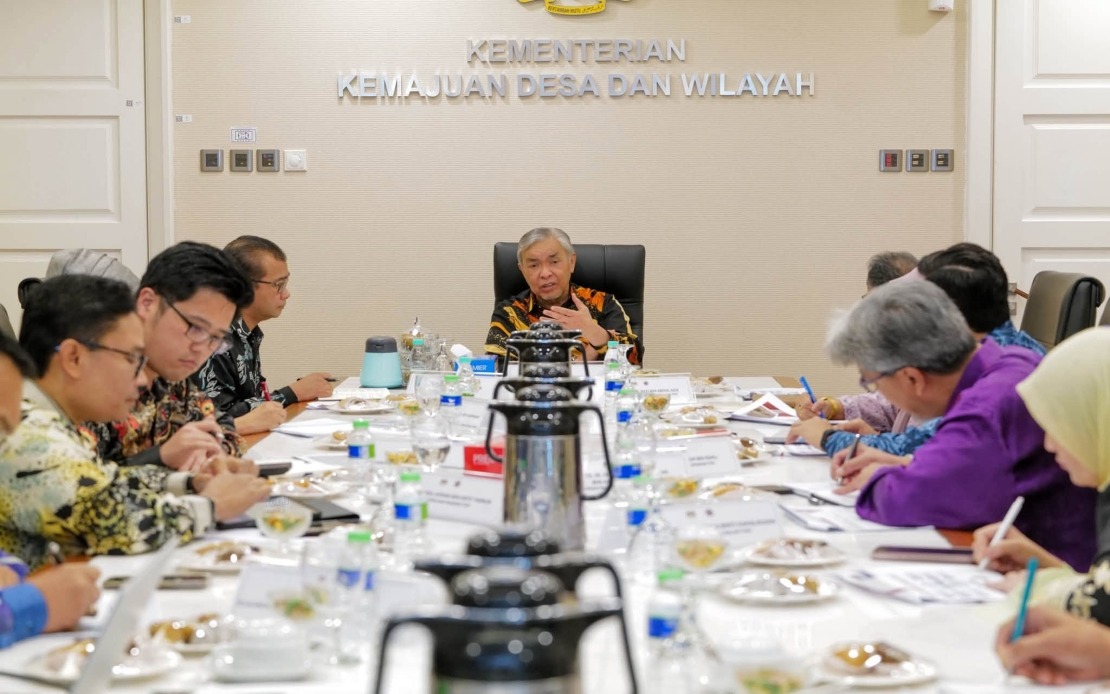
Malaysia's vocational education sector is entering a new phase of systematic transformation with the government's announcement of the Strategic TVET 2.0 Task Force covering the decade-long period from 2026 to 2035. Deputy Prime Minister Datuk Seri Dr Ahmad Zahid Hamidi, speaking from Putrajaya, outlined how this structural overhaul will reshape the country's approach to technical and vocational training at a time when skills gaps pose mounting challenges to economic competitiveness in Southeast Asia.
The task force represents a significant shift in how Malaysia intends to coordinate its TVET ecosystem, moving beyond fragmented initiatives toward what officials describe as a more cohesive, outcomes-focused strategy. By establishing parallel committees focused on governance, industry engagement, financing, and workforce inclusion, the government is signalling that vocational training will no longer operate in isolation from broader economic planning. Ahmad Zahid, who chairs the National TVET Council alongside his portfolio as Minister of Rural and Regional Development, emphasised that this layered institutional framework will enable better integration between educational institutions and the private sector—a critical gap that has historically limited the relevance of vocational programmes to employer requirements.
Eminent Professor Datuk Dr Siti Hamisah Tapsir, president and vice-chancellor emeritus of UCSI University, has been appointed to lead the Strategic TVET 2.0 Task Force. Her appointment signals the government's intent to draw on academic leadership and institutional experience in charting the sector's long-term direction. The inclusion of a university leader in this role underscores recognition that vocational training must increasingly intersect with higher learning pathways, particularly as automation and digital transformation reshape labour markets across the region.
The 10 supporting committees address specific dimensions of TVET reform that have emerged as critical in recent policy discussions. The TVET Governance and Institutional Reform Committee, chaired by Datuk Dr Asyraf Wajdi Dusuki, will tackle structural deficiencies within training institutions and regulatory frameworks. Meanwhile, the TVET Industry and Employers Committee, led by Datuk Khairul Azwan Harun, is tasked with ensuring curricula align with real workplace demands—a persistent weakness in many Southeast Asian vocational systems where training often lags industry evolution by several years. For Malaysian readers familiar with complaints from manufacturers and service providers about skills mismatches among new entrants, this committee's work carries tangible importance for employment prospects.
Financial sustainability represents another focus area through the TVET Financing and Sustainability Committee under Ramelle Ashram Ramli's direction. This committee will examine funding mechanisms that can support both institutional operations and student access, a particularly relevant concern for rural Malaysia where vocational options remain limited. The government's framing here suggests recognition that TVET expansion cannot rely indefinitely on public expenditure alone, and that creative financing models—potentially involving industry partnerships, endowments, or hybrid public-private arrangements—will be necessary to scale quality provision nationwide.
The Women Empowerment in TVET Committee, chaired by Datuk Dr Masilla Kamalrudin, addresses a demographic reality often overlooked in skills discussions: women remain significantly underrepresented in technical fields across Malaysia and the region. With female participation rates substantially below those of male students in trades, engineering, and manufacturing-related vocations, this committee's mandate suggests the government recognises that achieving demographic balance in TVET is not merely an equity issue but an economic imperative. As workforce ageing accelerates and labour shortages intensify, mobilising the full pool of female talent becomes essential for sectoral growth.
The broader context for this announcement lies in Malaysia's shifting economic position within Southeast Asia. As the country competes for higher-value manufacturing and advanced services, it requires a workforce capable of operating complex systems, troubleshooting problems independently, and adapting to technological change. Vocational education historically served as a pathway for students not pursuing university degrees, but contemporary labour markets increasingly demand that technicians possess sophisticated capabilities alongside manual competence. The TVET 2.0 framework's emphasis on comprehensiveness and coordination reflects understanding that isolated technical colleges or standalone programmes cannot produce the integrated talent pipelines that modern industries require.
Regional comparisons also inform this initiative. Neighbouring countries like Singapore and Thailand have invested heavily in TVET as core economic strategy, creating international benchmarks against which Malaysia's performance is measured. Singapore's SkillsFuture ecosystem and Thailand's emphasis on dual-track education systems have achieved higher employer satisfaction and clearer career progression pathways than Malaysian models have historically offered. The task force structure announced by Ahmad Zahid appears designed partly to learn from and adapt such approaches to Malaysian contexts.
The 2026-2035 timeframe itself carries significance. This decade encompasses Malaysia's target period for achieving developed nation status, a goal explicitly tied to productivity and innovation capacity. A workforce equipped with advanced technical skills becomes instrumental for achieving this aspiration, particularly in sectors like semiconductor manufacturing, renewable energy, digital infrastructure, and advanced manufacturing. TVET 2.0 therefore functions not merely as an education initiative but as a component of Malaysia's broader national development strategy.
Implementation will reveal whether this institutional restructuring translates into measurable improvements in graduate employment outcomes, employer satisfaction, and student progression rates. The task force's success depends partly on its ability to navigate tensions inherent in vocational education: the need for rapid responsiveness to industry change must be balanced against the time required for curricula development and instructor retraining. Additionally, the committees must navigate regional variations in economic opportunities, ensuring that TVET expansion in less industrialised states generates genuine employment rather than creating graduates with skills misaligned to local labour markets.
The government's emphasis on strengthening the TVET ecosystem through 'more strategic, integrated and impact-driven policy coordination' also implies that previous approaches suffered from fragmentation and unclear accountability. Whether this reorganisation will reduce bureaucratic complexity or add layers remains to be observed. Nonetheless, the appointment of credible leaders across multiple committees and the establishment of clear thematic focus areas suggest a serious commitment to reform rather than mere rebranding of existing arrangements.

