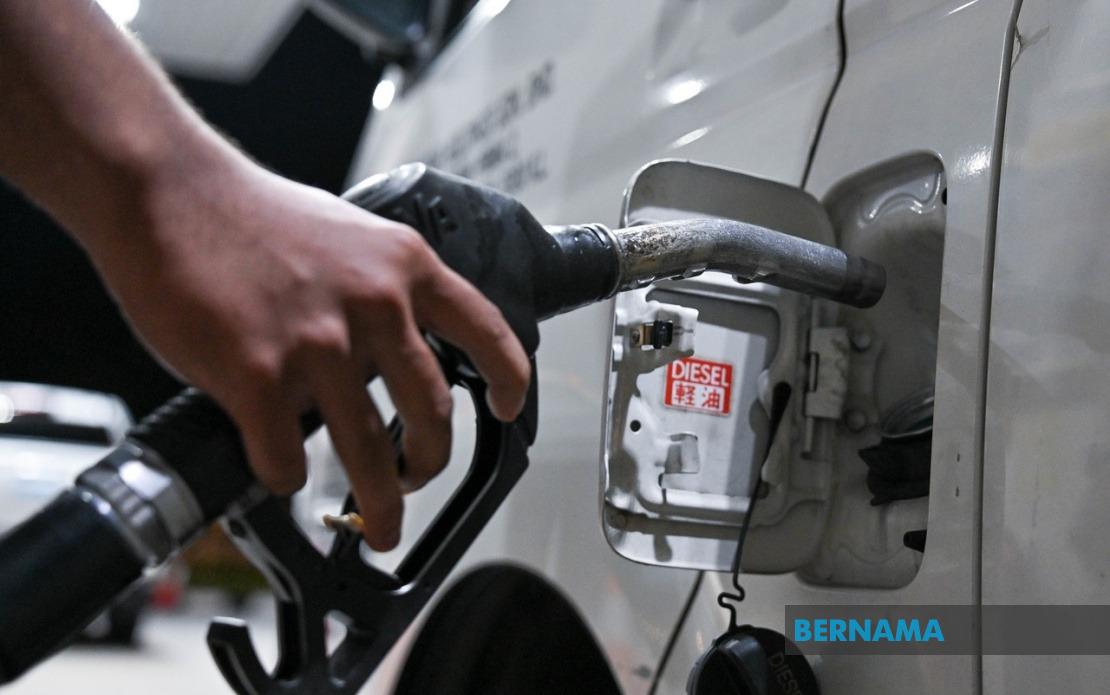
The Ministry of Domestic Trade and Cost of Living has terminated restrictions on diesel sales to commercial transport operators across Sabah, Sarawak, and the Federal Territory of Labuan, dismantling a system of tiered purchase caps that had constrained fuel availability in these regions. The move, effective immediately from tomorrow, represents a significant policy shift in how the government manages fuel distribution across the country's most geographically isolated states.
The revoked directive, originally implemented on March 27, 2026, had imposed strict limits on how much diesel individual transport operators could purchase at subsidised rates. Vehicles had been categorised into three tiers, with caps set at 50 liters, 100 liters, and 150 liters per transaction depending on vehicle classification. These restrictions were designed to prevent hoarding and ensure equitable distribution during a period of elevated international fuel costs, but they created practical challenges for legitimate operators whose vehicle operations exceeded these thresholds.
According to Datuk Azman Adam, Director-General of Enforcement at KPDN, the cancellation aligns with Prime Minister Datuk Seri Anwar Ibrahim's announcement on June 21 establishing a unified subsidised diesel price of RM2.10 per litre under the BUDI Diesel Programme. This standardisation programme represents a rationalisation of fuel subsidy policy, where previously different states operated under varying price regimes that complicated logistics and created cross-border price differentials incentivising smuggling.
The termination of purchase restrictions marks a confidence vote in an alternative safeguarding mechanism that the government is simultaneously introducing across the eastern Malaysian states. Rather than volume-based caps at the point of sale, authorities are implementing a MyKad-based authentication system at petrol stations. This verification approach aims to ensure that subsidised fuel reaches only eligible recipients while removing the burden of manual oversight that had constrained transaction sizes.
The shift from quantity restrictions to identity verification represents a modernisation of subsidy administration aligned with Malaysia's broader digital transformation agenda. By requiring MyKad presentation, authorities can cross-reference purchasers against centralised databases, theoretically preventing ineligible buyers from accessing subsidised rates while permitting legitimate commercial operators to purchase in quantities appropriate to their operational needs. This approach addresses a longstanding complaint from the transport sector that volume caps had made efficient fleet operations difficult, particularly for larger haulage companies serving the sparsely populated interior regions.
For Sabah, Sarawak, and Labuan specifically, the implications are substantial. These states depend heavily on reliable, affordable fuel for economic activity ranging from agricultural transport to coastal shipping. The removal of purchase limits should reduce friction in logistics chains and lower administrative burden on petrol station operators, who had previously borne responsibility for enforcing categorisation systems. The geographic isolation of these territories means fuel costs disproportionately affect consumer prices for goods and services, giving subsidy policy outsized economic importance.
Petrol retailers holding scheduled controlled goods licenses in the three affected regions have been formally notified that the old restrictions no longer apply from tomorrow. This notification addresses a critical implementation gap: without explicit guidance, retailers operating across multiple states might have continued enforcing the old rules out of caution. The formal revocation eliminates this legal ambiguity and places responsibility squarely on compliance with the new MyKad verification mechanism rather than volume policing.
The introduction of the MyKad system simultaneously across all three states demonstrates coordinated implementation rather than incremental rollout, suggesting the government has conducted sufficient testing and stakeholder consultation to proceed with confidence. However, questions remain about system reliability, particularly in remote areas where telecommunications infrastructure remains inconsistent. Petrol stations in interior Sarawak or outlying Sabah locations may struggle with real-time verification systems if connectivity falters, potentially disrupting fuel sales during peak hours.
This policy adjustment sits within the broader context of Malaysia's subsidy rationalisation efforts initiated by the current administration. Rather than maintaining blanket price controls that distort markets and encourage consumption, targeted subsidy programmes like BUDI attempt to preserve affordability for legitimate users while reducing fiscal burdens. The movement from quantitative restrictions to identity-based eligibility represents philosophical alignment with means-testing approaches employed in other social programmes.
The standardised RM2.10 per litre price across all three territories eliminates previous incentive structures that had driven cross-border fuel trading. When prices differed substantially between jurisdictions, commercial arbitrage became profitable despite smuggling risks. Harmonised pricing removes this profit motive while the MyKad system addresses remaining leakage channels by preventing ineligible purchasers from accessing subsidised fuel regardless of location.
For Malaysian manufacturers and traders, particularly those operating logistics-intensive businesses, the policy change should improve operational flexibility. Companies previously forced to make multiple small purchases to stay within legal limits can now optimise fuel procurement, reducing transaction frequency and associated administrative costs. This should translate into modest efficiency gains across supply chains, though savings may be imperceptible to consumers given other cost pressures affecting Malaysia's economy.
Implementation success depends critically on petrol station readiness and the robustness of MyKad verification systems. KPDN has emphasised its confidence in the mechanism, but operational reality often reveals implementation gaps overlooked during planning phases. Retailer compliance and consumer acceptance will be crucial; if the MyKad system experiences frequent verification failures, pressure will mount for reinstatement of simpler volume-based restrictions or removal of subsidies entirely.
The cancellation represents calculated risk-taking by policymakers who believe improved targeting through digital identity verification will outperform crude quantitative restrictions. Success could establish a template for subsidy administration across other essential goods, while failure would force embarrassing policy reversals and potentially accelerate moves toward market-based fuel pricing policies that represent far more significant challenges to affordability.

