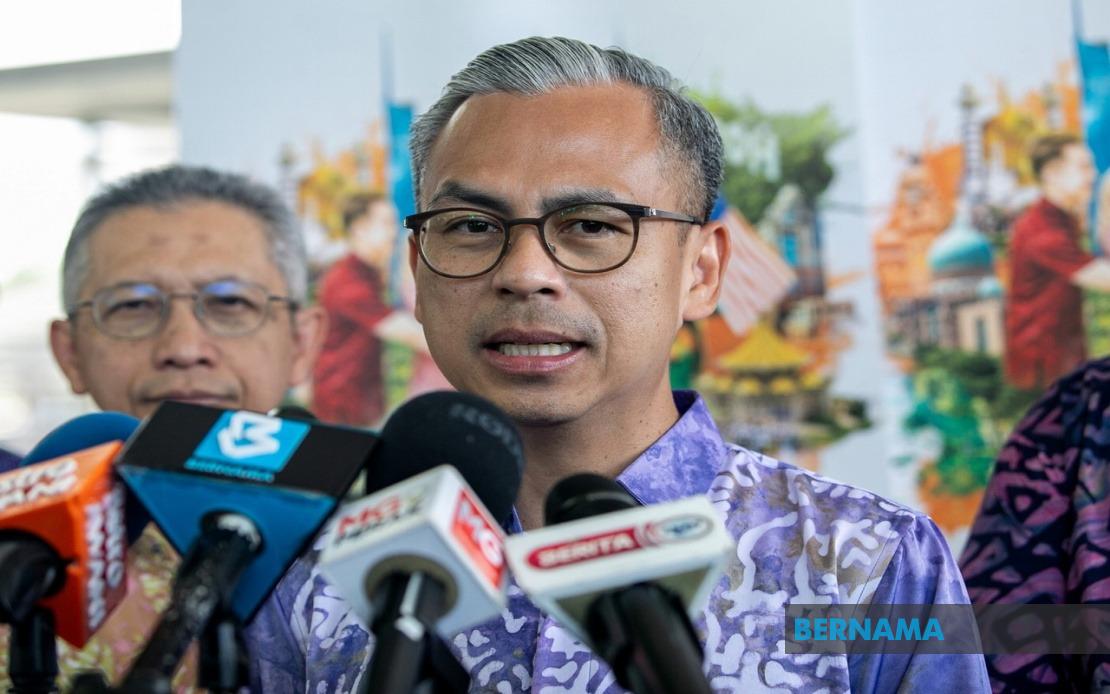
The Malaysian government has crystallised its core development philosophy into the official theme for next year's National Day and Malaysia Day celebrations, signalling a deliberate pivot toward inclusive growth as the centrepiece of national identity. Launched in Ipoh at the Sultan Azlan Shah Ministry of Health Training Institute in Tanjung Rambutan, the 2026 National Month campaign carries the message 'Malaysia MADANI: Kesejahteraan Dinikmati'—Malaysia MADANI: Shared Prosperity—encapsulating what Communications Minister Datuk Seri Fahmi Fadzil described as the government's fundamental commitment to ensuring that the nation's economic and social gains reach every Malaysian fairly and equitably.
The thematic choice reflects a broader repositioning of how the MADANI administration frames its policy agenda to citizens. Rather than focusing solely on headline economic growth figures, Fahmi emphasised that the government's vision encompasses tangible improvements in living standards, the creation of genuine equal opportunity across society, and the deliberate distribution of development benefits in ways that prevent any segment of the population from being marginalised. This framing suggests the government views shared prosperity not as a secondary outcome of economic success, but as a primary objective requiring strategic intervention and oversight.
Fahmi articulated the inclusivity principle explicitly, stating that the government's development framework operates without reference to racial, religious, geographical or socioeconomic boundaries. This messaging carries significance for a nation with Malaysia's demographic complexity and historical sensitivities around resource distribution. By anchoring the 2026 celebrations around a pledge that prosperity transcends traditional dividing lines, the government seeks to position economic development as a unifying national endeavour rather than a zero-sum competition between communities.
Prime Minister Datuk Seri Anwar Ibrahim's presence at the launch ceremony in Tanjung Rambutan underscored the administration's investment in this particular messaging framework. The event also drew National Unity Minister Datuk Aaron Ago Dagang and Perak Menteri Besar Datuk Seri Saarani Mohamad, indicating alignment across federal and state governance structures around the shared prosperity narrative. The gathering at a health ministry training facility, rather than a more ceremonial venue, subtly reinforced the practical, implementation-focused dimension of the government's prosperity agenda.
The minister positioned Malaysia's ethnic and religious diversity not as a challenge to be managed, but as a foundational asset that has historically enabled the nation's stability and cohesion. According to Fahmi, this heritage of mutual respect and harmony creates corresponding obligations for all Malaysians to actively preserve unity, strengthen interfaith and intercommunal relations, and maintain the nation's sovereignty. The formulation transforms the 2026 theme from a mere slogan into a call for collective custodianship of national social capital.
The practical manifestation of this vision will unfold through several coordinated campaigns and programmes scheduled throughout the National Month. The 'One House, One Jalur Gemilang' initiative invites households across the nation to display the Malaysian flag, transforming private domestic spaces into expressions of national sentiment and unity. Complementing this grassroots element, the Kembara Merdeka Jalur Gemilang convoy programme will traverse the country, bringing the celebration narrative directly to communities and regions that might otherwise experience independence commemorations primarily through media coverage.
These initiatives carry particular relevance for regional observers tracking how Southeast Asian democracies construct and communicate national identity in an era of increasing social polarisation and competing narratives. Malaysia's explicit emphasis on inclusive prosperity positioning reflects the government's assessment that citizens across the socioeconomic spectrum have become attuned to questions about whether they personally benefit from national development—and whether government structures genuinely work in their interests regardless of their background. By making shared prosperity the central theme of the nation's most significant civic celebrations, the MADANI administration signals that equitable distribution is not a peripheral concern but a core organising principle.
The campaign's information architecture deserves attention as well. The government has designated the Merdeka 360 portal and the Information Department's social media platforms as the primary distribution channels for updates and campaign materials. This digital-first approach reflects both the composition of Malaysia's population and the strategic importance the government assigns to controlling the narrative environment around national identity and development. In an information ecosystem increasingly fragmented across platforms, maintaining integrated messaging through official digital channels becomes crucial for ensuring consistency in how the shared prosperity vision reaches diverse audiences.
For Malaysian businesses and civil society organisations, the 2026 theme carries implicit expectations about corporate engagement with the shared prosperity agenda. Companies operating in Malaysia increasingly face pressure—both formal and informal—to demonstrate commitment to inclusive growth through corporate social responsibility initiatives, equitable employment practices, and community development programmes. The government's elevation of shared prosperity to the level of official national celebration messaging suggests that alignment with this principle will become an increasingly important metric by which businesses are evaluated by government, consumers, and advocacy groups.
The timing of the campaign launch, occurring several years before the actual 2026 celebrations, indicates the government intends to use the intervening period to build institutional and societal momentum around the shared prosperity concept. Rather than treating the National Month theme as an annual communications exercise, the early launch suggests the government views it as an opportunity to embed inclusive development principles more deeply into government operations, corporate practices, and public consciousness. This extended timeline could enable the MADANI administration to point to concrete policy outcomes and programme results by the time 2026 arrives, allowing the theme to serve as both aspiration and documented achievement.
Regionally, Malaysia's emphasis on inclusive prosperity positioning also reflects broader Southeast Asian conversations about development models in an era when rapid economic growth alone no longer guarantees political legitimacy or social cohesion. Countries across the region grapple with similar challenges: how to ensure that technological advancement, foreign investment, and economic expansion translate into improved circumstances for citizens beyond the urban centres and corporate sectors. By framing national identity explicitly around shared prosperity rather than abstract principles of sovereignty or historical achievements, Malaysia offers a case study in how governments attempt to align national celebration messaging with contemporary citizen expectations about the practical delivery of government benefits.

