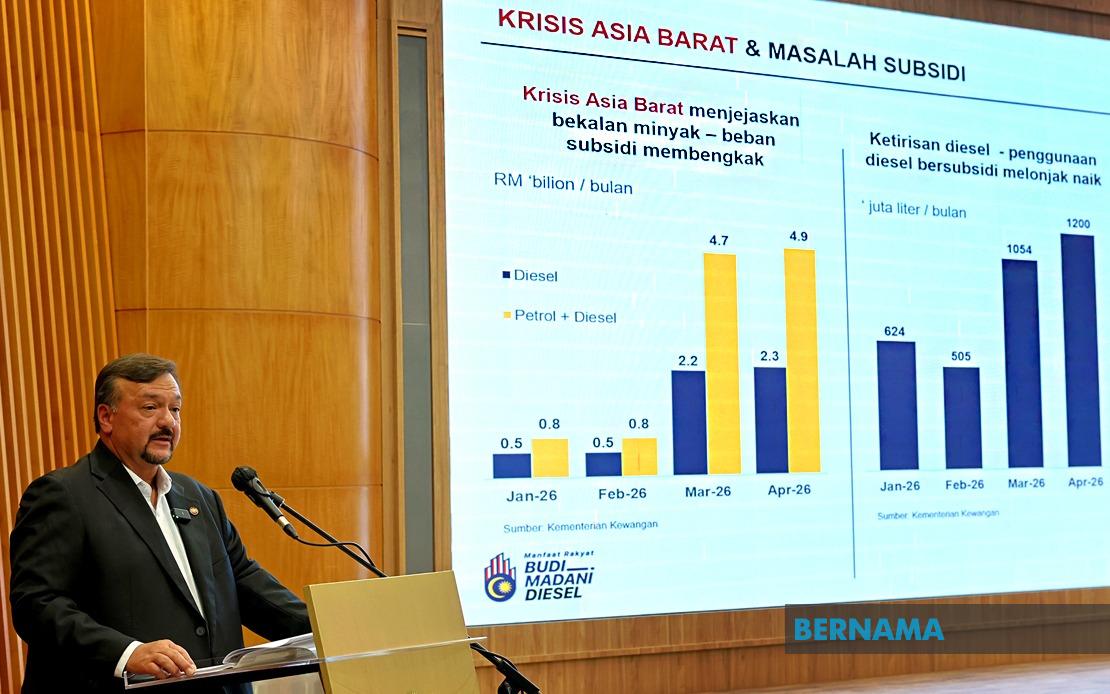
The Malaysian government has confirmed it will keep the BUDI MADANI RON95 (BUDI95) monthly fuel subsidy quota at 200 litres, signalling that any decision to return to the previous 300-litre allocation remains premature while regional tensions in West Asia remain uncertain. Finance Minister II Datuk Seri Amir Hamzah Azizan announced the position during a press conference in Putrajaya on June 22, emphasising that policy adjustments depend on how international crude oil prices respond to the evolving geopolitical landscape.
The government's cautious stance reflects broader economic considerations tied to a temporary ceasefire agreement recently concluded between the United States and Iran. According to Amir Hamzah, the 60-day negotiation window initiated by the preliminary peace accord requires careful observation before Malaysia can confidently predict oil market stability. The hesitation underscores how Middle Eastern political developments can create significant ripple effects on Southeast Asian economies that depend on refined petroleum imports, making hasty policy reversals potentially risky for state finances.
Malaysia's fuel subsidy framework has undergone considerable restructuring in recent years as global energy prices have become increasingly volatile. The reduction from 300 to 200 litres represents a strategic recalibration designed to balance affordability for ordinary motorists with fiscal sustainability for the government. By maintaining this threshold temporarily, policymakers aim to preserve budgetary headroom while avoiding sudden price shocks that could trigger inflationary pressures across the transportation and logistics sectors.
Amir Hamzah provided reassurance that the existing subsidy cap does not create undue hardship for most beneficiaries. Statistical analysis revealed that approximately 80 per cent of eligible BUDI95 recipients currently consume less than 200 litres monthly, suggesting the quota accommodates the vast majority without requiring supplementary fuel purchases at market rates. This data-driven approach demonstrates that the government possesses granular information about usage patterns, allowing policymakers to calibrate assistance more precisely than under the previous flat-rate system.
Beyond the technical subsidy mechanics, the government has promoted complementary behavioural changes to reduce fuel consumption organically. Initiatives promoting remote work arrangements exemplify how policy can address energy costs from the demand side rather than relying solely on price controls. Such measures align broader sustainability objectives with immediate financial pressures, creating synergies between climate goals and budget management that appeal to both environmental constituencies and fiscally conservative constituencies.
Prime Minister Datuk Seri Anwar Ibrahim expressed cautious optimism regarding the US-Iran agreement framework on June 20, noting that successful negotiations could fundamentally alter the geopolitical calculus affecting oil markets. The preliminary memorandum of understanding, outlined in a 14-point document signed by United States President Donald Trump and Iranian President Masoud Pezeshkian, theoretically reduces supply-side risks that have historically created crude price spikes. However, the 60-day implementation timeline introduces uncertainty, as negotiations frequently encounter obstacles that derail preliminary agreements.
For Malaysian consumers and businesses, the stakes around oil price stability are substantial. Petrochemical industries, aviation, shipping, and agricultural sectors all rely on predictable fuel costs for operational planning. Prolonged West Asian instability could force these sectors to factor in larger price premiums, ultimately translating into higher costs for imported goods and services across the broader economy. Conversely, successful conflict resolution could unlock sustained price moderation that provides manufacturing and export sectors with competitive advantages.
The government's decision to maintain vigilant monitoring rather than commit to quota restoration demonstrates acknowledgment that fiscal discipline matters more than short-term political popularity. Reversing the subsidy cut prematurely, only to face renewed price volatility if Middle East tensions resurface, would undermine government credibility and create budgetary chaos. This measured approach reflects lessons learned from previous cycles where reactive fuel policy shifts destabilised both consumer expectations and state finances.
For Malaysian households, the message remains that fuel affordability will continue receiving protection within realistic fiscal constraints. The subsidy programme's targeting mechanism ensures assistance reaches those who depend most on personal vehicles for livelihood purposes, while allowing those with higher consumption to access market-priced fuel above the quota threshold. This progressive structure aligns social protection with economic efficiency, avoiding the distortionary effects of universal subsidies that benefit wealthy consumers disproportionately.
Looking forward, Malaysia's fuel subsidy policy will likely remain contingent on international developments beyond domestic control. The government's explicit linkage between West Asian stability assessments and subsidy decisions creates a policy framework that responds dynamically to external shocks rather than following rigid predetermined schedules. This flexibility provides useful protection against unpredictable global commodity markets while maintaining fiscal responsibility.
The broader context reveals how Southeast Asian governments navigate difficult tradeoffs between social protection and macroeconomic stability. Malaysia's approach combines targeted subsidies with efficiency measures and contingent policy adjustment, representing a pragmatic middle ground between full market liberalisation and unsustainable universal price controls. As global energy markets remain volatile and geopolitical risks persist, such balanced frameworks offer lessons for regional policymakers wrestling with comparable pressures on public budgets and social expectations.

