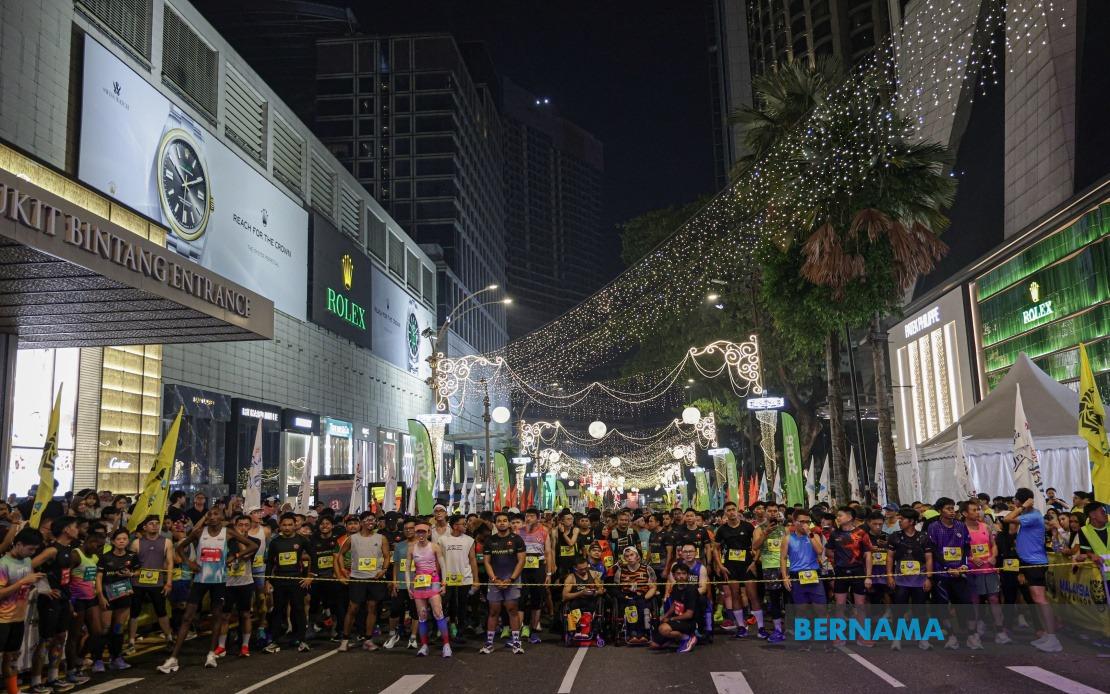
Malaysia Marathon 2026 commenced shortly after midnight with an ambitious gathering of 25,000 runners spanning four distance categories, transforming Kuala Lumpur into a sprawling athletics venue for the nation's 69th National Day festivities. The ceremonial flag-off for the 42-kilometre Full Marathon took place at Pavilion Kuala Lumpur, with Minister of Tourism, Arts and Culture Datuk Seri Tiong King Sing presiding over the opening proceedings. This staggered start structure, beginning in the early morning hours and extending into daylight, reflected careful event planning designed to accommodate the massive participant base and manage urban logistics across Malaysia's capital.
The race organisation showcased strategic timing across its four distance tiers. The Full Marathon commenced at 12:30 am on August 30, attracting 2,000 elite and amateur competitors keen to test themselves over the full Olympic distance. The Half Marathon division, covering 21 kilometres, saw 8,000 participants beginning their courses at 2:00 am, positioning this category as the event's largest segment by participant count. A third wave launched the 10-kilometre category at 3:30 am with 5,000 runners, while the recreational 5-kilometre Fun Run, designed for broader participation, commenced at 7:30 am with 10,000 participants. This segmented approach allowed race organisers to manage crowd density while maximising the festive atmosphere across extended hours.
Perhaps the most distinctive feature of Malaysia Marathon 2026 involved its historic relocation of the finish line from the traditional Dataran Merdeka venue to the Kuala Lumpur City Centre precinct. This shift represented a significant departure from established convention, repositioning the race endpoint within one of Malaysia's most iconic commercial and architectural complexes. The decision reflected contemporary urban event management philosophy, leveraging the KLCC's infrastructure, accessibility, and symbolic prominence as the finishing location for all four race categories. For participants and spectators alike, this geographic repositioning offered a modern dimension to the celebration of national identity.
The 42-kilometre course presented substantial physical challenges designed to test marathon endurance. Full Marathon participants faced a demanding 900-metre elevation gain as they navigated the Ampang-Kuala Lumpur Elevated Highway, commonly known as AKLEH. This topographical feature transformed the event from a flat urban circuit into a genuine endurance test, separating serious distance runners from recreational participants. The routing strategy utilised major Kuala Lumpur thoroughfares including Jalan Bukit Bintang, Jalan Ampang, Jalan Sultan Ismail, and Jalan Raja Chulan, effectively creating an urban course that showcased the capital's geography while testing competitor stamina across varied terrain and elevation profiles.
One particularly striking element of Malaysia Marathon 2026 involved the participation of a humanoid robot manufactured by HONOR, which competed alongside international runners representing nations including Japan and Nigeria. This technological dimension represented an innovative fusion of sport and cutting-edge technology, positioning Malaysia's marathon event at the intersection of traditional athletics competition and contemporary innovation. The robot's participation in the 10-kilometre category captured broader trends in how sporting events integrate emerging technologies, whether for promotional purposes, research opportunities, or simply to generate international attention and media interest. Such inclusions reflect how major athletic gatherings increasingly serve as platforms for technological demonstration and cultural exchange beyond conventional competitive parameters.
The international scope of Malaysia Marathon 2026 extended beyond the novelty robot competitor, drawing participants from multiple nations competing alongside Malaysian runners. This cosmopolitan dimension enhanced the event's significance as both a national celebration and a genuine international athletic gathering. World Athletics, the global governing body for track and field athletics, formally recognised the championship, providing institutional credibility to the proceedings. Such recognition validates the event's standards, competitive integrity, and alignment with international athletic principles, elevating Malaysia Marathon 2026 beyond a regional celebration into the broader landscape of globally significant running competitions.
Kuala Lumpur authorities implemented comprehensive traffic management strategies to accommodate the massive logistical demands imposed by a 25,000-participant event traversing the city's central areas. Phased road closures and strategic traffic diversions commenced late on August 29 and extended through the following afternoon, affecting major arterial routes and elevated highways. The AKLEH and SUKE highways required significant traffic management, as did principal city streets including Jalan Bukit Bintang and Jalan Sultan Ismail. Such coordination between law enforcement and event organisers demonstrated the complexity of staging major athletic competitions within functioning urban environments, requiring meticulous planning to balance public participation with maintaining essential city services.
The timing of Malaysia Marathon 2026 as a cornerstone event for National Day celebrations carried significant symbolic weight. Rather than remaining a standalone athletic competition, the marathon served as a tangible embodiment of national pride and unity, drawing citizens from diverse backgrounds into common cause. This integration of sports into patriotic observance reflects broader governmental strategies to leverage athletic events as vehicles for fostering national cohesion and projecting Malaysia's capacity to organise world-class competitions. For participating international runners and observers, the association between athletic competition and national celebration reinforced Malaysia's positioning as a sophisticated, well-organised destination capable of hosting major international sporting occasions.
The participation figures across four categories revealed interesting demographic and participation patterns. The Half Marathon emerged as the most popular distance, attracting 8,000 participants, suggesting strong appeal among competitors seeking a substantial but manageable distance. The 5-kilometre Fun Run, despite its recreational positioning, drew 10,000 participants, indicating significant engagement from the broader public and families seeking National Day involvement without committing to demanding endurance requirements. The Full Marathon and 10-kilometre distances attracted smaller but dedicated cohorts of 2,000 and 5,000 participants respectively. Together, these numbers demonstrate how varied distance options expanded participation demographics, transforming the event from a specialised competition into a inclusive celebration engaging multiple experience levels and age groups across Malaysian and international communities.

