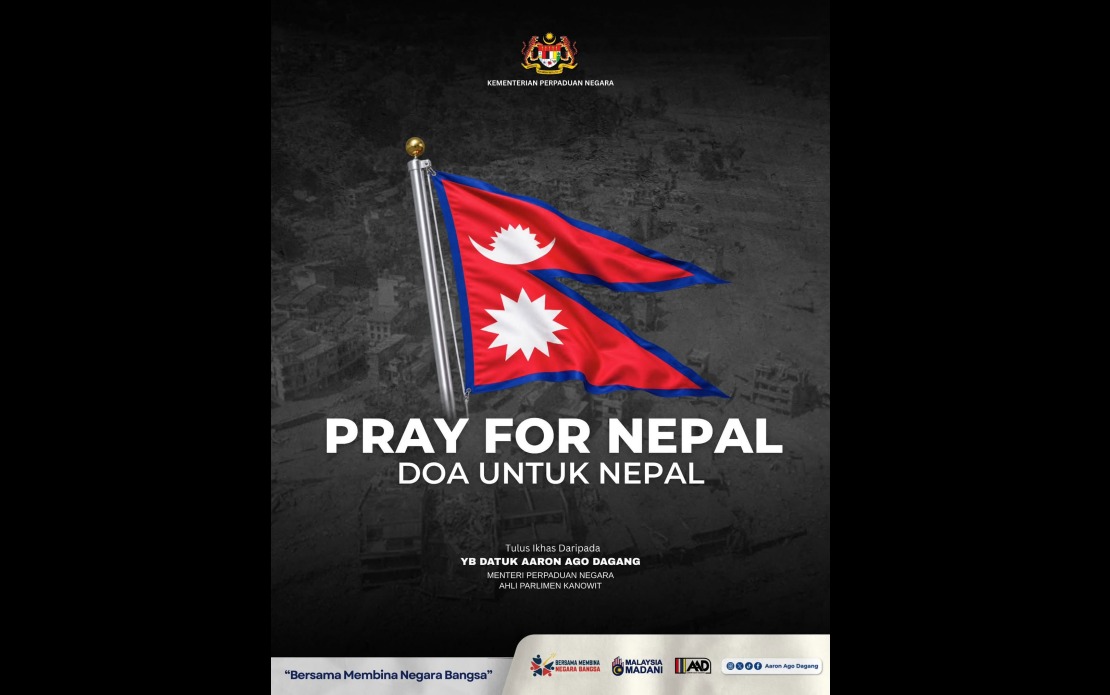
The devastating floods that struck Nepal's Rasuwa district have prompted an immediate and coordinated response from the Malaysian government, underscoring the nation's commitment to regional humanitarian concerns. Minister of National Unity Datuk Aaron Ago Dagang has publicly expressed deep sorrow over the natural disaster through social media, calling on Malaysians to unite in solidarity with affected Nepali communities during what he characterised as an extraordinarily challenging period.
The disaster has placed particular urgency on locating and ensuring the safety of Malaysian nationals caught in the disaster zone. According to the Ministry of Foreign Affairs, as of 11 pm on August 27, a total of 57 Malaysians remain unable to be contacted by their families, employers, or official channels. This figure is compiled from reports submitted by relatives, associates, and employers seeking information about their whereabouts and welfare—a process that underscores the complexity of emergency coordination across borders during natural catastrophes.
In response to the developing crisis, Prime Minister Datuk Seri Anwar Ibrahim has directed all relevant government agencies to prioritise the identification and contact of affected Malaysians. This directive encompasses multiple critical institutions, including the National Security Council and the Ministry of Foreign Affairs, ensuring that a whole-of-government approach is marshalled toward the dual objectives of locating citizens and facilitating their safe departure or support if they remain in affected areas.
The mobilisation of Malaysia's foreign affairs apparatus reflects established protocols for overseas emergencies, yet the scale of this particular disaster presents distinct challenges. The Rasuwa district, situated in a mountainous region of Nepal, has historically been vulnerable to flash flooding during monsoon seasons, and the topography complicates rescue and communication efforts. Malaysian officials are coordinating with Nepali authorities to establish communication networks and identify evacuation routes for their nationals.
For Malaysian families waiting for news of loved ones in Nepal, the uncertainty represents an agonising period. The preliminary figure of 57 uncontactable citizens may fluctuate as communication networks are progressively restored in the affected region and as missing persons come into contact with authorities or their families. The Ministry's decision to release this figure transparently, based on specific reporting mechanisms, demonstrates an attempt to manage public expectations whilst acknowledging the genuine difficulties in obtaining immediate information during such crises.
Datak Aaron Ago Dagang's public expression of sympathy carries significance beyond ceremonial sentiment. By explicitly calling for Malaysians to join in prayers for Nepal's affected population and extending solidarity to the broader Nepali nation, Malaysia signals its commitment to the humanitarian principles that bind Southeast Asian and South Asian nations together. His particular emphasis on praying for the safety of Malaysian citizens demonstrates the dual nature of Malaysia's response—concern for regional neighbours coupled with primary responsibility for protecting its own nationals abroad.
The disaster exposes the vulnerability of Malaysian expatriates across South Asia, a region where thousands of citizens live and work. Whether engaged in business, education, tourism, or employment, these individuals depend upon functioning diplomatic and consular networks during emergencies. The Foreign Ministry's rapid activation of tracking mechanisms—collecting information from family members and employers—reflects improvements in consular responsiveness that have been developed over years of managing various overseas crises affecting Malaysian nationals.
Nepal's susceptibility to natural disasters, whether monsoon-related flooding, earthquakes, or landslides, means that the frequency of such incidents affecting regional expatriate communities may increase. For Malaysia, this underscores the need for maintaining robust emergency protocols and pre-positioned resources that allow rapid response coordination. The involvement of the National Security Council in this particular crisis suggests that the government is treating the matter with high-level attention, potentially expediting information-sharing with Nepali counterparts and facilitating any necessary evacuation or rescue operations.
The humanitarian dimension of this crisis extends beyond the immediate concern for Malaysian citizens. By publicly emphasising prayers for Nepal's affected population and expressing solidarity with the nation, Malaysia's government acknowledges broader regional responsibilities and the universal nature of natural disaster suffering. This messaging, particularly from the Minister of National Unity, carries potential for strengthening bilateral relations and demonstrating Malaysia's willingness to support neighbours during moments of acute vulnerability.
Looking forward, the resolution of this crisis will depend significantly upon the restoration of communication infrastructure in the Rasuwa district and the success of joint Malaysian-Nepali coordination efforts. As additional information emerges from the affected region and as contact is re-established with missing Malaysians, the Foreign Ministry will likely provide updated figures and situational briefings. For the families of the 57 unaccounted individuals, each successful contact represents an outcome devoutly to be wished—a return from the uncertainty that characterises the immediate aftermath of major disasters.

