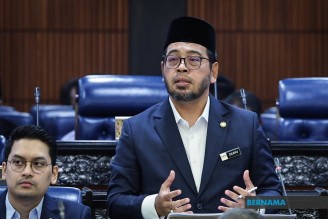
The Malaysian government has embarked on a comprehensive restructuring of Tabung Haji's regulatory framework in response to a damaging financial crisis that nearly crippled the institution responsible for managing the nation's haj pilgrimage fund. During a marathon 10-hour special parliamentary sitting in August, the government unveiled an array of corrective measures aimed at preventing a recurrence of the investment losses and governance failures documented in the Royal Commission of Inquiry report, signalling its determination to restore public confidence in one of Malaysia's most significant Islamic financial institutions.
The scale of Tabung Haji's difficulties has been staggering. Between 2014 and 2020, the fund accumulated losses approaching RM13 billion through ill-fated investment decisions and mismanagement. Finance Minister II Datuk Seri Amir Hamzah Azizan revealed that seven of fourteen troubled investments suffered complete losses, obliterating depositor value in those ventures. Most alarmingly, the government faced potential liabilities exceeding RM74.5 billion had panic withdrawals spiralled out of control during the crisis period, representing an exposure that could have fundamentally destabilised Malaysia's financial system and placed enormous strain on public finances.
Central to the government's response is the establishment of a specialist task force chaired by Tabung Haji chairman Tan Sri Abdul Rashid Hussain, with participation from Bank Negara Governor Datuk Seri Abdul Rasheed Ghaffour and Securities Commission chairman Datuk Mohammad Faiz Azmi. This high-level committee examined the RCI's findings and recommendations, ultimately proposing a structural separation of Tabung Haji's functions. The investment management arm will now fall under Securities Commission regulation, while religious and pilgrimage operations remain under the Ministry in the Prime Minister's Department (Religious Affairs), preserving Tabung Haji's institutional continuity while subjecting its financial operations to stringent capital market oversight.
A particularly revealing detail emerged regarding Tabung Haji's connection to the 1Malaysia Development Bhd scandal. The fund's investment in Putrajaya Perdana Bhd inadvertently entangled it in 1MDB's toxic legacy, demonstrating how poor due diligence and inadequate investment governance allowed depositors' retirement savings to become ensnared in one of the nation's greatest financial frauds. This connection underscores why transferring investment authority to the Securities Commission, an independent regulator with proven expertise in capital market supervision, represents a critical safeguard against future investment disasters.
Amendments to the Tabung Haji Act 1955 will form the legal foundation for these reforms. Most significantly, the legislation will explicitly prohibit active politicians from serving on Tabung Haji's board of directors, addressing a longstanding concern about political interference in the fund's decision-making. Additionally, future profit distributions to depositors will be based exclusively on audited accounts, eliminating the discretionary element that previously enabled unsustainable payments. Every major decision affecting Tabung Haji will henceforth be evaluated against a single criterion: the welfare of the Muslim community.
The government's approach to accountability has been notably unflinching. Minister in the Prime Minister's Department (Religious Affairs) Dr Zulkifli Hasan publicly committed to comprehensive investigations into those responsible for the fund's failures, emphasising that accountability would be pursued without favouritism or compromise. This stance reflects the MADANI Government's stated philosophy of transparency and zero tolerance for malfeasance, even when disclosures reveal uncomfortable truths about previous mismanagement and the scale of public resources required to salvage the institution.
Parliamentary debate during the special sitting revealed broader concerns about Malaysia's regulatory architecture for non-bank financial institutions. MP Aminolhuda Hassan proposed establishing a single unified regulator to oversee major NBFIs including the Employees Provident Fund, Permodalan Nasional Bhd, the Retirement Fund Incorporated, and the Armed Forces Fund Board. Currently, Malaysia lacks a consolidated supervisory framework for assessing systemic risks across these institutions, creating potential vulnerabilities in the financial system. Tabung Haji's near-collapse highlights why such institutional gaps warrant urgent attention.
Another parliamentary concern focused on Tabung Haji's dependence on sukuk income from UJSB, which contributed approximately 26 per cent of annual revenue according to the RCI report. This concentration of income creates earnings volatility and may have incentivised risky investment strategies to compensate for sukuk volatility. Addressing this structural weakness requires diversifying revenue streams and ensuring investment returns reflect prudent risk management rather than attempts to meet distribution targets through aggressive asset strategies.
The Royal Commission of Inquiry itself conducted an exhaustive examination spanning 2014 to 2020, ultimately producing a 211-page report released publicly on July 29. The investigation identified 25 recommendations for operational improvements, and as of late July, Tabung Haji had already implemented three-quarters of these suggestions, demonstrating institutional willingness to embrace reform. The RCI process, initiated in 2021 with member appointments in January 2022, represented Malaysia's most significant institutional investigation into Islamic financial governance failures in recent memory.
For Malaysian Muslims and Tabung Haji depositors, these reforms carry existential significance. The haj pilgrimage represents one of Islam's Five Pillars, and Tabung Haji's traditional role as a trusted savings vehicle enabling ordinary Malaysians to fulfil this religious obligation distinguishes it from conventional financial institutions. Restoring depositor confidence requires not merely technical regulatory adjustments but a fundamental demonstration that the institution serving Islam's most sacred obligation operates with absolute integrity and transparency.
The implications extend beyond Malaysia's borders throughout Southeast Asia. Other Muslim-majority nations managing substantial haj funds and Islamic financial institutions will scrutinise Malaysia's restructuring approach. The establishment of clear governance boundaries between religious authority and capital market regulation, combined with stringent political safeguards, may offer instructive lessons for regional peers concerned with Islamic financial institution governance and the prevention of systemic crises that undermine depositor trust.
Implementation timelines remain critical. While the task force has formulated recommendations requiring Cabinet approval, converting legislative amendments into operational reality demands sustained political will and technical expertise. The coming months will determine whether Malaysia's institutional capacity to execute these reforms matches the boldness of its policy ambitions, ultimately determining whether Tabung Haji emerges from crisis as a genuinely transformed and trustworthy steward of Malaysian Muslims' savings.

