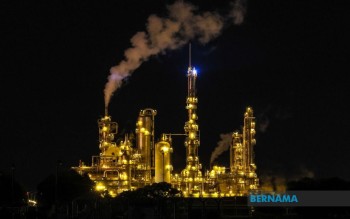
Malaysia should move cautiously and deliberately if it chooses to establish a strategic petroleum reserve, an investment strategy director has cautioned, urging policymakers to resist the temptation to simply emulate the massive reserve systems maintained by wealthier nations. Mohd Sedek Jantan, director of investment strategy at IPPFA Sdn Bhd, made this assessment following Prime Minister Datuk Seri Anwar Ibrahim's announcement that the government would examine the viability and mechanics of creating such a stockpile to safeguard the country's energy security in an increasingly unstable geopolitical environment.
The distinction Mohd Sedek drew between necessity and scale represents a crucial insight for Malaysian policymakers considering energy infrastructure investment. While acknowledging that energy resilience matters, he pushed back strongly against the notion that Malaysia should attempt to replicate the strategic petroleum reserve systems operated by the United States and Japan, two wealthy industrial powers with substantially different economic circumstances. His argument rests on a fundamental recognition that Malaysia's fiscal capacity, economic structure, and vulnerability profile differ markedly from these developed economies, making direct comparison both unrealistic and potentially damaging to the nation's financial health.
The economist framed the challenge in terms of competing demands on the government budget. Public funds allocated to petroleum storage cannot simultaneously be directed toward healthcare improvements, educational expansion, or food security programmes, all areas where Malaysia faces ongoing pressures. This zero-sum reality necessitates rigorous evaluation of any proposed reserve scheme before commitments are made. Mohd Sedek emphasised that such investments must survive careful cost-benefit analysis, not merely rhetorical appeals to energy independence or vague notions of security.
Paradoxically, Mohd Sedek also acknowledged the potential catastrophic expenses associated with being unprepared during a major petroleum supply disruption. An extended supply shock—whether triggered by geopolitical conflict, natural disaster, or production failure—could inflict economic damage vastly exceeding the upfront costs of establishing a prudent reserve capacity. This observation underscores the complexity of the decision: the government must navigate between the dangers of over-investment and the risks of inadequate preparation, finding a middle path suited to Malaysia's particular circumstances.
His recommended methodology begins with comprehensive risk assessment rather than immediate infrastructure development. Before committing resources to physical storage facilities, the government should map out the specific vulnerabilities that a reserve would address, calculate the optimal volume required to mitigate identified risks, and explore various financing mechanisms. This analytical groundwork serves as essential foundation for any subsequent implementation, ensuring that decisions rest on evidence rather than assumption or international precedent.
Mohd Sedek outlined a phased implementation strategy that prioritises planning and partnership over rapid expansion. He suggested that policymakers should investigate potential collaboration with private sector entities, recognising that commercial operators may bring efficiency gains and reduce burden on public finances. A scalable, commercially viable approach would allow Malaysia to adjust reserve capacity as circumstances evolve, rather than locking in expensive infrastructure that may prove oversized or undersized relative to actual requirements.
The emphasis on commercial viability carries particular significance for a developing economy managing multiple fiscal pressures. Unlike established energy powers that can absorb reserve maintenance costs as routine national security expenditure, Malaysia must ensure that any petroleum reserve operates efficiently and potentially generates returns that partially offset operational expenses. This consideration shapes the entire architecture of any reserve system, from storage technology selection to purchasing and disposition strategies.
Mohd Sedek's advocacy for a "smartest and most cost-effective" reserve rather than the largest or most comprehensive one reflects sophisticated understanding of Malaysia's position within global energy markets. The country remains a net energy exporter with significant domestic petroleum production capacity, distinguishing it from import-dependent nations whose reserve requirements differ fundamentally. A reserve sized appropriately to Malaysia's specific vulnerabilities—perhaps addressing temporary disruptions or supporting neighbouring regional economies during crises—would serve national interests more effectively than attempting to match the strategic reserves of consumption-heavy developed economies.
The recommendation to establish a clear economic case before moving toward gradual implementation provides a sensible roadmap for government action. Rather than rushing to announce reserve facilities that may prove financially unsustainable or technologically mismatched to Malaysia's needs, this measured approach allows thorough examination of options, costs, and benefits. Such preparation work positions Malaysia to make informed decisions that genuinely strengthen energy security without mortgaging fiscal capacity needed for other development priorities.
For Malaysian policymakers and observers, this economic analysis highlights the distinction between sound strategy and reactive policymaking. Energy security matters in an era of geopolitical volatility and potential supply disruptions, but responding to this imperative requires calibrated approaches suited to local conditions rather than wholesale adoption of foreign models. The economist's framework suggests that Malaysia can enhance its resilience through deliberate, financially disciplined action, ultimately serving both immediate security concerns and longer-term economic stability.

