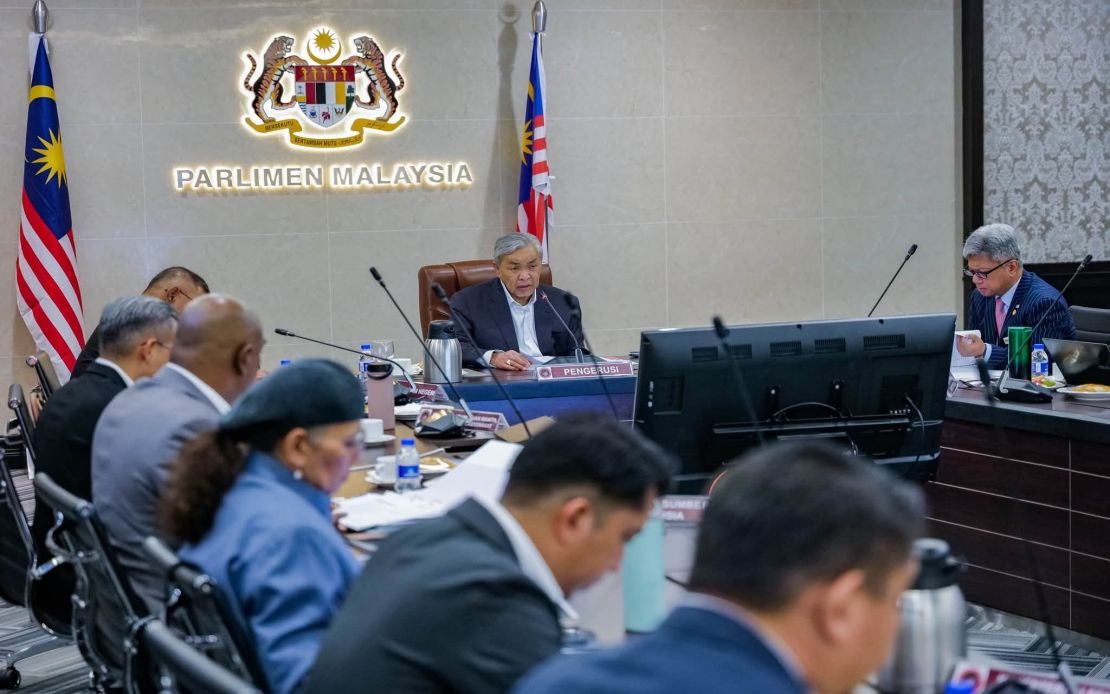
Malaysia faces mounting pressure to recalibrate its approach to refugee management, with Deputy Prime Minister Datuk Seri Dr Ahmad Zahid Hamidi emphasising the need to harmonise humanitarian commitments with rigorous security safeguards. Speaking after a high-level government committee meeting on June 30, Ahmad Zahid stressed that the country must develop comprehensive policies capable of addressing the competing demands of protecting vulnerable displaced populations while preserving national stability and territorial sovereignty.
The urgency of Ahmad Zahid's remarks reflects the scale of the global displacement crisis, which has reached unprecedented proportions. The Deputy Prime Minister cited figures indicating that more than 122 million people worldwide have been forcibly displaced by armed conflict, political persecution, and regional instability. This astronomical number underscores why Malaysia, as a Southeast Asian nation positioned along major migration corridors and hosting significant refugee populations, cannot adopt a purely humanitarian stance without considering domestic ramifications.
Ahmad Zahid's framing of refugee policy as inseparable from national security represents a significant positioning statement in Malaysian political discourse. He articulated that managing displaced persons transcends administrative bureaucracy, instead constituting a fundamental national security imperative that demands alignment with Malaysia's strategic interests and public safety requirements. This approach acknowledges growing domestic concerns about unmanaged immigration while attempting to preserve Malaysia's international standing as a responsible regional actor.
The Deputy Prime Minister chairs the 6th Meeting of the High-Level Committee on the Management of Refugees and Asylum Seekers, which functions as the principal coordinating body for refugee-related policies across Malaysian government agencies. During this latest session, the committee undertook comprehensive reviews of existing policy implementation mechanisms, evaluating whether Malaysia's refugee framework continues operating effectively within the constraints of national capacity and security parameters. This systematic oversight reflects official recognition that refugee management requires continuous recalibration as circumstances evolve.
A central focus of the committee's deliberations involved the Refugee Registration Document (DPP) system, which represents Malaysia's primary mechanism for identifying and tracking displaced persons within its borders. Strengthening this documentation framework assumes critical importance given the challenge of distinguishing legitimate refugees from potential security risks or economic migrants seeking irregular entry. Enhanced registration procedures theoretically enable authorities to conduct more thorough background screening while maintaining records necessary for future policy adjustments.
Simultaneously, the committee addressed coordination challenges surrounding refugee access to essential services, particularly education and healthcare. Ahmad Zahid identified streamlining these access guidelines as a priority, suggesting that current arrangements may suffer from bureaucratic inefficiency, contradictory legal provisions, or inadequate inter-agency cooperation. By clarifying and harmonising protocols across relevant government departments, authorities could theoretically reduce administrative burdens while ensuring service delivery remains legally defensible and equitably distributed.
Malaysia's refugee situation carries particular regional significance given the country's geographical position and economic status within Southeast Asia. As a middle-income nation with developed infrastructure and established healthcare and education systems, Malaysia has historically attracted disproportionate numbers of asylum seekers relative to its population size. Simultaneously, Malaysia maintains diplomatic relationships across the Islamic world while hosting substantial expatriate communities, creating complex geopolitical considerations that inform refugee policy decisions.
The tension between humanitarian obligations and security concerns reflects broader global shifts in how nations approach displacement crises. Traditional asylum frameworks developed during the Cold War era increasingly struggle to accommodate contemporary challenges including failed state fragility, transnational terrorism, climate-induced migration, and hybrid security threats. Ahmad Zahid's emphasis on balancing competing imperatives acknowledges that purely restrictive approaches prove politically unsustainable and ethically problematic, while wholly open policies risk overwhelming domestic capacity and generating public backlash that undermines support for refugee protections.
For Malaysia specifically, the refugee management challenge intersects with broader immigration policy considerations affecting citizens from Bangladesh, Myanmar, Indonesia, and Pakistan. Distinguishing formal asylum seekers entitled to international protection from irregular migrants seeking economic opportunity requires sophisticated administrative infrastructure and consistent inter-agency coordination. The committee's focus on improving policy implementation mechanisms suggests recognition that Malaysia's existing framework, while reasonably functional, requires enhancement to function more effectively amid increasing pressures.
Ahmad Zahid's assertion that refugee decisions must ultimately serve the interests of the Malaysian people and national sovereignty reflects constitutional obligations while signalling that refugee protection remains subordinate to domestic priorities. This formulation acknowledges that democratic governments ultimately derive legitimacy from securing citizen welfare, meaning refugee policies cannot function at levels generating public security anxieties or requiring unsustainable resource commitments. The Deputy Prime Minister's framing attempts to position Malaysia as a responsible international actor while reassuring domestic constituencies that refugee management serves defined national interests.
Looking forward, the effectiveness of Malaysia's strengthened refugee framework will depend substantially on implementation capacity and sustained political commitment. The committee's work on clarifying education and healthcare access guidelines represents concrete progress toward reducing administrative friction, yet success requires that field-level enforcement agencies receive adequate resources, training, and political support. Moreover, Malaysia's approach will likely influence how other Southeast Asian nations calibrate their own refugee policies, given the region's interconnected migration systems and shared security concerns.
The Deputy Prime Minister's June 30 statement ultimately reflects Malaysia's attempt to navigate a difficult policy space where humanitarian principles, security imperatives, and diplomatic considerations collide. By emphasising the need for systematic, legally compliant refugee management that explicitly prioritises national interests, Ahmad Zahid positions Malaysia within mainstream international practice while highlighting government resolve to prevent policy areas from developing through reactive crisis management or ad hoc agency decisions.

