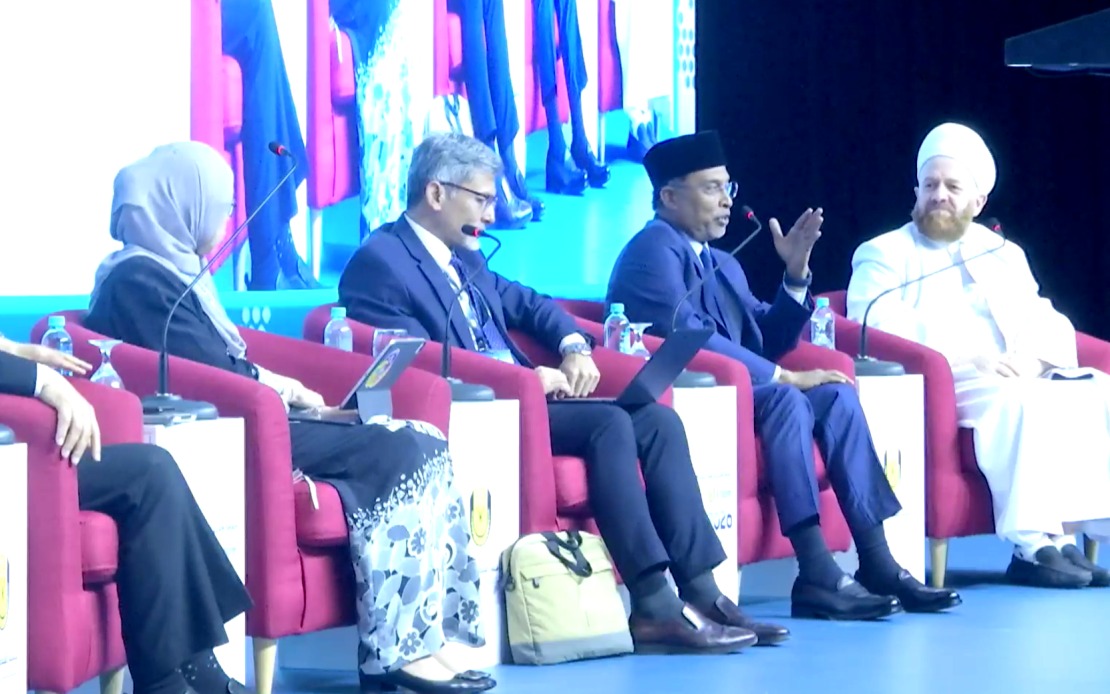
Malaysia's approach to incorporating artificial intelligence into its higher education system must go beyond technical implementation and prioritise the development of moral and ethical frameworks, according to Higher Education Minister Datuk Seri Dr Zambry Abd Kadir. Speaking at the 8th World Conference on Islamic Thought and Civilisation in Ipoh, Zambry stressed that as emerging technologies reshape the academic landscape, institutions must ensure students develop not only cutting-edge technical skills but also the ethical grounding needed to deploy those capabilities responsibly.
The Ministry of Higher Education has responded to this challenge by developing a comprehensive 10-year strategic blueprint spanning 2026 to 2035. This roadmap attempts to chart a course through the competing demands of rapid technological change, the urgent need to cultivate skilled workers, and the preservation of fundamental human values. The blueprint reflects growing recognition within Malaysia's education establishment that technology alone cannot address the complex societal challenges that graduates will face, particularly those related to the proliferation of artificial intelligence systems that increasingly influence decision-making across sectors from healthcare to finance to governance.
Zambry's emphasis on embedding ethics into AI education addresses a critical gap in how many institutions globally have approached technological training. While universities have rapidly expanded programmes in computer science and engineering to meet employer demand, comparatively fewer have developed coherent frameworks for teaching students how to think critically about the societal implications of their work. In the Malaysian context, where the nation aspires to position itself as a technology hub within Southeast Asia, this oversight could prove costly if graduates lack the moral compass to guide AI development toward outcomes that benefit society broadly rather than narrow commercial interests.
A key element of this reorientation involves transitioning from the conventional STEM educational model—focused on Science, Technology, Engineering and Mathematics—toward the expanded STEAM framework that incorporates Arts and liberal studies. This shift acknowledges that technological problem-solving cannot be divorced from humanistic inquiry. The inclusion of arts, philosophy, history, and social sciences creates space for students to examine questions about the social consequences of technological choices, the distribution of AI benefits and harms across populations, and how algorithmic systems might embed bias or reinforce existing inequalities.
Zambry pointed to Universiti Teknologi Petronas as a practical example of this integrated approach. The institution requires engineering students to pursue coursework beyond their core discipline, deliberately exposing them to broader intellectual traditions and perspectives. This model recognises that technical excellence alone does not ensure wise decision-making. A software engineer or data scientist who understands the mathematical foundations of machine learning but has never engaged deeply with ethics, philosophy, or social sciences may be technically capable yet intellectually incomplete for the challenges of building systems that affect millions of lives.
The minister articulated a fundamental distinction between what artificial intelligence can and cannot accomplish. AI systems excel at processing information rapidly, identifying patterns in data, and generating optimised solutions to well-defined problems. Yet these systems cannot independently cultivate the qualities of character, integrity and moral conscience that Zambry identified as central to the ministry's vision. These human qualities emerge through education that engages students in reflection on values, exposure to diverse perspectives, and practice in reasoning through ambiguous ethical situations where technical correctness does not automatically determine what ought to be done.
This philosophical stance carries particular significance for Malaysia and the broader Southeast Asian region. As countries across Asia race to develop domestic artificial intelligence capabilities and attract technology investment, there is pressure to prioritise speed and commercial success over deeper questions about how these technologies align with regional values and social needs. Zambry's framing pushes back against this utilitarian calculus, suggesting that Malaysia's competitive advantage will ultimately depend not just on technical talent but on graduates who can deploy that talent with wisdom and integrity.
The 10-year blueprint also reflects implicit recognition that AI's impact on employment, economic opportunity and social cohesion in Malaysia will be profound. Higher education institutions cannot simply train workers to operate within existing systems; they must prepare citizens to navigate and potentially reshape those systems as AI disrupts established industries and creates new forms of work. This requires cultivating adaptability, creative problem-solving and critical thinking—capacities that emerge more readily from curricula that integrate diverse disciplines and encourage questioning of assumptions.
Moreover, embedding ethics into AI education addresses concerns that have surfaced globally about the concentration of AI development in the hands of a small number of wealthy companies and countries. If Malaysian universities produce graduates who understand both how to build sophisticated AI systems and why certain applications of those systems raise serious ethical concerns, the nation positions itself not merely as a consumer of foreign technology but as a thoughtful participant in global conversations about AI governance and responsible development.
The challenge ahead lies in implementation. Translating Zambry's vision into concrete curriculum changes requires universities to hire faculty capable of teaching rigorous ethics alongside technical content, to redesign degree programmes that have been structured around disciplinary silos for decades, and to assess student learning in ways that account for moral reasoning alongside technical competence. It demands cooperation between engineering schools and humanities departments, between industry partners who hire graduates and educators who prepare them.
For Malaysian students and parents, the implication is that higher education should equip graduates not just with marketable skills but with the intellectual and moral resources to understand the systems they work within and to advocate for beneficial change. As Zambry emphasised, education at its best cultivates critical thinking minds paired with strong character—producing graduates who can navigate the uncertainties ahead with both capability and conscience.

