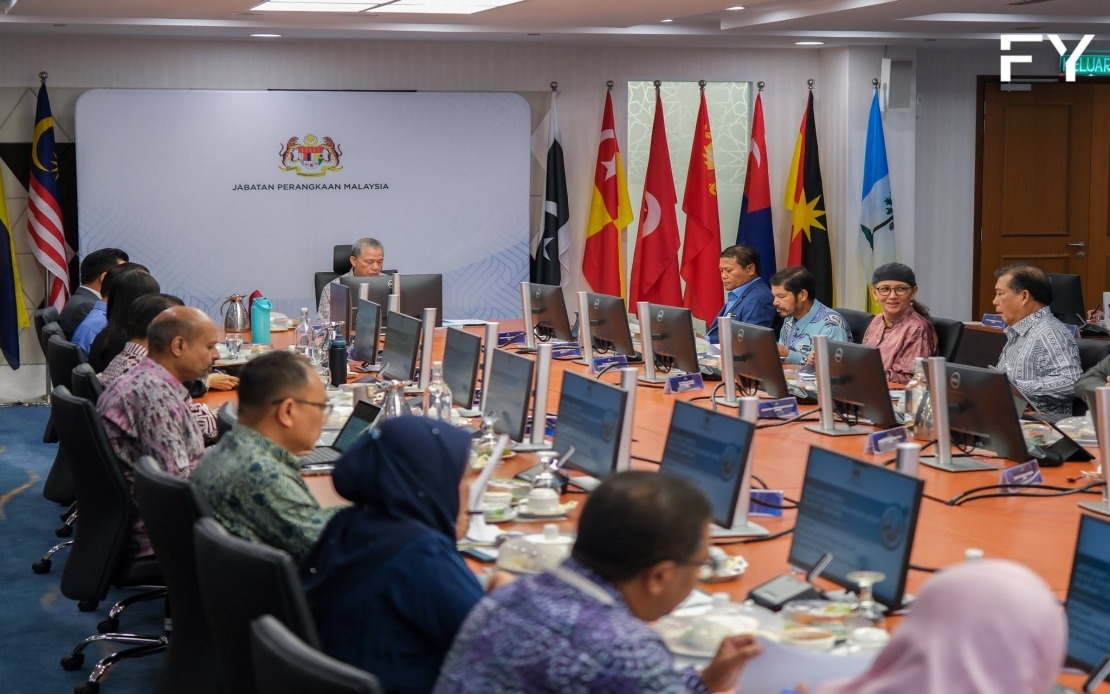
Malaysia's pathway to successful execution of the 13th Malaysia Plan (13MP) spanning 2026 to 2030 hinges on the government's ability to harness data and artificial intelligence as foundational tools for strategic decision-making, according to Deputy Prime Minister Datuk Seri Fadillah Yusof. Speaking after chairing a high-level meeting of the National Statistics and Data Council (MSDN), Fadillah articulated how the contemporary operating environment—marked by economic volatility, geopolitical instability, accelerating digital transformation and climate imperatives—demands that policymakers move beyond traditional approaches to information gathering and analysis.
The Malaysian government's commitment to strengthening the National Statistical System (NSS) reflects a broader recognition that data has transcended its traditional role as mere informational content. Instead, Fadillah positioned comprehensive, reliable data as a strategic national asset, one that underpins the efficiency and impact of public service delivery while fortifying economic and social resilience. This reframing carries significant implications for how ministries and agencies structure their operations, allocate resources and measure outcomes. By treating statistical capability as fundamental infrastructure rather than administrative function, the government signals an intention to embed evidence-based reasoning throughout the policy development cycle.
The imperative for quality, integrity and timeliness in data collection and statistical analysis cannot be overstated when considering the 13MP's scope and ambitions. Fadillah emphasised that robust data systems directly enable more effective policy planning, more rigorous implementation monitoring, and more credible evaluation of whether interventions achieve their intended impact on Malaysian households and businesses. The economic case provides immediate validation: Malaysia's gross domestic product expanded by 5.4 per cent during the first quarter of 2026, a performance Fadillah attributed to development strategies grounded in reliable data analysis. This tangible result demonstrates that the relationship between analytical rigour and economic outcomes is not theoretical but demonstrable.
Crucially, Fadillah called for the Strengthening of the National Statistical System to proceed through coordinated effort spanning multiple institutional layers. Ministries and federal agencies must align their data collection methodologies and standards; state governments must contribute local-level intelligence; the private sector should supply commercial and operational data; while academic institutions and research organisations bring analytical expertise and methodological sophistication. This horizontal and vertical integration represents a significant operational challenge, requiring governance frameworks that balance data sharing with security, privacy and ethical safeguards. The complexity of orchestrating such collaboration underscores why Fadillah elevated the matter to high-level council attention.
The digital era presents both opportunity and complexity for Malaysian data governance. Fadillah highlighted the strategic value of integrating data from disparate sources—spanning government systems, corporate databases, research repositories and public records—in ways that are simultaneously secure, ethically sound and technically effective. Such integration enables more holistic understanding of policy challenges and accelerates decision cycles. However, achieving this requires substantial investment in technological infrastructure, workforce training, and importantly, institutional trust-building. Agencies must believe that data-sharing mechanisms will protect their operational autonomy and that information supplied will be handled responsibly.
Beyond overarching statistical infrastructure, Fadillah emphasised the development of integrated databases, the advancement of big data analytics capabilities, and the strategic deployment of artificial intelligence to enhance Malaysia's productivity, innovation and competitive positioning. These technical investments acquire particular salience in priority sectors such as energy transition, climate change adaptation, water resource management and sustainable development initiatives. In each domain, comprehensive data support proves essential: energy planners require granular consumption and production data to optimise transition pathways; climate scientists need integrated environmental datasets to model impacts and design mitigation strategies; water managers depend on real-time distribution and demand data to maximise efficiency. Without such data foundations, policy and investment decisions risk being misaligned with actual conditions.
The MSDN meeting agenda reflected this sectoral emphasis. Discussions encompassed standardising official statistical methodologies across the government apparatus, institutionalising robust data governance frameworks, leveraging administrative records for policy purposes, developing talent databases focused on science, technology and innovation sectors, channelling data insights toward youth development initiatives, and managing national road asset information systems. Each initiative addresses distinct functional needs while collectively contributing to what Fadillah termed a more integrated, high-integrity and development-oriented national data ecosystem. The breadth suggests recognition that effective governance in the 13MP period requires not piecemeal improvements to particular data streams but comprehensive ecosystem strengthening.
For Malaysian readers and regional observers, the significance extends beyond technical statistical policy. The government's declared commitment to data-driven governance reflects assumptions about the relationship between information quality and policy effectiveness that increasingly characterise development strategies across Southeast Asia. Nations competing for investment, talent and technological sophistication recognise that decision-making grounded in comprehensive, current, reliable data tends to outperform approaches reliant on assumption or precedent. By positioning statistical capability as a cornerstone of the 13MP, Malaysia signals to international partners, potential investors and its own citizens that development planning proceeds from evidence rather than ideology.
However, implementation challenges merit acknowledgment. Strengthening the NSS demands not merely policy directives but sustained funding, skilled personnel, organisational culture change within agencies accustomed to operating in information silos, and political will to prioritise long-term institutional capability over short-term political convenience. Privacy advocates will scrutinise data integration initiatives to ensure citizens' personal information remains appropriately protected. Regulatory frameworks must evolve to address questions about data ownership, algorithmic transparency and accountability when artificial intelligence systems influence policy outcomes affecting millions of people.
Fadillah's emphasis on artificial intelligence deserves particular attention given ongoing global uncertainty about AI governance. Malaysia, like other developing economies, must navigate adoption of AI technologies while managing risks including algorithmic bias, job displacement and erosion of human oversight in consequential decisions. The Malaysian context adds considerations specific to a diverse, multicultural society: AI systems trained on datasets unrepresentative of Malaysia's demographic complexity risk perpetuating or amplifying existing inequities in access to services, economic opportunity and political voice. Responsible AI deployment therefore requires not merely technical sophistication but social awareness and inclusive governance.
The National Statistics and Data Council meeting brought together cabinet-level representatives from critical portfolios including works, health, communications, digital infrastructure and economic affairs, alongside the chief statistician. This configuration underscores that data governance is no longer a technocratic backwater but a matter commanding high-level political attention. For the 13MP to fulfil its development objectives, these leaders must translate commitment into coordinated resource allocation, policy integration and institutional reform. The coming years will reveal whether Malaysia's declarative emphasis on data-driven governance translates into the institutional changes, cultural shifts and technological investments that such transformation requires.

